
South London

Air Conditioning in the Royal Borough of Greenwich

The Royal Borough of Greenwich holds Georgian streets beside a World Heritage Site, riverside towers on the Peninsula and at Woolwich, and miles of interwar suburbs in Eltham and Kidbrooke. We install, service and repair air conditioning across all of it, for homes and businesses alike.

  • SE3
  • SE7
  • SE9
  • SE10
  • SE18
  • SE28

Free quote in Greenwich

Homes and businesses: tell us what you need and we’ll be in touch.

World Heritage Streets, River Towers and Eltham Suburbs

Around Greenwich town centre, Crooms Hill and the edges of Blackheath, houses are largely Georgian and Victorian, many within conservation areas close to the Maritime Greenwich World Heritage Site and some individually listed. Blackheath also has several post-war Span estates, with their distinctive low-rise modernist houses and flats managed under estate-wide arrangements. In all of these, what can be fixed to the outside of a building is the first question rather than the last.

Along the river, regeneration has created entirely new neighbourhoods. The Greenwich Peninsula and the Royal Arsenal at Woolwich hold thousands of apartments in mid- and high-rise blocks, several of them in converted historic arsenal buildings. Kidbrooke has been rebuilt with new housing, and Thamesmead mixes its late twentieth-century estates with more recent development. These flats are often heavily glazed with river or park views, and exposed upper floors can face strong winds.

Inland, Eltham, Charlton, Plumstead, Shooters Hill and Abbey Wood are built up mainly with interwar and post-war houses, typically semis and terraces with rear gardens. Commercial activity spans visitor attractions, hotels, pubs and restaurants around the park and market, the shopping streets of Woolwich and Eltham, and offices and studios on the Peninsula. Better rail links, including the Elizabeth line at Woolwich and Abbey Wood, continue to bring new homes and businesses.

Our services

Cooling for Royal Borough Homes, Venues and Offices

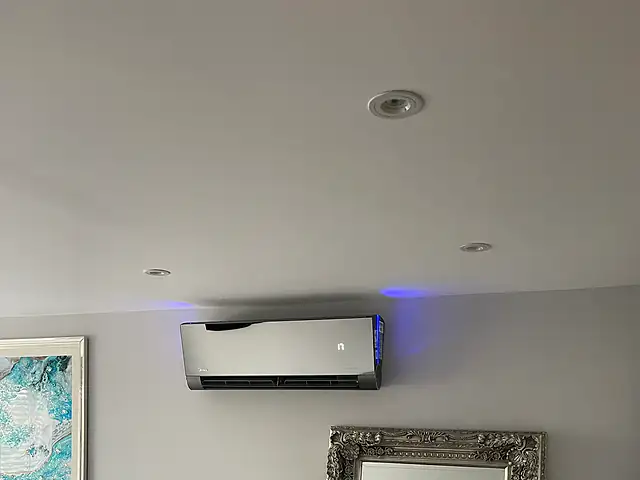
A quiet mirror-finish air conditioning unit above a bed, the kind of air conditioning we fit for homes in Greenwich
A quiet mirror-finish air conditioning unit above a bed. An example of the air conditioning we install for homes in Greenwich.

For homes

Domestic air conditioning in the Royal Borough splits broadly into two groups: owners of modern riverside flats seeking relief from overheating, and families in houses across Eltham, Charlton, Plumstead and Blackheath wanting cooler bedrooms and home offices. We use compact wall-mounted units where space and consent are tight, and multi-split systems where several rooms need cooling from one outdoor unit. All the systems we fit also heat efficiently, and annual servicing keeps them quiet and hygienic.

Domestic air conditioning
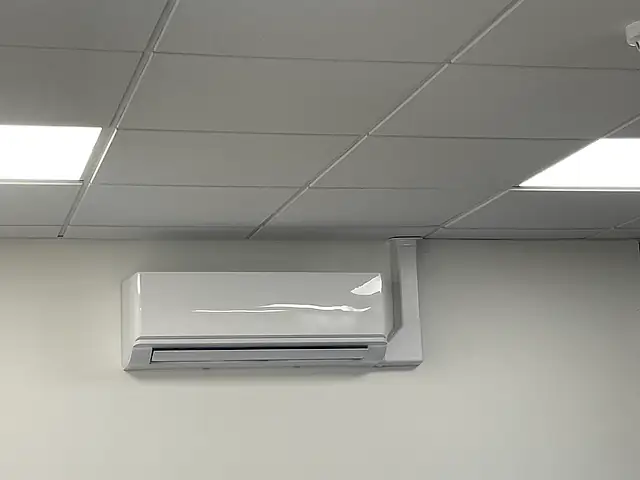

A wall-mounted air conditioning unit in an office, the kind of commercial air conditioning we fit for businesses in Greenwich
A wall-mounted air conditioning unit in an office. An example of the commercial air conditioning we install for businesses in Greenwich.

For businesses

Businesses in the borough include visitor attractions, hotels, pubs and restaurants around the town centre and market, offices and studios on the Peninsula, shops in Woolwich and Eltham, and schools, surgeries and clinics across the suburbs. We provide ceiling cassettes for dining rooms, ducted units hidden in bulkheads for characterful older interiors, and multi-zone systems for office suites. Planned maintenance is particularly valuable for hospitality venues, where a summer breakdown can disrupt trade.

Commercial air conditioning

Can You Install Air Conditioning in a Greenwich Peninsula Flat?

Often you can, but the building sets the rules. Riverside blocks on the Peninsula and at the Royal Arsenal vary widely in what they allow, from designated balcony positions to no external equipment at all. Here is how we approach these flats.

Reading the building rules before designing

We start with the development's rules on external plant, facade penetrations, approved fixings and working hours, and ask whether the building already has comfort cooling or a heat recovery ventilation system. Where a balcony position is allowed, a compact condenser on a floor stand or wall bracket is typical. Some buildings require a specific unit colour or position for a consistent appearance. We prepare the technical details managing agents usually request, including dimensions, sound data and fixing method.

Wind loading on exposed balconies

Upper-floor balconies facing the river can see strong gusts. Condensers must be fixed securely to suitable structure, and the unit should be positioned so wind does not blow directly against the fan, which can reduce performance.

Condensate on stacked balconies

Dripping onto the balcony below is rarely acceptable. Condensate is usually piped back into the flat to a trapped internal waste, or managed with a small pump hidden in trunking or a ceiling void.

Indoor unit choices for glazed riverside rooms

Living areas with floor-to-ceiling glass gain heat rapidly in the afternoon. A high-wall unit is the most common choice, but a ducted unit concealed in a bulkhead can work where ceiling depth allows. Floor-standing console units suit rooms where walls are mostly glass. Sizing accounts for orientation, glazing and floor level, as well as open-plan kitchens adding heat.

Discreet Cooling for Listed and Conservation Homes Near the Park

Georgian and Victorian houses around Greenwich Park, Crooms Hill and Blackheath deserve installations that respect their character. Consent comes first, then careful choices about where equipment sits inside and out.

Keeping equipment out of public view

Outdoor units are usually placed in rear gardens, basement areas or behind parapets where they cannot be seen from the street, subject to planning permission or listed building consent as required. Inside, pipework is routed through floor voids, cupboards and service risers rather than across decorative walls. Units with discreet finishes, or ducted units hidden above ceilings in less sensitive rooms, reduce visual impact further.

  • Check conservation area and listing status before design
  • Prefer rear and basement positions for condensers
  • Route pipework through voids and cupboards

Reversible and low-impact fixing methods

In historic buildings, it helps to choose fixing methods and routes that could be removed later with minimal damage. Core holes are kept to a minimum and placed in less significant fabric, and existing openings are reused where appropriate. These are points the council's conservation officers commonly look at, so planning them early can make the consent process smoother.

Local properties

Peninsula Flats, Span Houses and Interwar Semis

Riverside apartments on the Peninsula and at Woolwich

Flats here nearly always need managing-agent approval before installation. Some blocks provide plant space on balconies or roofs; others restrict external units entirely, and some include communal cooling. In converted arsenal buildings, listed status may also affect what can be fixed to walls and windows.

Georgian and Victorian houses in Greenwich and Blackheath

Period homes near the park and heath are often in conservation areas and some are listed. Discreet indoor units, condensers in rear gardens or basement areas, and internal pipe routes are the usual approach, subject to the necessary consents. Original cornices and panelling shape where pipework can go.

Span estate homes in Blackheath

These modernist houses and flats have large windows, timber cladding and open-plan layouts that can gain heat quickly. Estates are typically run under shared management arrangements, so alterations to the exterior usually need approval. Compact units placed to respect the uniform elevations are the priority.

Interwar homes in Eltham, Kidbrooke and Plumstead

Semi-detached and terraced houses with rear gardens make good candidates for split or multi-split systems. The condenser sits out of view at the back, and pipework runs through the loft to bay-fronted bedrooms, which are often the rooms that overheat first on sunny afternoons.

Before you install

Heritage, High-Rise Wind and Visitor Traffic in Greenwich

This is general guidance only. Every building, lease and planning situation is different, so we’ll talk through yours at survey stage.

  1. 01Much of historic Greenwich and Blackheath lies within conservation areas, and listed building consent is likely to be required for work on listed properties, including some converted Royal Arsenal buildings. Early advice from the council planning team is strongly recommended.
  2. 02Riverside developments usually publish detailed rules on external equipment, sometimes with an approved specification. Your managing agent can tell you what is allowed, and whether the building already has cooling that just needs servicing.
  3. 03Upper floors in exposed blocks on the Peninsula and at Woolwich can see strong winds. Condenser brackets, fixings and positions must be chosen for safety and for safe servicing access in future.
  4. 04Span estates and other managed estates in Blackheath typically need estate approval for external changes. Check with the estate's management before choosing a condenser position.
  5. 05Visitor traffic around the town centre, the park and the market affects parking and loading. Weekday and early starts usually make installation days smoother.
Pricing explained

What Shapes the Cost of Cooling a Greenwich Home or Venue

Greenwich installations range from a single bedroom unit in an Eltham semi to a carefully concealed system in a listed Blackheath house. Each quote separates equipment, labour, electrical work and any specialist access or making good. The factors below make the biggest difference across the borough.

Heritage requirements and concealed routes

In conservation and listed properties, internal pipe routes through voids and careful making good take more time than surface trunking. Producing drawings and details for consent applications can also be part of the work.

High-rise access and building approvals

Peninsula and Woolwich towers often require method statements, lift bookings, restricted working hours and secure fixings for wind loading. These add labour and coordination compared with a house with a garden.

Number of rooms and system choice

A single split is the simplest option. Multi-splits for several bedrooms in an Eltham or Charlton house add indoor units and branch pipework; ducted or console units suit particular rooms and change the scope accordingly.

Hospitality schedules and kitchen loads

Restaurants and pubs near the town centre often need work outside trading hours, and kitchens add heat that must be accounted for in sizing. Both affect the design and the labour involved.

Step by step

Our Installation Steps for Greenwich Properties

  1. Survey across the Royal Borough

    We assess each room, its glazing and orientation, check the electrical supply and identify outdoor positions. For listed or conservation homes, and for riverside blocks, we review the consents or building rules likely to apply.

  2. Design, quote and approvals

    You receive a written recommendation and quote. Where your managing agent, estate management or the council will need information, we supply unit dimensions, sound data, fixing details and proposed positions.

  3. Installation and commissioning

    We protect interiors, install units and insulated pipework, connect drainage and the electrical supply, then pressure test, vacuum and commission the system. Controls and settings are explained before we leave.

  4. Servicing for homes and venues

    An annual service keeps domestic systems efficient. Hospitality venues and offices can arrange planned maintenance timed before the busy summer and visitor season, and we repair many existing systems in the borough.

FAQs

Greenwich and Woolwich Air Conditioning FAQs

Can I install air conditioning in a Greenwich Peninsula flat?

In many cases it is possible, but the decision rests with the building management. Some developments allocate space for outdoor units on balconies or roofs, while others restrict external equipment entirely. Ask your managing agent for the building rules first. We can then recommend a system that complies with them and supply the technical information they usually need for approval.

What about listed or conservation-area homes near Greenwich Park?

Work on listed buildings is likely to need listed building consent, and conservation areas carry extra planning controls on visible equipment. The usual approach is to keep outdoor units at the rear or in basement areas and route pipework internally. We recommend speaking to the council planning team before any work goes ahead, and can provide details for an application.

Can a Span house in Blackheath have air conditioning?

Often yes, with the right approvals. Span estates are typically run under shared management arrangements that control external changes, so check with the estate before choosing a condenser position. The large windows and open layouts in these homes gain heat quickly, so compact wall or console units placed with care can make a noticeable difference.

Is my Woolwich Royal Arsenal flat in a listed building?

Several of the historic buildings at the Royal Arsenal are listed, while newer blocks on the site are not. Your managing agent or the council can confirm the status of your building. In a listed building, listed building consent is likely to be required for external units and some internal alterations, which shapes what is possible.

Do you cover Woolwich, Eltham and Thamesmead?

Yes. We serve the whole Royal Borough, including Woolwich, Eltham, Charlton, Kidbrooke, Blackheath, Plumstead, Shooters Hill, Abbey Wood and Thamesmead. Installation, servicing and repairs are available throughout the borough for homes and businesses, from riverside apartments to suburban family houses and high-street premises.

When should a Greenwich restaurant service its air conditioning?

Ideally in spring, before the warmer months and the busier visitor season begin. Kitchens and dining areas collect grease and dust that clog filters and coils, so many restaurants benefit from more than one visit a year. Regular servicing reduces the risk of a breakdown during a busy summer weekend when trade is at its peak.

Areas Bordering the Royal Borough of Greenwich

Free quote

Get a Quote for Your Greenwich Property

Tell us about your home or business in Greenwich and what you’d like to achieve, whether that’s cooling, heating or both. We’ll come back with advice and next steps.

  • Survey-led advice: recommendations based on your rooms, layout and how you use the space.
  • Clear written quotation: what’s included, the equipment proposed and the next steps.
  • No obligation: ask questions and take your time to decide.
  • CoverageHomes & businesses across Greater London

Request your free quote

A few details help us understand your property and come back with useful advice.

Fields marked * are required. We only use your details to respond to this enquiry.
Get a Free Quote

