
East London

Canary Wharf Air Conditioning Installation & Servicing

In Canary Wharf, most cooling is already there: hidden in apartment ceilings or running from landlord plant on every office floor. We service, repair and extend those systems, and add new air conditioning where building management allows, for residents and businesses across E14.

  • E14

Free quote in Canary Wharf

Homes and businesses: tell us what you need and we’ll be in touch.

Living and Working Among the Towers of the Isle of Dogs

The office towers around Canada Square, Cabot Square and the newer Wood Wharf district were built with central plant: chillers and cooling towers or heat pumps supplying fan coil units, chilled beams or VRF on each floor. Tenants do not usually install cooling from scratch. Instead they adapt the landlord's base-build system during fit-out and add dedicated equipment for rooms with heavier loads, such as meeting suites, kitchens and comms rooms, all under the landlord's technical approval process.

The residential towers on the estate and along Marsh Wall, South Quay and Millharbour are similar in a different way. Many apartments have comfort cooling built in, usually ducted fan coil units concealed above a bathroom or hallway ceiling, fed by a central system or by a condenser in a plant area residents never see. When cooling fades, the unit starts to rattle or water marks appear on a ceiling, the cause is usually a blocked filter, a dirty coil or a failing condensate pump rather than the plant itself.

Work in Canary Wharf is shaped as much by procedure as by engineering. Buildings are tightly managed, contractors must be approved before attending, deliveries go through booked loading bays and service lifts, and external alterations to towers are very rarely permitted. We plan every visit around those rules so the work is approved, booked and completed without surprises for residents, facilities teams or building managers.

Our services

Fan Coil Care for Residents, Fit-Out Cooling for Office Tenants

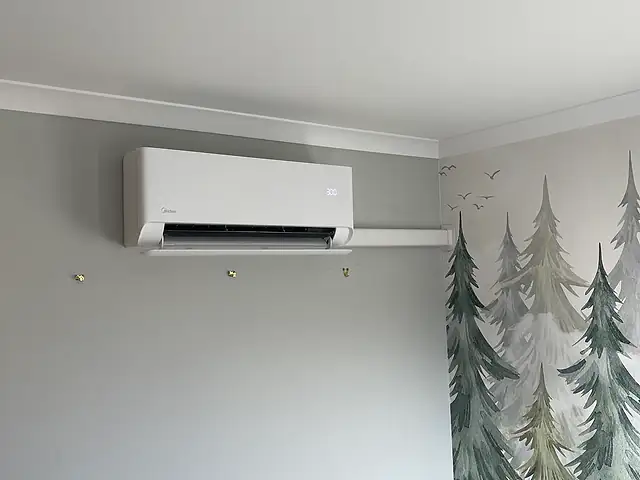
A slim wall-mounted air conditioner with neat trunking, the kind of air conditioning we fit for homes in Canary Wharf
A slim wall-mounted air conditioner with neat trunking. An example of the air conditioning we install for homes in Canary Wharf.

For homes

For Canary Wharf residents the usual need is not a new system but getting an existing one working properly. We service concealed fan coil and ducted units, clean or replace filters, clean coils and condensate trays, test and replace condensate pumps, check controls and diagnose faults such as weak airflow, rattling fans, musty smells and water leaks. Where an apartment has no cooling, we can advise on what the building might permit and prepare the details management will want to see before any decision is made.

Domestic air conditioning
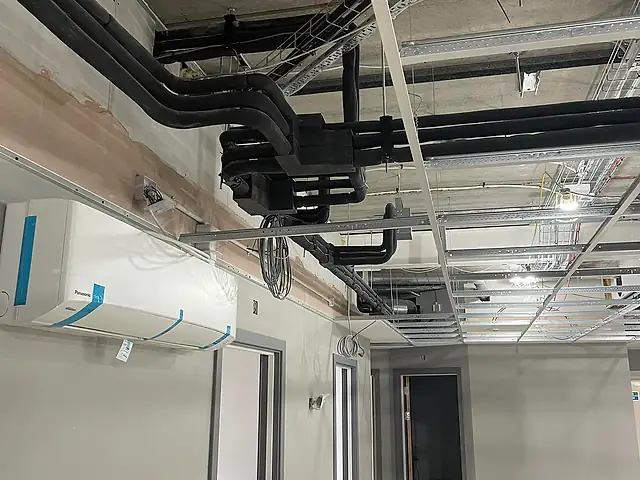

Insulated refrigerant pipework during a commercial fit-out, the kind of commercial air conditioning we fit for businesses in Canary Wharf
Insulated refrigerant pipework during a commercial fit-out. An example of the commercial air conditioning we install for businesses in Canary Wharf.

For businesses

Businesses on the estate and across the Isle of Dogs typically need cooling work during or after fit-out: relocating or adding fan coils to suit new partitions, supplementary DX systems for meeting rooms and kitchens, and resilient cooling for comms rooms. We prepare designs and documentation for landlord approval, coordinate with facilities teams and the landlord's own contractors, and provide planned preventive maintenance so supplementary equipment is checked on a schedule rather than only after it fails.

Commercial air conditioning

Why Is the Comfort Cooling in My E14 Apartment Weak or Noisy?

Concealed systems in Isle of Dogs towers fail quietly. Because the unit sits out of sight above a ceiling, small problems build up for months before anyone notices. In most cases weak cooling, extra noise or a damp patch has a simple, fixable cause inside the apartment, and replacement of the whole unit is rarely the first answer.

Clogged filters in ducted fan coil units

Ducted fan coils draw air through a filter behind the return grille or inside the unit. In a busy apartment these clog quickly with dust, fluff and cooking residue. Airflow drops, rooms at the far end of the ductwork cool poorly and the fan works harder, so it sounds louder. Cleaning or replacing filters every few months and a full service each year keeps airflow balanced between rooms.

Condensate trays and pumps above the ceiling

Cooling removes moisture from the air, which drains from a tray under the coil, often via a small pump, to the building's waste. When the tray fills with sludge or the pump fails, water backs up and eventually overflows. Because the unit is concealed, the first sign is often a stain on the ceiling below.

Early warning signs of a drainage problem

Listen for a pump running continuously or cycling more often than usual, a gurgling sound from the ceiling, or a musty smell when cooling starts. Any of these is worth investigating before water reaches the ceiling or a neighbour's apartment below.

What a drainage repair involves

We open the access hatch, clean the tray and coil, flush the drain line, test the pump and its safety cut-out, and replace the pump if it is failing. Where the original pump is noisy, quieter models can usually be fitted in the same position.

When the building, not the unit, is the issue

Some residential towers run a central system that supplies either heating or cooling to all apartments, switched over by building management at the change of season. If your unit blows tepid air on the first hot week of spring, the building may still be in heating mode. We check this with management before diagnosing a fault, so you are not paying for a repair the unit does not need.

Adding Supplementary Cooling to a Landlord Base-Build System

Office tenants in Canary Wharf rarely start with a blank page. The landlord provides cooling to a standard design, and any addition has to fit around its capacity, zoning and controls. Getting this right early in a fit-out avoids rooms that are always too hot and approval delays later.

Extending landlord plant versus a standalone split

If the base-build system has spare capacity, extra fan coils or VRF indoor units can be connected and controlled alongside the rest of the floor. Where it does not, or where the room needs cooling outside the landlord's operating hours, a standalone split system is more appropriate. Its condenser must go in plant space the landlord allocates, often on a roof or plant floor some distance away, so pipe length and routing through risers are key design points.

Comms rooms that must never overheat

A comms room carrying network switches, servers or trading infrastructure needs cooling every hour of every day. We size units to the real IT load in kW, not just the room size, and design for resilience so a single failure or service visit does not leave the room uncooled.

  • Duty and standby units alternating to share wear
  • High-temperature alarms with remote notification
  • Monitoring through the building management system where allowed
  • Condensate pumps with overflow cut-outs to protect equipment below

Meeting suites, kitchens and high-occupancy zones

Boardrooms and training rooms often hold far more people than the open-plan design assumed, and staff kitchens add heat from appliances. These spaces may need additional terminal units, larger units, or independent controls so they can be cooled quickly before a meeting without overcooling neighbouring areas.

Options for Apartments Built Without Any Cooling

Older residential blocks around the Isle of Dogs, including some converted warehouses and earlier Docklands developments, have no comfort cooling at all. Options are more limited than in a house, because towers rarely allow anything new on the facade, but there are sensible routes to explore with building management.

Starting the conversation with building management

Ask first whether the building has a policy on residents adding cooling, whether there is plant space available, and whether any balconies already have condensers that set a precedent. Put the request in writing with the proposed equipment, its noise level and the installation method. We can prepare these details for you, but approval is entirely the freeholder's or managing agent's decision.

Lower-impact choices when external units are refused

Where no outdoor unit is allowed, through-wall units without a separate condenser are sometimes considered, though they still need two openings in the external wall and usually face the same restrictions. Portable units with an exhaust hose avoid alterations altogether but are much less efficient and noisier. Solar control film, blinds and night-time purge ventilation can also reduce the load significantly.

Local properties

Serviced Apartments, Trading Floors and Wood Wharf Homes

Apartments with concealed comfort cooling

Most newer flats in E14 have a ducted fan coil above the ceiling with grilles in each room and a wall controller. These units are reliable when maintained, but filters clog with dust and fluff within months, coils collect dirt and condensate trays can become slimy. A proper service through the access hatch restores airflow, reduces noise and cuts the risk of leaks onto ceilings below.

Office floors in estate-managed towers

Tenants take floors with the landlord's fan coils or VRF already installed in an open-plan grid. Once partitions go up, cellular offices and meeting rooms can end up too warm or too cold, so fit-out work often involves relocating terminal units, adding new ones from spare capacity, or installing a separate system for rooms the base build cannot handle.

Comms rooms and trading support spaces

Server and comms rooms produce heat continuously and cannot rely on base-build cooling that may be reduced overnight or at weekends. Dedicated split or close-control units, with a second unit for resilience, temperature alarms and, where possible, a link to the building management system, protect equipment around the clock.

Retail and food units in the malls and podiums

Shops, cafés and restaurants in the underground malls and on the ground floors of towers follow the estate's tenant guidance. Cooling is often supplied from landlord systems, with tenants responsible for the terminal units, controls and maintenance within their demise. Food outlets need careful sizing for cooking equipment and close coordination with kitchen extract.

Before you install

Estate Rules and Building Management Expectations in E14

This is general guidance only. Every building, lease and planning situation is different, so we’ll talk through yours at survey stage.

  1. 01Expect to submit risk assessments, method statements, equipment details and insurance documents before any contractor is allowed on site, and to attend a building induction on the first visit.
  2. 02External alterations to residential towers are very rarely possible. Most residential work involves servicing, repairing or upgrading existing concealed systems, or using plant space the building has allocated.
  3. 03Access is through booked loading bays and service lifts. Noisy work such as core drilling may be restricted to specific hours, so programmes need to be agreed with building management well in advance.
  4. 04Office tenants should check the lease to see who owns and maintains supplementary cooling installed during fit-out, and what condition it must be left in at the end of the term.
  5. 05Any connection to landlord chilled water or condenser water systems is usually carried out by, or under the supervision of, the landlord's own contractor. Supplementary systems must be designed with that in mind.
Pricing explained

Why Canary Wharf Quotes Look Different From Suburban Ones

The equipment used in Canary Wharf is not unusual, but the way work is carried out is. Quotes here include time for approvals, inductions, booked access and sometimes out-of-hours working, alongside the usual equipment, labour and materials. We itemise each part so facilities managers and residents can see exactly what they are paying for, without publishing fixed prices that would not reflect individual buildings.

Approvals, inductions and permits to work

Preparing risk assessments, method statements and equipment submissions, attending inductions and obtaining permits takes time before any tools come out. The more complex the building's process, the more preparation the quote needs to include.

Restricted access and out-of-hours windows

Booked lift slots, escorted access and noisy work limited to early mornings, evenings or weekends all affect labour time. Office fit-outs often take place outside trading hours, which is reflected in how the job is programmed and priced.

Distance to allocated plant space

When a supplementary condenser must sit on a roof or plant floor well away from the room it serves, refrigerant pipework, cabling and fire-stopping through risers add materials and labour compared with a short domestic run.

Condition of concealed residential units

Servicing a ducted fan coil with a clean drain and good access is straightforward. Units with failed pumps, corroded trays, restricted hatches or years without maintenance need more time and parts, which we confirm after inspection.

Step by step

From Building Manager Approval to Commissioning on the Estate

  1. Clarify the building process

    We confirm the building's contractor requirements, how to book access, and what documents management needs. For residents, we check where the service hatch is and whether the building is in heating or cooling mode.

  2. Submit for approval

    We prepare risk assessments, method statements, equipment data and, for fit-outs, drawings for the landlord's technical team. Work is scheduled only once written approval and any permits are in place.

  3. Carry out the work on site

    We attend at the booked slot, use the agreed loading bay and lift, protect finishes, and complete servicing, repairs or installation with minimal disruption to residents and neighbouring tenants.

  4. Commission, record and plan ahead

    Systems are tested, drainage confirmed and controls checked. We provide service records for management and suggest a maintenance schedule, particularly for comms rooms where planned visits reduce the risk of unexpected failures.

FAQs

Answers for Canary Wharf Residents and Facilities Managers

Can you service the concealed comfort cooling in my Canary Wharf apartment?

Yes. We clean or replace filters, clean the coil and condensate tray, test the drain pump, check fan operation and test the controls. We need access to the ceiling hatch, and most buildings require contractors to be booked through the concierge or management team, so it helps to check their process first. Annual servicing keeps concealed units quieter and reduces leak risks.

Water is dripping from the ceiling near my apartment's air conditioning. What should I do?

Switch the cooling off at the controller, place a container under the drip and report it to building management, especially if it may affect a neighbour below. The most likely causes are a blocked condensate tray or drain line, or a failed condensate pump. These are usually repairable once the unit is opened, cleaned and tested through the access hatch.

Can an office tenant add cooling for a meeting room or comms room?

Usually, yes, with the landlord's approval. Depending on spare capacity, the solution may be extra terminal units on the base-build system or a standalone split with a condenser in allocated plant space. We prepare the technical submission and coordinate with the landlord's contractor where connections to central systems are involved.

Why does my apartment's cooling blow warm air in early spring?

Some residential towers run central systems that provide either heating or cooling to every apartment and are switched over seasonally by building management. If a warm spell arrives before the changeover, units can only deliver heat. Check with management first; if the building is already in cooling mode, a fault such as a blocked filter or valve problem is more likely.

Why do works in Canary Wharf buildings involve so much paperwork?

Large managed buildings have many occupants, shared fire and life safety systems and high-value tenants, so management controls who works on site and how. Risk assessments, method statements and permits protect occupants and the building fabric. Allowing a week or two for approval before the planned date avoids frustrating delays, especially for fit-out work.

Do comms rooms on the estate need their own maintenance plan?

Strongly advisable. Comms room cooling runs continuously, so filters clog and components wear faster than in office comfort systems. Planned visits, usually quarterly or every six months depending on load, allow cleaning, refrigerant checks, alarm testing and early detection of failing fans or pumps, keeping equipment protected without emergency call-outs.

Free quote

Send Us the Details of Your Canary Wharf Apartment or Floor

Tell us about your home or business in Canary Wharf and what you’d like to achieve, whether that’s cooling, heating or both. We’ll come back with advice and next steps.

  • Survey-led advice: recommendations based on your rooms, layout and how you use the space.
  • Clear written quotation: what’s included, the equipment proposed and the next steps.
  • No obligation: ask questions and take your time to decide.
  • CoverageHomes & businesses across Greater London

Request your free quote

A few details help us understand your property and come back with useful advice.

Fields marked * are required. We only use your details to respond to this enquiry.
Get a Free Quote

