
Central London

Camden Air Conditioning Installation & Repairs

Camden stretches from the rail termini and offices on the Euston Road up through Camden Town and Kentish Town to the hilltop streets of Hampstead and Highgate. We install, service and repair air conditioning for homes and businesses throughout the borough.

  • NW1
  • NW3
  • NW5
  • NW6
  • WC1

Free quote in Camden

Homes and businesses: tell us what you need and we’ll be in touch.

From Euston Road Offices to Hampstead Villas in a Single Borough

Few boroughs change character as quickly as Camden does from south to north. The southern edge is part of central London, with Holborn's offices, Bloomsbury's universities and the King's Cross, St Pancras and Euston stations. Camden Town brings markets, music venues and a busy high street. Beyond lie the Victorian terraces of Kentish Town, Gospel Oak and West Hampstead, then the larger period houses of Belsize Park, Primrose Hill and Hampstead.

Much of the housing is Victorian terraces converted into two or three flats, alongside council estates, mansion blocks, mews houses and the new apartment buildings around King's Cross. Loft conversions and glazed rear extensions are very common, and they are almost always the first rooms that people want to cool. Basement flats tend to stay cooler but can feel close and humid, where the dehumidifying effect of a split system is welcome.

Commercial life is equally broad: tech, media and life-science firms around King's Cross, hospitals and university buildings near Euston, independent shops and cafes in Camden Town, and pubs and venues that fill to capacity on summer evenings. Our work here therefore ranges from a single wall-mounted unit in a converted flat to multi-zone systems for studios, clinics and hospitality premises.

Our services

Cooling Camden Flats, Studios, Venues and Clinics

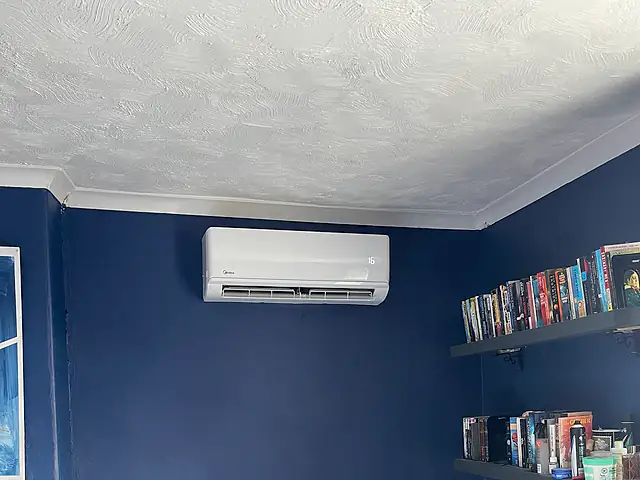
A split air conditioning unit in a home office, the kind of air conditioning we fit for homes in Camden
A split air conditioning unit in a home office. An example of the air conditioning we install for homes in Camden.

For homes

Camden homeowners and tenants most often ask about cooling bedrooms, top-floor flats, loft conversions and home offices. A single wall-mounted split suits one room; a multi-split serves several rooms from one condenser, which helps where a shared garden or flat roof has limited space. Where a renovation opens ceilings, a ducted unit can serve two or three bedrooms invisibly. As heat pumps, these systems can also take on part of the heating load, which many residents find useful alongside an older gas boiler.

Domestic air conditioning
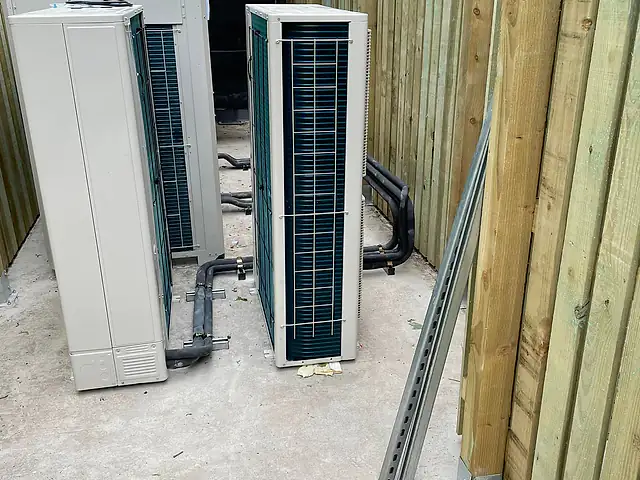

Large commercial outdoor air conditioning units in a plant area, the kind of commercial air conditioning we fit for businesses in Camden
Large commercial outdoor air conditioning units in a plant area. An example of the commercial air conditioning we install for businesses in Camden.

For businesses

Businesses across Camden, from creative studios near King's Cross to independent shops, cafes, dental and medical practices and live music venues, rely on comfortable indoor conditions. We provide installation, servicing and repairs for split, multi-split, cassette, ducted and VRF systems, plus dedicated cooling for IT rooms. Many premises sit beneath flats in mixed-use buildings, so condenser noise and working hours are planned with residents in mind from the start.

Commercial air conditioning

Cooling the Hottest Rooms in Kentish Town and Gospel Oak Terraces

The typical terrace in the middle of the borough has a slate roof, a back addition with a flat roof, and often a loft conversion with a rear dormer. These features create predictable hot spots, but they also offer practical places for pipework and outdoor units that keep the street-facing elevation untouched.

Loft rooms under slate and dormer windows

Loft bedrooms absorb heat through the roof all day and release it overnight, so they are often several degrees warmer than the floors below. A wall-mounted split sized for the room's roof area and glazing usually solves the problem. The pipe route can often run through the eaves storage, then out through the rear dormer cheek or down the back wall to a condenser on the back addition roof.

Condensate drainage from a loft unit

Condensate needs a continuous fall to a suitable drain, such as a soil stack or hopper. Where that is not possible, a small condensate pump is fitted inside the trunking or the unit. Pump noise is low, but its position should be chosen with sleeping in mind.

Glazed kitchen extensions

Side-return and rear extensions with large rooflights and folding doors can become uncomfortably hot by mid-afternoon. These spaces usually need more capacity than their floor area suggests. A high-wall unit or a ceiling cassette, if there is a void, can cool the extension, while external shading on the rooflight reduces the load and may allow a smaller unit.

Flats sharing one building

When a house is split into flats, each owner may want cooling, but the rear wall and flat roofs are shared. Agreeing a plan with all leaseholders, rather than adding units one at a time, avoids a cluttered elevation and makes freeholder approval more straightforward.

Agreeing positions between neighbours

A simple drawing showing where each flat's condenser and pipework would go, and how noise is managed, helps all owners agree. It also gives the freeholder a single proposal to approve, which tends to be quicker than separate applications.

Is a Ducted System Possible in a Hampstead or Belsize Park House?

Often, yes, particularly when a house is being refurbished. Large period houses in the north of the borough have generous ceiling heights and, frequently, basements or lofts that can house equipment. The constraints are mostly about consent, condenser noise in quiet streets and fitting ductwork around original features.

Planning ductwork around period ceilings

Ducted units are usually placed in lofts, above bathroom ceilings or in bulkheads along corridors, with short duct runs to bedrooms. Ornate ceilings and cornices in principal rooms are best left untouched, so grilles are often set high in walls or in joinery instead. A ducted design works best when decided before plastering and decoration, so services can be planned with the builder.

Condenser positions on hillside plots

Gardens in Hampstead and Belsize Park are often sloping and overlooked, and evenings are very quiet. Condensers should be low-noise models placed against garden walls or in screened enclosures, with clear airflow. Some houses can use a basement lightwell or a flat roof concealed behind a parapet instead.

  • Check distance to neighbouring bedroom windows
  • Use anti-vibration feet or brackets
  • Avoid tight corners that amplify sound
  • Allow service access around the unit

Heating with the same system

Many owners now treat a ducted or multi-split heat pump as a way to reduce reliance on an old boiler. In that case the system should be selected on its heating performance and SCOP, and controls arranged so the heat pump and boiler do not work against each other.

Local properties

Converted Terraces, Lofts, Rail-Side Offices and Camden Town Venues

Victorian houses split into flats

Kentish Town, Camden Town and West Hampstead have many houses divided into two or three flats with a shared freehold or a managing agent. One split or a small multi-split per flat is typical, with condensers on rear walls, flat roofs over back additions or garden positions agreed with the other owners.

Loft conversions and glazed rear extensions

Rooms under slate roofs and kitchen extensions with large rooflights overheat early in the day. A wall-mounted heat pump gives targeted cooling and useful extra heating in winter. Pipework is often routed through the loft eaves or down the rear elevation to a condenser on the extension roof or at ground level.

King's Cross and Euston workplaces

Newer office and lab buildings around the stations generally have central systems, with tenants adding supplementary cooling for meeting rooms, studios and comms rooms. Older buildings nearby may need standalone cassettes or ducted units, and university or healthcare premises often have their own technical standards.

Pubs, venues and restaurants

Camden Town's venues get very hot when full. Systems are sized for peak occupancy and lighting loads, with condensers placed carefully because many venues have flats directly above or behind them and operate late into the night.

Before you install

What Camden Council and Your Freeholder May Want to See

This is general guidance only. Every building, lease and planning situation is different, so we’ll talk through yours at survey stage.

  1. 01Camden has many conservation areas, including large parts of Hampstead, Primrose Hill, Belsize Park, Bloomsbury and Kentish Town. External units visible from the street are more likely to need planning permission from Camden Council, so it makes sense to check before committing.
  2. 02Converted houses usually have shared freeholds or managing agents, and leases commonly require written consent before equipment is fixed to external walls, flat roofs or shared gardens.
  3. 03Hampstead's steep, narrow streets and the busy roads around Camden Town make parking and unloading difficult. Bay suspensions or early deliveries can save time on installation day.
  4. 04Rear gardens in terraced streets are close together and sound carries. Quiet condensers on anti-vibration mounts, placed away from neighbouring bedroom windows, reduce the risk of complaints.
  5. 05Applications for external plant may be assessed for noise impact, so having manufacturer sound data and distances to the nearest windows ready can help any planning submission.
Pricing explained

Practical Factors Behind a Camden Air Conditioning Quote

Most quotes in the borough are shaped by the building type rather than the postcode. A loft unit in a Kentish Town terrace and a ducted system in a Hampstead house involve very different amounts of labour, access and coordination. Quotes are built up from equipment, materials, labour, commissioning and any documentation, and we explain each element so you know what you are paying for.

How many Camden rooms, and which system

A single wall-mounted split is the most economical option. Multi-splits, ducted units and systems designed to provide primary heating cost more because of larger equipment, more pipework and longer installation time.

Pipe route through the house

A unit on the back wall of a ground-floor room has a short, simple route. A loft unit with pipework running down four storeys, or a ducted system threaded between floors, takes longer and uses more materials.

Condenser location and access

Ground-level positions are quickest. Flat roofs over back additions need safe access, and sometimes scaffolding or a tower. Gardens reached only through the house require extra care to protect floors and walls.

Consents and coordination

Freeholder consent, planning drawings for conservation areas and coordinating with builders during a refurbishment all add time. Building that into the plan early keeps costs predictable.

Step by step

Our Four-Step Route From Kentish Town Survey to Switch-On

  1. Home or site survey

    We look at each room's orientation, glazing and roof exposure, find the shortest discreet pipe route, and check rear walls, flat roofs and gardens for condenser positions. We also note parking and access, which can be tight in Hampstead and Camden Town.

  2. Proposal and consent support

    Our written proposal sets out equipment, positions and pipe routes. If your freeholder, fellow leaseholders or Camden Council need details, we supply drawings and noise data. Work is booked once any approvals are confirmed.

  3. Tidy, efficient installation

    Floors and stairs are protected, core holes are drilled with dust extraction, and pipework is installed in neat trunking or concealed routes. The system is pressure tested and evacuated before refrigerant is released.

  4. Commissioning and ongoing care

    We check cooling and heating performance and drainage, set up controls or app connection, and show you how to clean the filters. An annual service keeps efficiency up and helps catch small faults before summer.

FAQs

Common Questions From Camden Leaseholders and Landlords

Can I fit air conditioning in a Camden flat without changing the front of the building?

In most cases, yes. Outdoor units can often go at the rear, on a flat roof over the back addition or in a lightwell, with pipework run internally. This keeps the street elevation unchanged, which matters in conservation areas. You may still need freeholder consent and, depending on location and visibility, planning permission from Camden Council.

Will a condenser be too noisy for my neighbours in Kentish Town?

Modern inverter outdoor units are much quieter than older ones, but position still matters in tight terraces. We assess distances to neighbouring windows, avoid reflective corners and use anti-vibration mounts. Where planning permission is needed, noise is often considered, so selecting a quiet unit and a sensible location from the start helps.

Is air conditioning worthwhile for a loft conversion?

Loft rooms are usually the hottest in the house because they take heat from the roof all day. A wall-mounted split heat pump cools them effectively in summer and adds heating in winter. Pipework can usually run through the eaves or down the rear wall to a condenser on a flat roof or at ground level.

Do all the leaseholders in my building need to agree?

Your lease will set out whose consent is needed, usually the freeholder's or managing agent's. In share-of-freehold buildings, that often means the other owners in practice. Even where formal agreement is not required from everyone, discussing plans with neighbours early, and showing where equipment will go, tends to make approval smoother and avoids later disputes.

Can you cool a busy venue or restaurant in Camden Town?

Yes. Venues and restaurants need systems sized for peak occupancy, lighting and kitchen heat, rather than floor area alone. Cassettes or ducted units are common, and condensers must be placed with residents above or behind in mind. Servicing is best scheduled outside trading hours, and filters in hospitality settings usually need cleaning more often.

Can air conditioning replace my boiler in a Camden house?

Air-to-air heat pumps can provide much of a home's heating, and some owners use them as the main source in certain rooms. They do not heat hot water, so a boiler, cylinder or water heat pump is still needed for that. If heating matters, we size and select units on heating performance at low outdoor temperatures.

Free quote

Arrange a Visit Anywhere From NW1 to NW6

Tell us about your home or business in Camden and what you’d like to achieve, whether that’s cooling, heating or both. We’ll come back with advice and next steps.

  • Survey-led advice: recommendations based on your rooms, layout and how you use the space.
  • Clear written quotation: what’s included, the equipment proposed and the next steps.
  • No obligation: ask questions and take your time to decide.
  • CoverageHomes & businesses across Greater London

Request your free quote

A few details help us understand your property and come back with useful advice.

Fields marked * are required. We only use your details to respond to this enquiry.
Get a Free Quote

