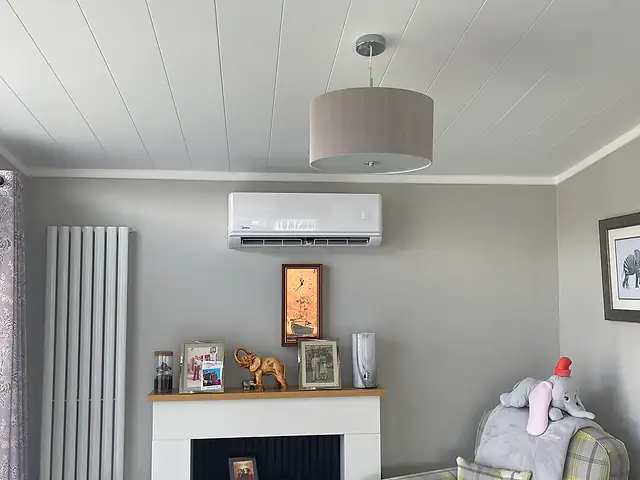
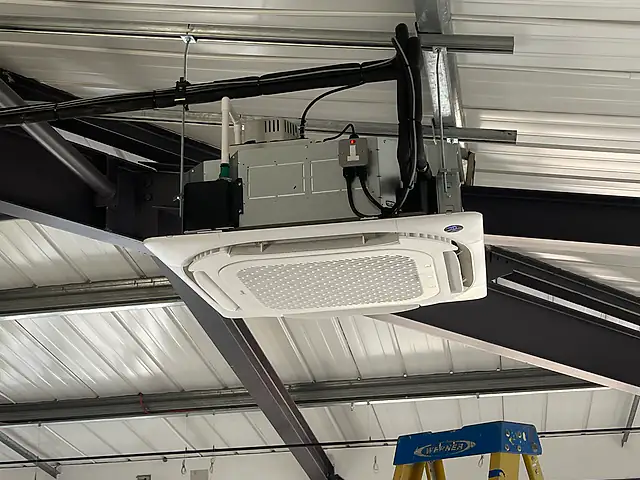
Bloomsbury is laid out more regularly than most of central London: a grid of Georgian terraces built around garden squares such as Bedford Square, Russell Square, Gordon Square and Tavistock Square, with the British Museum, Senate House and the main UCL campus at its centre. Most houses follow the same pattern of four or five storeys above a front basement area, a rear closet wing and a shallow roof hidden behind a parapet. That repeated form is what decides where cooling equipment can realistically go.
Very few of these buildings are still single houses. Over the past century they have become university departments, publishers, charities, small hotels, embassies, consulting rooms and flats, and each conversion has left partitions, lowered ceilings and redundant service risers behind. A good survey starts by working out which of those historic routes can carry refrigerant pipework, cabling and condensate, because cutting fresh holes through listed fabric should be the last resort rather than the first.
Not everything is Georgian. Red-brick mansion blocks line streets towards Holborn and Euston, the stepped and heavily glazed Brunswick Centre sits near Russell Square, and hotels and student halls cluster around the stations. Each building type has a different decision-maker, whether that is Camden's conservation officers, an estate landlord, a residents' association, a university estates team or a hotel operator, and knowing whose approval matters comes before choosing any equipment.