Core services

Planned Air Conditioning Maintenance for London

Maintenance is the long-term plan behind dependable air conditioning: a register of every unit, a visit schedule matched to how hard each one works, simple care between visits and records that build into a useful history. Instead of reacting to failures, you know what is due, what is ageing and what needs budgeting for.

  • Visit frequency set by how each unit is used
  • Asset registers and leak-check records kept up to date
  • One programme for single homes or multi-site estates

Discuss a Maintenance Plan

Tell us about your property and we’ll come back with advice and a written quote.

Maintenance as a Programme Rather Than a Single Visit

A one-off service cleans and checks a system on a given day. A planned preventative maintenance (PPM) programme is the framework around those visits: it records every indoor and outdoor unit, sets out how often each needs attention, defines what happens at each visit, and keeps the paperwork in one place. The difference matters most when you have more than one or two units, when equipment is critical to the business, or when refrigerant charges bring legal record-keeping duties.

We arrange maintenance programmes across Greater London for homeowners with multi-split or several separate systems, landlords and block managers with portfolios of flats, and businesses from a single café to offices, clinics and retail chains with premises in different boroughs. Each programme is shaped around the equipment, its operating hours and what you need most, whether that is keeping a comms room cool around the clock, avoiding disruption during trading or simply never having to remember to book a visit again.

Programmes are written down and agreed before they start, so everyone knows what is included, what is charged separately and how reports will reach the right person. They are reviewed as your buildings, tenants and equipment change.

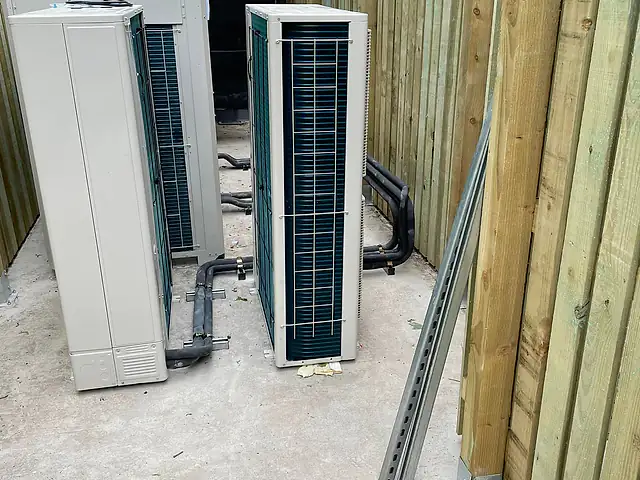
Air Conditioning Maintenance in London: large commercial outdoor air conditioning units in a plant areaAir Conditioning Maintenance

Large commercial outdoor air conditioning units in a plant area, a typical setup for air conditioning maintenance in London.

The Building Blocks of a Planned Preventative Maintenance Plan

Every programme starts with an asset survey. Each indoor and outdoor unit is recorded with its location, make, model, serial number, refrigerant type and factory or additional charge, along with installation date where known and general condition. Access notes, such as a roof hatch, a locked plant room or a ceiling void above a stockroom, are added too. This register becomes the foundation for the schedule and shows at a glance which equipment works hardest and which is nearing the end of its useful life.

From the register, a visit schedule is agreed for each asset rather than for the building as a whole. A guest bedroom unit used a few weeks a year may need a single annual visit, while a cassette over a restaurant pass or a unit cooling a server cabinet may justify quarterly attention. Each visit follows a consistent checklist so that readings such as temperature difference across the coil, operating pressures and current draw can be compared from one visit to the next.

Records tie it all together. After each visit the register is updated with work done, measurements, leak-check results where required and recommendations graded by urgency. Over a couple of years this history reveals patterns, such as pressures drifting on one condenser or a drain that blocks every August, and supports realistic budgeting for replacements rather than emergency spending when a compressor finally fails.

Benefits & applications

Why Facilities Teams and Landlords Choose Scheduled Upkeep

Predictable upkeep

Visits are booked to a set schedule per unit, so equipment is checked at the right intervals without anyone having to remember. That consistency is especially valuable for busy households, small businesses without a facilities team and stretched building managers.

Budgets you can plan

A clear view of equipment age, condition and repair history lets you forecast replacements and larger repairs over several years, rather than finding money at short notice when a system fails during the hottest week.

Compliance records in order

Where equipment falls within F-Gas leak-check requirements, scheduled checks and logged results keep your records complete and easy to produce for inspections, insurers, landlords or audits.

Faults caught while they are small

Comparing readings visit to visit reveals slow refrigerant loss, failing fan motors, weakening capacitors or partially blocked drains before they cause a breakdown or a water leak through a ceiling.

One standard across every site

Multi-site businesses get the same checklist, reporting format and quality of care at every location, making it far easier to compare performance, spot problem units and manage costs across an estate.

Less disruption to daily life

Planned visits can be fitted around opening hours, quiet periods or tenant availability. That is far less disruptive than a reactive call-out on a busy Saturday or with customers already sweltering.

How Often Should Air Conditioning Be Maintained?

There is no single correct interval. Frequency depends on running hours, how dusty or greasy the air is, how critical the space is, and whether refrigerant charge triggers mandatory leak checks. The schedule is set per unit after the survey and adjusted once real data comes in.

Light domestic use

Bedroom and living room units used mainly in summer, with occasional heating, usually need one full engineer visit a year, ideally in spring before the first hot spell. Between visits, the household cleans the washable filters every few weeks during heavy use. Homes near busy roads, with pets or with ongoing building work nearby may need filters cleaned more often, and a mid-season filter check can be added cheaply if dust builds up quickly.

Units used mainly for winter heating

Where a reverse-cycle unit is the main heat source in an extension or loft room, it may run more hours in winter than summer. In that case an autumn visit often makes more sense, checking defrost operation, outdoor coil condition and condensate drainage before cold weather arrives.

Offices and general commercial space

Offices running units through a working week typically have two visits a year, often timed for spring and autumn so the system is checked before the cooling season and again before heating takes over. Open-plan floors with many cassettes may combine a full service at one visit with a lighter filter and drain inspection at the other. Meeting rooms used intensively and reception areas near entrance doors can be flagged for closer attention on the register.

High-load and critical environments

Commercial kitchens, gyms, salons, nail bars and dusty retail stockrooms load filters and coils far faster than offices, so quarterly visits are common. Server rooms and comms cupboards are different again: the equipment runs every hour of the year, and a failure can take systems offline. Quarterly checks, alarm testing and confirmation that any standby unit takes over correctly are typical inclusions for these spaces.

  • Kitchens and bakeries: grease on coils and fan blades
  • Gyms and studios: high humidity and heavy condensate flow
  • Salons: airborne product residue and hair on filters
  • Comms rooms: continuous running and duty/standby changeover

What a Typical Maintenance Schedule Covers at Each Visit

A good schedule is specific. Rather than a vague promise to look at the system, it lists the tasks for each type of equipment so that every engineer does the same thing, results can be compared over time, and you can see exactly what you are paying for.

Indoor unit tasks

Filters are removed, cleaned or replaced and refitted. The coil is inspected and cleaned where needed, the fan and casing checked for dirt and wear, and the condensate tray and drain flushed and tested. Any condensate pump is run and its alarm or overflow switch tested. Supply air temperature and temperature difference across the coil are recorded, and controls and remote handsets are checked for correct operation and sensible set points.

Outdoor unit and refrigerant circuit tasks

The condenser coil is inspected and cleaned of leaves, litter and pollution grime, fan blades and guards are checked, and anti-vibration mounts and brackets inspected for corrosion or looseness. Operating pressures and temperatures are recorded and compared with previous readings, pipe insulation and trunking are checked for UV damage, and electrical connections, isolators and current draw are tested. Where F-Gas leak checks are due, they are carried out and logged.

Why comparing readings matters

A single set of pressures only shows how a system performs today. Comparing them with the last three visits can reveal a slow refrigerant leak, a fouling coil or a weakening compressor months before the unit stops cooling, which turns an emergency into a planned repair.

Reporting after every visit

Each visit produces a short report per asset: tasks completed, readings taken, faults found and recommendations ranked by priority, such as immediate, at next visit or plan for budget. Photos of defects help non-technical managers understand what has been found. For multi-site customers, the same format at every site makes it easy to compare condition and spot units that cost more to keep running than they are worth.

Record Keeping and F-Gas Leak-Check Logs Explained

In the UK, operators of equipment containing fluorinated refrigerants above certain thresholds have legal duties around leak checking and record keeping. The following is general guidance only; it is always worth confirming your own obligations with a certified engineer or the official guidance.

When leak checks may be required

Leak-check requirements are based on the refrigerant charge expressed in tonnes of CO2 equivalent, which depends on both the amount of refrigerant and its global warming potential. Many single small domestic splits fall below the threshold, but larger multi-splits, VRF and VRV systems and commercial condensing units often do not. Above the threshold, checks must be carried out at set intervals by a person holding the appropriate F-Gas certification, with the interval reducing as the charge increases or if automatic leak detection is not fitted.

What the records should contain

Records typically show the equipment identity, refrigerant type and quantity, dates and results of leak checks, any leaks found and repaired, refrigerant added or recovered, and who carried out the work. Keeping these in the asset register alongside service history means everything is in one place if an auditor, insurer, landlord or prospective buyer asks to see it.

Records when equipment changes hands

When a business moves out of leased premises or a landlord sells a flat, a complete maintenance and leak-check history is a useful document to pass on. It helps the next operator understand the equipment and meet their own obligations without starting from scratch.

Digital or paper logs

Some customers prefer a shared spreadsheet or digital log, others a printed file kept on site. The format matters less than consistency. What counts is that every visit is recorded in the same way and the records are easy to find when needed.

Managing Multi-Site Estates and Landlord Portfolios

Maintenance becomes far more valuable once equipment is spread across several buildings. Without a programme, visits are booked ad hoc, standards vary and nobody has a clear view of the estate. A single plan fixes that.

Retail, hospitality and office estates

Businesses with sites across London benefit from one register covering every location, the same checklist at each and visits grouped geographically to keep travel efficient. Visits can be timed for before opening, after closing or on quieter weekdays depending on the site. Head office receives a consolidated view while individual site managers see the reports relevant to their premises, which helps with prioritising spending across the estate.

Landlords and block managers

Landlords with several rented flats, and managing agents responsible for communal systems, need visits coordinated with tenants and records kept for each property file. A programme can include tenant notification, a simple filter-cleaning guide to leave in each flat and a note of any damage or misuse found. This makes it easier to show that equipment provided with a tenancy has been properly looked after.

  • Advance notice to tenants with a clear visit window
  • One report per property for the tenancy file
  • Simple filter guidance left with each household
Suitable properties

Portfolios and Premises That Gain Most from a PPM Plan

Larger homes with several units

Houses with a multi-split or several separate systems benefit from having every unit on one schedule and one record. Maintenance can include reminders and simple guidance for household filter cleaning, keeping a whole-home system working evenly rather than one room at a time.

Rented flats and residential blocks

Landlords and managing agents can keep each flat or communal system on a single register, with visits coordinated with tenants and records ready for each property file and for any handover when a flat is sold or re-let.

Offices and managed buildings

Facilities teams need dependable climate control and tidy paperwork. A programme covering cassettes, ducted units, VRF or VRV systems and comms room cooling keeps the whole building visible, with reports that are easy to share with landlords and stakeholders.

Multi-site retail and hospitality

Shops, cafés, restaurants and salons in different boroughs can be maintained to one standard, with visits fitted around trading hours and kitchen services, and consistent reports that make it simple to compare sites and plan spending.

Pricing explained

What Shapes the Cost of an Air Conditioning Maintenance Plan

Maintenance programmes are priced around the equipment and the effort needed to look after it properly. A quote usually sets out a cost per visit or per year for the scheduled work, with repairs and parts handled separately once you have approved them. These are the main factors that influence it.

Number and type of units

A single wall-mounted split takes far less time than a VRF system with dozens of cassettes and ducted units. The register shows exactly what is covered, and each type of equipment has its own task list and time allowance, so the quote reflects the real workload.

Visit frequency per asset

Units on quarterly visits naturally cost more to maintain each year than those on an annual schedule. Setting frequency per unit, rather than applying the most demanding interval to everything, keeps a programme proportionate to how each space is actually used.

Access and working conditions

Roof plant needing safe access equipment, cassettes above high-level shelving, ceiling voids behind locked panels or sites that require escorts and permits all add time. Out-of-hours visits to avoid trading disruption can also affect the cost.

Leak-check and record-keeping requirements

Systems with larger refrigerant charges may need leak checks at set intervals and detailed logs. Where these obligations apply, the time to carry out checks and maintain records is built into the programme rather than treated as an extra.

Condition of the equipment at the start

Older or neglected systems may need deep cleaning, drain clearance or remedial repairs before routine maintenance makes sense. The initial survey highlights this, so any catch-up work is quoted separately and clearly.

Geography of a multi-site estate

Sites spread across outer and central London involve more travel than several units in one building. Grouping nearby sites into the same visit days helps keep this efficient and is reflected in how a multi-site quote is structured.

Step by step

Setting Up Your Maintenance Programme, Step by Step

  1. Asset survey and register

    An engineer records every unit on site, including make, model, serial number, location, refrigerant type and charge, condition and access arrangements such as keys, roof permits or escorts. This becomes your asset register.

  2. Agreeing the programme

    Using the survey, we agree visit frequency for each asset, the tasks covered, filter care between visits, how leak checks fit in and how reports and visit reminders should be delivered.

  3. Scheduled visits

    Engineers attend at the agreed intervals to clean, inspect and test equipment, carry out any leak checks that are due, record readings against previous visits and note anything that needs repair or monitoring.

  4. Reports and register updates

    After each visit the register and logs are updated, with recommendations ranked by priority so you can approve urgent work quickly and plan the rest at a sensible time.

  5. Annual programme review

    Once a year we look at trends, ageing equipment, repeat faults and any changes in how spaces are used, then adjust visit frequencies or tasks so the programme stays proportionate.

London know-how

Access, Timing and Logistics Behind London Maintenance Visits

In London, access often shapes a maintenance programme as much as the equipment does. Condensers sit on high roofs reached by fixed ladders, in basement light wells, on balconies of occupied flats or behind locked service yards shared with other tenants. Recording keys, permits, roof access procedures and any building rules on contractor hours in the register means engineers spend their time on the equipment rather than waiting at reception.

For multi-site customers, travel across the capital is a genuine planning factor. Grouping visits by area, avoiding peak delivery times on busy high streets and allowing for the Congestion Charge and ULEZ zones all help keep visits efficient. In shopping centres and managed office buildings, permits to work, method statements and induction requirements are best arranged once and noted for future visits rather than rediscovered each time.

London air also affects maintenance itself. Outdoor coils near main roads, railway lines and construction sites collect grime and particulates faster than in suburban gardens, and leaves from street trees clog condensers in autumn. Units close to neighbours' windows are worth checking for noise and vibration during routine visits, as worn mounts and loose panels can turn a quiet unit into a source of complaints.

This is general guidance rather than legal advice. Requirements vary by building, lease and local authority.

FAQs

Planned Maintenance Questions from London Owners and Managers

What is included in a planned maintenance programme?

A typical programme includes an initial asset survey, scheduled visits at intervals agreed for each unit, a defined task list for indoor and outdoor equipment, arrangements for filter cleaning between visits, any F-Gas leak checks that apply, and an updated register and report after every visit. Repairs and replacement parts are usually quoted separately for your approval. The exact scope is written down and agreed before the programme begins.

How is maintenance different from a one-off service?

A service is a single visit focused on cleaning, inspecting and testing. Maintenance is the ongoing framework around those visits: the asset register, a schedule matched to each unit, filter care in between, compliance tracking and longer-term planning. A one-off service suits a single unit used occasionally, while a programme suits anyone with several units, critical spaces or record-keeping duties.

How often will engineers visit our premises?

It depends on the equipment and how it is used. Lightly used domestic units often need one visit a year, offices commonly have two, and kitchens, gyms, salons and comms rooms may justify quarterly visits because filters and coils load up quickly or the space is critical. Frequency is set per unit after the asset survey and can be adjusted as the records build up.

Do our systems need F-Gas leak checks?

It depends on the refrigerant type and quantity, expressed in tonnes of CO2 equivalent. Many single small domestic units fall below the threshold, while larger multi-splits and VRF or VRV systems often exceed it. Above the threshold, checks must be carried out at set intervals by a certified person and records kept. An asset survey identifies which of your units are likely to be affected.

What should we do between engineer visits?

Clean washable filters every few weeks during heavy use, keep outdoor units clear of leaves, bins and stored items, and avoid blocking indoor unit airflow with furniture or shelving. Watch for warning signs such as water drips, ice on pipes, unusual noises or rooms that no longer reach temperature, and report them promptly rather than waiting for the next scheduled visit.

Can one programme cover several sites?

Yes. Multi-site programmes use the same checklist and reporting format at every location, so you can compare equipment condition across your estate. Visits can be grouped by area to keep travel efficient and timed around each site's opening hours. Reports can go to a single head office contact, to individual site managers or both, depending on how your business makes decisions.

Who cleans the filters between scheduled visits?

That depends on what suits you. In homes and smaller premises we can show a household member or staff member how to remove, wash and refit filters safely. Where units are high up, above stock or in tenanted flats, short interim engineer visits can be built into the programme instead. Either way the routine is written into the plan so it does not get forgotten.

Can you take on a system someone else installed?

Usually, yes. The asset survey records the existing equipment, its condition and any missing information such as refrigerant charge or installation date. If previous service or leak-check records are available, they are added to the register so the history continues. Where a system has been neglected, any catch-up cleaning or repairs are identified and quoted separately before routine maintenance begins.

How do landlords show equipment has been looked after?

A maintenance programme produces a dated report for each property after every visit, showing tasks completed, readings and any issues found. Keeping these in the property file, together with leak-check records where applicable, gives a clear history to share with tenants, managing agents or buyers. It also helps when deciding whether a fault was caused by wear or by misuse.

Free quote

Set up planned maintenance for your premises

Share a few details about your property and what you need, and we’ll respond with advice and the next steps for your air conditioning maintenance.

  • Survey-led advice: recommendations based on your rooms, layout and how you use the space.
  • Clear written quotation: what’s included, the equipment proposed and the next steps.
  • No obligation: ask questions and take your time to decide.
  • CoverageHomes & businesses across Greater London

Discuss a Maintenance Plan

A few details help us understand your property and come back with useful advice.

Fields marked * are required. We only use your details to respond to this enquiry.
Get a Free Quote