
East London

Waltham Forest Air Conditioning Specialists

Waltham Forest stretches from Leyton's Edwardian streets to Chingford's forest edge, with Walthamstow's Warner flats, a busy market and a growing cluster of workshops in between. We install, service and repair air conditioning for homes and businesses throughout the borough, designing around shared walls, lofts and local access.

  • E4
  • E10
  • E11
  • E17

Free quote in Waltham Forest

Homes and businesses: tell us what you need and we’ll be in touch.

Warner Flats, Edwardian Terraces and Chingford Semis

The most distinctive local challenge is the Warner flat. Built in large numbers in Walthamstow and Leyton in the late Victorian and Edwardian period, these look like terraced houses but contain two separate flats, one up and one down, each with its own front door. The upper flat has the hottest rooms but usually no garden, while the lower flat owns the outdoor space. Any condenser position therefore involves both owners and often a freeholder, and the design must keep equipment away from the downstairs windows and garden.

Walthamstow, Leyton and Leytonstone are otherwise dominated by two-storey terraces with rear outriggers, many with loft conversions added. Walthamstow Village, around St Mary's church and the old almshouses, is a conservation area with a strong historic character, and there are others across the borough. North of the North Circular, Chingford, Highams Park and Hale End have more interwar semis and detached houses with larger gardens backing onto open land and Epping Forest.

The borough also has a busy business mix: cafés and shops along Walthamstow's long market street, Hoe Street and Leytonstone High Road, and makers, breweries and small manufacturers in light-industrial units around Blackhorse Lane. Newer apartment blocks near Walthamstow Central, Blackhorse Road and Leyton stations add managed buildings with balcony rules. Low-traffic schemes in parts of Walthamstow mean the route a van takes to your door needs planning in advance.

Our services

Cooling for Walthamstow, Leyton, Leytonstone and Chingford

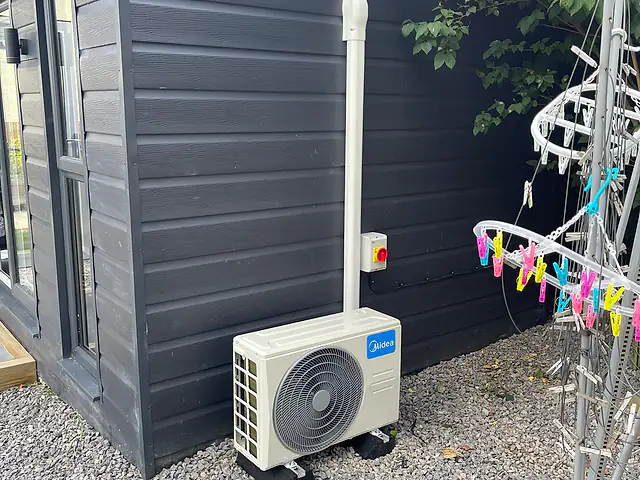
An outdoor air conditioning unit beside a garden room, the kind of air conditioning we fit for homes in Waltham Forest
An outdoor air conditioning unit beside a garden room. An example of the air conditioning we install for homes in Waltham Forest.

For homes

Domestic requests across the borough typically involve top-floor bedrooms in Edwardian terraces, upstairs Warner flats and converted lofts. We survey the property, discuss where the outdoor unit can realistically go, and recommend split or multi-split equipment sized to each room. For anyone working from home in a spare bedroom or garden studio, a quiet single split provides cooling in summer and efficient heating through the rest of the year, often replacing an expensive-to-run electric heater.

Domestic air conditioning
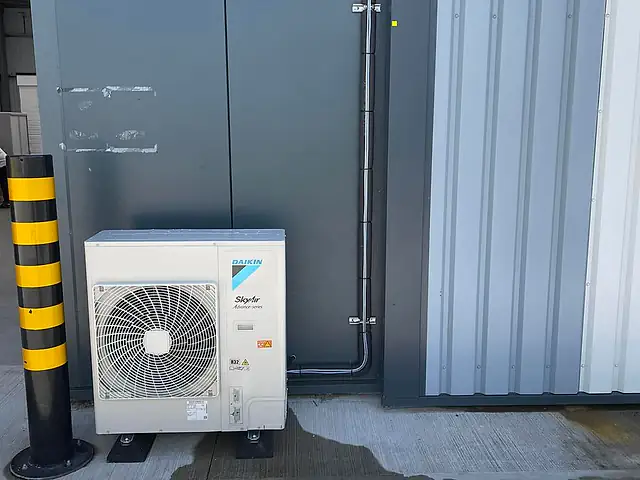

A commercial outdoor air conditioning unit on anti-vibration feet, the kind of commercial air conditioning we fit for businesses in Waltham Forest
A commercial outdoor air conditioning unit on anti-vibration feet. An example of the commercial air conditioning we install for businesses in Waltham Forest.

For businesses

Commercial clients in Waltham Forest range from cafés, restaurants and shops to workshops, breweries, small offices, schools and community buildings. We specify systems to suit each building's use and occupancy, whether that is a cassette for a busy café near the market, a ducted system for an office or dedicated cooling for a comms cupboard. Planned servicing helps maintain efficiency and gives early warning of problems before the warmest weeks.

Commercial air conditioning

How Do You Air Condition an Upstairs Warner Flat?

Carefully, and with the downstairs neighbour on board. The flat itself is easy to cool: a wall-mounted split in each hot room works well. The challenge is the outdoor unit, which almost always ends up on a wall or roof shared with, or overlooking, the lower flat.

Understanding the Warner layout

Upper Warner flats typically have two or three bedrooms and a living room, with the rear bedroom over the outrigger and the front rooms under the main roof. Many have had loft rooms added. The lower flat usually owns the rear garden, and the freehold may be shared between the two or held separately. These details decide who must consent.

Condenser options for the upper flat

The two most practical positions are high on the rear wall of the outrigger or on any flat roof over a ground-floor extension. Both keep pipe runs short but sit close to the lower flat, so noise, drainage and appearance need careful thought.

Rear wall above the downstairs garden

A bracket high on the outrigger wall keeps the unit above head height and away from the garden's main use. Angling discharge away from windows and draining condensate to a downpipe avoid drips and noise below.

Flat roof over a ground-floor extension

If the lower flat has a flat-roofed extension, its owner's consent is essential, and the roof structure and waterproofing must be checked. A weighted frame avoids piercing the membrane.

Agreeing the plan with the downstairs owner

A simple drawing showing the condenser position, pipe route and drainage, plus the unit's sound data, helps the conversation. Check the lease for the freeholder's consent process. Written agreement from both parties before installation avoids disputes later.

Blackhorse Lane Workshops, Breweries and Market Traders

Waltham Forest's working buildings range from industrial units with metal roofs to small shops on the market street. Each needs cooling sized for its real heat load and designed for the way it is used, whether that means dust, steam, ingredients or customers coming and going.

Workshops with metal roofs and machinery

Uninsulated roofs radiate heat all afternoon, and machinery adds more. Ceiling-suspended units often outperform cassettes where there is no ceiling void, and filters must suit dusty environments. Sizing for the roof, machines and occupancy prevents systems that run constantly but never catch up.

Breweries, bakeries and food production

Production areas may need steady temperatures to protect ingredients and finished goods, while heat from brewing, ovens or fridges adds to the load. Zoning separates customer areas from production, and condensate and hygiene requirements influence where indoor units can go.

Cafés and shops near the market

Small shops along the market street and Hoe Street often have limited space and a flat or storage above. A cassette or wall-mounted split with the condenser in a rear yard or on a flat roof keeps the shopfront clear. Busy doors and customer numbers affect the cooling load significantly.

Local properties

Waltham Forest Homes and Workspaces We Regularly Survey

Upper and lower Warner flats

The upstairs flat usually needs cooling most, with bedrooms under the roof. Condenser positions on the rear wall or outrigger roof sit close to the lower flat, so agreement from that owner, and any freeholder, is normally needed. Compact wall-mounted splits with short pipe runs are the usual outcome.

Edwardian terraces with loft conversions

Terraces in Leyton and Leytonstone often have a rear outrigger and a dormer loft. A multi-split with a rear condenser cools bedrooms and the loft independently, each with its own controller, while keeping the front elevation unchanged.

Interwar homes in Chingford and Highams Park

Semis and detached houses in the north of the borough usually have side access and gardens, giving plenty of choice over condenser positions. Ducted or multi-split systems can cool larger family homes without an indoor unit dominating each room.

Workshops and light-industrial units

Units around Blackhorse Lane house makers, brewers and small manufacturers. Metal roofs and machinery generate heat, so ceiling-suspended or cassette units sized for the real load keep staff comfortable and protect sensitive equipment or ingredients.

Before you install

Shared Walls, Low-Traffic Streets and Walthamstow Village Rules

This is general guidance only. Every building, lease and planning situation is different, so we’ll talk through yours at survey stage.

  1. 01Warner flats and other converted properties involve shared walls and freehold arrangements. Check your lease and talk to the other flat owner early to avoid disputes over condenser positions, noise and drainage.
  2. 02Conservation areas, including Walthamstow Village, may restrict equipment visible from public spaces. You should check with the council's planning team before choosing a front or side elevation.
  3. 03Low-traffic filters and controlled parking zones affect access in parts of Walthamstow and Leyton. Tell us about restrictions near your home so we can plan the van route, permits and unloading.
  4. 04Loft conversions are very common. Pipe and drainage routes from loft units should be planned at survey stage so they can run neatly through eaves voids rather than across finished rooms.
  5. 05Houses backing onto Epping Forest or the Lea Valley can collect leaves and debris around outdoor units. Positioning condensers clear of overhanging trees and keeping them raised reduces cleaning and airflow problems.
Pricing explained

The Cost Drivers Behind a Waltham Forest Quote

Waltham Forest installations range from a quick single split in a Chingford bedroom to a carefully negotiated Warner flat job or a workshop with high ceilings. We itemise the equipment, labour, access, pipework, drainage and electrical work, and do not publish prices because the survey determines each element.

Warner flat and conversion constraints

Condensers on outrigger walls above a neighbour's garden often need access equipment and careful drainage. Producing drawings and information for the lower flat owner and freeholder adds design time.

Loft rooms and multi-room systems

Each additional indoor unit adds equipment, copper and labour. Lofts need pipe routes through eaves voids, and sometimes condensate pumps where gravity drainage is not possible.

Commercial ceiling height and roof type

Workshops with high ceilings or exposed roofs need higher-capacity units and more access equipment. Out-of-hours work for shops or cafés may also affect labour.

Access restrictions and parking

Low-traffic filters, controlled parking and market days can lengthen the route from van to property, adding time to deliveries and unloading.

Step by step

Our Four-Step Approach to Waltham Forest Installations

  1. Survey and consent check

    We assess the hot rooms, loft and outrigger, and possible condenser positions, and ask about leases, shared freeholds and conservation areas. For Warner flats we note anything the downstairs owner should see.

  2. Design and quote

    You receive unit sizes, condenser position, pipe and drain routes and an itemised quote, plus a simple drawing to share with your neighbour, freeholder or planning team if needed.

  3. Installation day

    We plan the van route and parking, protect floors, drill, fix brackets or frames with anti-vibration mounts, run pipework and drainage, wire the supply and isolator, and pressure-test the circuit.

  4. Commissioning and servicing

    We check pressures, temperatures and airflow, set up controls and quiet modes, explain filter cleaning, and recommend an annual service before each summer.

FAQs

Answers for Waltham Forest Homeowners and Business Owners

I own an upstairs Warner flat. Can I have air conditioning?

Usually yes, although arrangements need care. The condenser may need to go on a rear wall or a flat roof, and you may need agreement from the downstairs owner and any freeholder, especially if equipment would be fixed to shared walls or sit above their garden. Check your lease first, then we can propose positions that minimise the impact on your neighbour.

Will air conditioning work in a loft conversion?

Lofts are one of the best places for it, as they heat up quickly under the roof. A wall-mounted split is common, with pipework running through the eaves to a condenser on the rear wall or a flat dormer roof. We check insulation and sizing so the room stays comfortable without the unit working harder than necessary.

Do workshops need different equipment from offices?

Workshops tend to have higher ceilings, more heat from machinery and sometimes dust, so indoor units and filters must be chosen accordingly. Ceiling-suspended units often work better than cassettes under uninsulated roofs. Regular filter cleaning is especially important in dusty environments to keep the system efficient and reliable.

My street has a low-traffic filter. Does that affect installation?

It can affect how the van reaches your property and where it can park, but it does not stop the work. Let us know about filters, controlled parking and any permit needs when booking. We plan the route and arrange unloading so equipment reaches your door without unnecessary delays.

Do I need permission in Walthamstow Village?

Walthamstow Village is a conservation area, so external equipment visible from the street is more likely to need permission. Rear positions are usually the starting point. Rules depend on the specific property and location, so check with the council's planning team before choosing a position. We can provide product information and drawings to support any application.

Can air conditioning heat my Chingford home as well?

Yes. Reverse-cycle split systems are air-to-air heat pumps, providing efficient heating as well as cooling. In a Chingford semi they work well for bedrooms, extensions and home offices, often reducing reliance on expensive electric heaters. Whether they can be the main heat source depends on insulation and room sizes, which we assess during the survey.

Neighbouring Boroughs and Towns Around Waltham Forest

Free quote

Request a Waltham Forest Air Conditioning Survey

Tell us about your home or business in Waltham Forest and what you’d like to achieve, whether that’s cooling, heating or both. We’ll come back with advice and next steps.

  • Survey-led advice: recommendations based on your rooms, layout and how you use the space.
  • Clear written quotation: what’s included, the equipment proposed and the next steps.
  • No obligation: ask questions and take your time to decide.
  • CoverageHomes & businesses across Greater London

Request your free quote

A few details help us understand your property and come back with useful advice.

Fields marked * are required. We only use your details to respond to this enquiry.
Get a Free Quote

