
East London

Stratford Air Conditioning Installation and Repairs

Stratford packs glass-fronted towers, a vast retail district and Victorian streets into a few square miles, and each needs a different approach to cooling. We install, service and repair air conditioning for flats, offices, shops and houses across E15 and E20.

  • E15
  • E20

Free quote in Stratford

Homes and businesses: tell us what you need and we’ll be in touch.

Stratford's Post-Olympic Housing and Why So Much of It Runs Warm

Most of the new housing around the Queen Elizabeth Olympic Park was designed to be airtight and well insulated, with large areas of glazing facing the park, the River Lea or the railway lands. That keeps heating demand low in winter, but in summer the same flats hold on to heat. In East Village, Chobham Manor, East Wick and the towers lining Stratford High Street, residents regularly report bedrooms above 26C in the evening, and higher floors often have limited window opening for safety reasons.

The direct answer for most of these homes is a split system, single or multi, with an indoor unit in each overheating room and a condenser on a balcony or in a plant area the building allows. The harder part is permission. Many blocks here are build-to-rent or estate-managed, are served by the park's district heating network rather than individual boilers, and have strict facade rules. We help residents put together the technical details their landlord or managing agent needs before anything is ordered.

Step away from the regeneration zone and Stratford looks very different. Around Maryland, West Ham Lane and the roads towards Forest Gate there are Victorian terraces, converted flats and small shops with flats above, where rear walls, yards and flat-roofed back additions give conventional condenser positions. Commercial work spans International Quarter office floors, units in and around Westfield Stratford City and the older Stratford Centre, restaurants on the Broadway and the education and cultural buildings of East Bank.

Our services

Cooling for Stratford Residents, Retailers and Campus Tenants

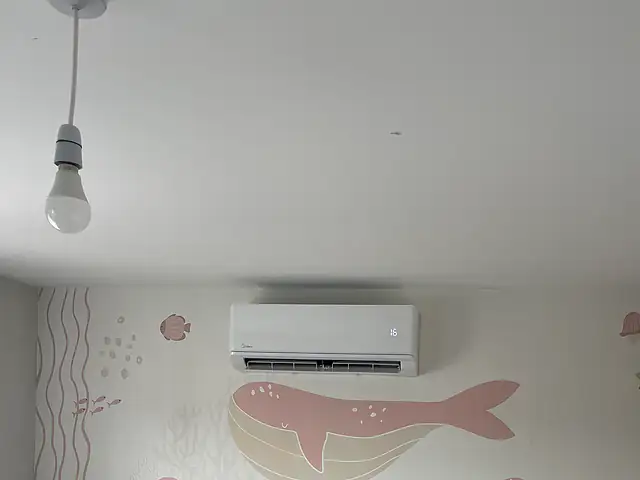
A quiet air conditioning unit in a child’s bedroom, the kind of air conditioning we fit for homes in Stratford
A quiet air conditioning unit in a child’s bedroom. An example of the air conditioning we install for homes in Stratford.

For homes

Domestic work in Stratford is dominated by overheating flats. For a one-bedroom apartment a single wall-mounted split in the bedroom is often enough; two- and three-bedroom flats with an open-plan living space usually suit a multi-split with one condenser. We check your lease or tenancy position with you, calculate heat gain from the glazing and orientation of each room, and propose a layout the building is likely to accept. In older houses nearby we design systems that cool upstairs bedrooms and loft rooms while keeping equipment off the front of the property. Reverse-cycle units also provide efficient heating, useful in homes without a gas supply.

Domestic air conditioning
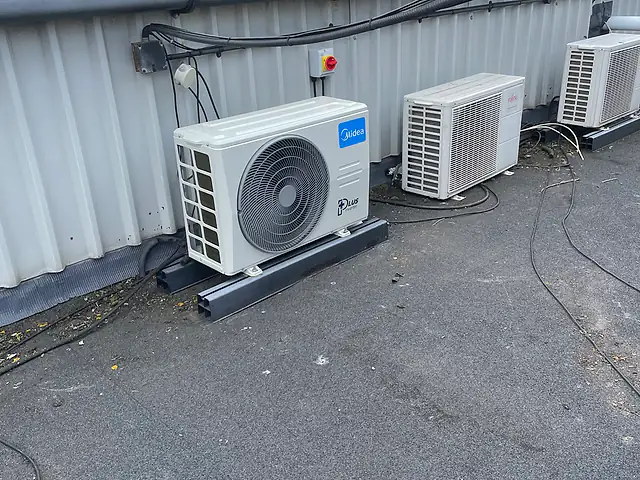

A row of outdoor air conditioning condensers at a commercial building, the kind of commercial air conditioning we fit for businesses in Stratford
A row of outdoor air conditioning condensers at a commercial building. An example of the commercial air conditioning we install for businesses in Stratford.

For businesses

Stratford's commercial premises range from large office floors and campus buildings to independent cafés, gyms, salons and restaurants along the Broadway and the High Street. We add supplementary cooling to meeting rooms and server rooms in landlord-cooled buildings, design ceiling cassette and ducted systems for shops and dining rooms outside the main centres, and service tenant-owned plant on a planned basis. For fit-outs inside managed centres or campus buildings, we prepare the drawings, data and method statements the landlord expects and work within agreed hours.

Commercial air conditioning

Can You Add Air Conditioning to a Flat on the Park's Heat Network?

Yes, in most cases the heat network is not the obstacle. A split air conditioning system is electrically powered and completely separate from the heat interface unit that supplies your radiators or underfloor heating and hot water. What decides the outcome is whether your landlord or freeholder will allow an outdoor unit, where it can sit, and how pipework and drainage can be routed through a modern, airtight facade.

Why the heat network and new cooling do not clash

Flats on the Olympic Park network receive heat through a heat interface unit, usually in a utility cupboard. Air conditioning connects only to the electrical supply, refrigerant pipework and a condensate drain, so nothing is plumbed into the heating. The one practical overlap is space: the cupboard that houses the heat interface unit is sometimes the best place for a condensate pump or electrical isolator, so the survey checks there is safe clearance and that access for heat network maintenance is not blocked.

Finding an acceptable condenser position at height

Balconies are the usual answer in East Village and along Stratford High Street, but blocks differ. Some allow a floor-standing condenser on rubber anti-vibration feet; others ban anything visible above the balustrade. Pipework is kept short, typically a single core hole behind the indoor unit, with the run finished in trunking that matches the wall.

  • Check the balcony is not a designated fire escape route
  • Confirm the floor finish can take a stand without drilling
  • Choose a condenser with a low sound power rating for night use
  • Plan a condensate route that avoids dripping onto balconies below

When the balcony is ruled out

If no external position is permitted, ask whether the building has a shared plant area or roof space allocated for residents' equipment. Failing that, the options narrow to through-wall units without an outdoor condenser, which still need facade openings, or portable units, which are far less efficient and noisier.

Wind loads on upper floors

Condensers on high balconies face stronger winds than those at street level. Brackets and stands should be rated for the location, and units fixed so they cannot shift. Lighter weight models and secure, non-penetrating stands are often preferred by managing agents for this reason.

Sizing for floor-to-ceiling glazing over the park

A west-facing living room with full-height windows can gain far more heat on a summer afternoon than its floor area suggests. We assess glazing area, orientation, any external shading or balconies above, and how many people use the room. A typical Stratford bedroom may need a 2.0 to 2.5kW unit, while a sunny open-plan living and kitchen space often needs 3.5kW or more. Inverter models with high SEER ratings run at low output most of the time, keeping noise and electricity use down.

Supplementary Cooling for International Quarter and Westfield-Area Tenants

Commercial cooling in Stratford divides into two very different markets. Large, modern buildings have landlord plant and strict rules, so tenants add capacity carefully. Independent premises on the Broadway, the High Street and in the older Stratford Centre usually have no cooling at all and need a complete system designed around the unit.

Meeting rooms and comms rooms on base-build office floors

Office buildings near the park typically provide fan coil or VRF cooling sized for general office use. Enclosed meeting rooms, training suites and comms rooms often exceed that design load. The solution may be an extra indoor unit connected to spare capacity in the landlord system, or a separate split system with its condenser in plant space the landlord allocates. Comms rooms need cooling that runs around the clock, independently of the building's occupied-hours schedule.

Retail and food units under a centre landlord

Units in and around Westfield Stratford City and the Stratford Centre usually have a tenant's technical guide covering approved equipment, condenser locations, refrigerant pipe routes and working hours. Installations are often carried out overnight or before opening, and paperwork such as risk assessments and insurance details is submitted in advance. Food outlets need extra capacity for cooking equipment and must keep cooling separate from kitchen extract.

Independent shops and restaurants on the Broadway

Older commercial buildings along the Broadway and the High Street often have a flat roof or rear yard that can take a condenser, but flats above are common, so noise matters. Ceiling cassettes suit shops with suspended ceilings, while restaurants with exposed ceilings may prefer ducted or wall-mounted units. Sizing considers peak trade, lighting, glazing to the street and heat drifting from the kitchen.

Out-of-hours and night-time operation

Late-opening venues near residential upper floors should choose condensers with quiet night modes, set timers so equipment is not running after closing, and fit anti-vibration mounts so noise is not transmitted through the structure to the flats above.

Older Stratford Homes Beyond the Regeneration Zone

Not every Stratford home is a new-build flat. The streets between Stratford Broadway, Maryland and West Ham contain Victorian and Edwardian terraces, many split into flats, where the cooling challenges have more to do with narrow layouts, solid walls and close neighbours than with estate management rules.

Terraced houses and conversions around Maryland

Two-storey terraces usually take a multi-split well: one condenser in the rear yard or on the back-addition roof, with indoor units in two or three bedrooms. Pipework can run through the rear addition and up inside a cupboard or alongside the chimney breast. Solid brick walls need proper core drilling, and the condensate drain is ideally connected to an existing waste pipe at the back of the house rather than left to run down the wall.

Flats above shops on Romford Road and West Ham Lane

Upper floors over shops tend to be warm and noisy, with windows that cannot be left open at night. A wall-mounted split with the condenser on a rear wall or flat roof works well, provided the freeholder and, where relevant, the shop tenant agree. Ownership can be split between several parties, so we recommend confirming who must consent before the survey.

Local properties

From East Village Towers to the Terraces of Maryland

Build-to-rent blocks in East Village and beyond

Professionally managed rental blocks keep tight control over every alteration. Some apartments already have comfort cooling that simply needs servicing, arranged through the operator. Where there is none, a new system depends entirely on written approval, and the operator may specify where condensers go, which contractors can attend and when. We can supply equipment data sheets, noise figures and a method statement to support a resident's request.

Leasehold flats on the Olympic Park and Stratford High Street

Owners in newer leasehold schemes have more scope, but leases and estate rules still govern balconies and external walls. A compact condenser on a floor stand or low bracket, with pipework entering through one neat core hole and a condensate pump where gravity drainage is not possible, is the typical layout. Fixings at height must be secure and wind-rated, and equipment should be as quiet as possible for neighbours above and below.

Office floors around the International Quarter

Modern office buildings near the park usually have landlord-supplied cooling through fan coils or VRF on each floor. Tenants most often need extra capacity for meeting rooms, training suites and comms rooms, or areas used by more people than the original design assumed. Any addition has to fit the base-build controls and the landlord's technical standards.

Victorian terraces and shops off the Broadway

Older houses towards Maryland and West Ham take standard wall-mounted splits or multi-splits, with condensers on rear walls, in yards or on back-addition roofs. Owners control far more of the decision here, and the front elevation can usually be left untouched. Ground-floor shops with flats above need the condenser positioned so it does not sit under a bedroom window.

Before you install

Leases, Operators and Loading Bays: Checks Before a Stratford Booking

This is general guidance only. Every building, lease and planning situation is different, so we’ll talk through yours at survey stage.

  1. 01Renters in managed blocks should get written approval from the operator before any survey is booked. Unauthorised external units are likely to breach the tenancy and may have to be removed at the resident's cost.
  2. 02District heating and air conditioning are separate systems, but the managing agent may still have rules on new electrical circuits, core drilling through the facade and anything placed on a balcony.
  3. 03Retail and food units inside large centres normally follow the centre landlord's technical requirements, including approved contractor documentation and installation work outside trading hours.
  4. 04Tall residential blocks usually need a booked loading bay and service lift slot. Arranging these at least a week ahead keeps the installation day on schedule and avoids carrying equipment through public lobbies.
  5. 05Older houses near Maryland and West Ham are not part of the managed estates, but neighbours are close. You should choose a condenser position away from adjoining windows and discuss it with next door before work starts.
Pricing explained

What Shapes the Price of Cooling a Stratford Apartment or Unit

Every quote we prepare in Stratford is itemised so you can see where the cost sits: equipment, labour, materials such as pipework and trunking, electrical work, access and any documentation the building requires. We do not publish fixed prices because a ground-floor terrace and a twentieth-floor apartment involve very different amounts of work, even for similar equipment.

Access arrangements in managed high-rise blocks

Booked loading bays, service lift slots and restricted working hours affect how long the job takes. If equipment must be carried through a concierge route or installed outside normal hours, labour time increases. Knowing the building's process at the survey stage keeps the quote accurate.

Number of rooms and the glazing load in each

A single bedroom split costs less than a multi-split serving three rooms and an open-plan living space. Large south- or west-facing windows can push a room into a higher capacity bracket, which changes both the indoor unit and the condenser required.

Pipe routes, pumps and electrical supply

Short pipe runs through one core hole are the simplest. Longer concealed runs, condensate pumps where there is no gravity drain, and a dedicated circuit with an isolator from the consumer unit all add materials and time, particularly in flats with finished, airtight walls.

Documentation for landlords and centre managers

Build-to-rent operators, estate managers and shopping centre landlords often ask for drawings, data sheets, noise figures, risk assessments and method statements. Preparing these is part of the job and is reflected in the quote, along with any attendance for building inductions.

Step by step

How a Stratford Job Moves From First Survey to Handover

  1. Permissions check and survey

    We start by confirming what your lease, tenancy or centre rules allow, then survey the rooms, glazing, balcony or rear wall, electrical supply and drainage routes. In managed blocks we book the visit through building management.

  2. Design and documentation

    You receive a written proposal with equipment, capacities, positions and pipe routes. Where the operator, freeholder or centre landlord needs to approve it, we supply data sheets, noise figures and method statements for their review.

  3. Installation on a booked slot

    Once approval is in writing, we book the loading bay and service lift, protect floors and finishes, core drill, fit the units, run pipework and condensate, and connect the electrical supply. Most flats are completed in a day.

  4. Commissioning and aftercare

    We pressure test and evacuate the system, check refrigerant performance and drainage, set up controls with you and explain filter cleaning. We then recommend an annual service, timed before summer when Stratford flats overheat most.

FAQs

Questions From East Village Residents and Stratford Businesses

I rent in a build-to-rent block in Stratford. Can I get air conditioning?

Only with your operator's written permission. Ask the building management team whether residents can add cooling, where condensers may go and which contractors they accept. Some blocks already have comfort cooling that simply needs servicing. If approval is likely, we can provide equipment details, noise data and a method statement to support your request, and work within the building's access rules once it is agreed.

Does my flat's connection to the Olympic Park heat network stop me having cooling?

No. Air conditioning is electrically powered and does not connect to the heat network or your heat interface unit. The limits are your lease, your landlord's approval and whether there is somewhere suitable for an outdoor unit. We simply check that any new pump, isolator or pipework does not obstruct access to the heat interface unit for future maintenance.

What size air conditioner does a south-facing Stratford bedroom need?

Most double bedrooms need around 2.0 to 2.5kW of cooling, but large windows facing south or west, a top-floor position or a home office setup can push that higher. We calculate it from the room's dimensions, glazing, orientation and use rather than guessing, because an oversized unit cycles on and off and an undersized one runs flat out and noisily.

Can you install cooling in a retail unit inside a Stratford shopping centre?

Yes, following the centre landlord's technical requirements. These usually cover approved equipment, condenser and pipe routes, working hours and contractor paperwork. We prepare drawings, risk assessments and method statements for approval, then carry out work at agreed times, often before opening or overnight, so trading is not disrupted.

Is a multi-split better than separate units for a two-bedroom flat?

Usually, yes, where the building allows only one external position. A multi-split connects two to four indoor units to a single condenser, which is tidier on a balcony and needs fewer facade penetrations. The trade-off is that if the condenser fails, every room loses cooling, and very long pipe runs between rooms can be harder to conceal in new-build flats.

How often should a Stratford apartment air conditioner be serviced?

Once a year suits most homes, ideally in spring before the first warm spell. A service covers filter and coil cleaning, condensate drain and pump checks, refrigerant performance, electrical connections and controls. Flats near busy roads and construction sites around the park may collect dust faster, so cleaning filters every few weeks in summer makes a noticeable difference.

Free quote

Tell Us About Your Stratford Flat, Shop or Office Floor

Tell us about your home or business in Stratford and what you’d like to achieve, whether that’s cooling, heating or both. We’ll come back with advice and next steps.

  • Survey-led advice: recommendations based on your rooms, layout and how you use the space.
  • Clear written quotation: what’s included, the equipment proposed and the next steps.
  • No obligation: ask questions and take your time to decide.
  • CoverageHomes & businesses across Greater London

Request your free quote

A few details help us understand your property and come back with useful advice.

Fields marked * are required. We only use your details to respond to this enquiry.
Get a Free Quote

