

Repairs that target the real fault
Measuring temperatures, pressures and electrical values before replacing anything means the repair addresses the actual cause, avoiding wasted parts and repeat visits for the same symptom.
If your air conditioning is blowing warm air, dripping water, icing up, tripping the fuse board or flashing an error code, our engineers trace the fault to its cause, explain it in plain English and carry out a repair that stops it coming back.
Request a Repair Visit
Tell us about your property and we’ll come back with advice and a written quote.
Most air conditioning faults announce themselves through a symptom: warm air, water on the floor, ice on the pipes, a new noise, an odd smell, an error code or a tripped circuit breaker. Each symptom narrows down the list of possible causes, but several faults can look identical from the outside. A unit that blows warm air might have a clogged filter, a failed outdoor fan, a faulty sensor or a refrigerant leak, and the correct repair for each is completely different.
Our engineers repair wall-mounted, floor console, ceiling cassette, ducted and multi-split systems in homes, offices, shops and restaurants across Greater London. We take measurements and readings before deciding on a repair, so you are not paying for parts that were never the problem or for refrigerant that will leak out again within weeks.
Below you will find guidance on each common symptom, the simple checks you can safely make before calling anyone, what an engineer does on site, and how to weigh up repairing an older system against replacing it. Regular cleaning and checks are covered on our servicing page; this page is about getting a faulty system working again.
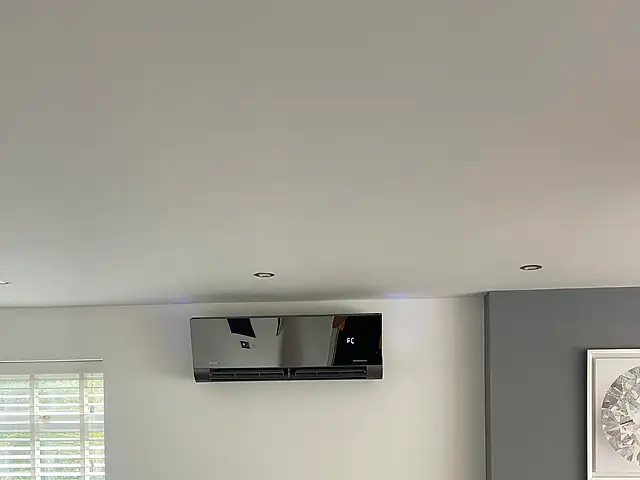
A black gloss designer air conditioning unit in a living room, a typical setup for air conditioning repairs in London.
An air conditioning system is a chain of components that all have to work together: filters and coils to move air and heat, fans to drive airflow, a compressor to circulate refrigerant, an expansion device to control flow, sensors to report temperatures, a control board to make decisions and a drain to remove water. A failure anywhere in that chain shows up as a handful of familiar symptoms.
That is why a single symptom rarely points to a single part. Ice on the indoor coil can be caused by a blocked filter, a slow indoor fan or low refrigerant. Water leaks can come from a blocked drain, a failed pump or a coil that froze and thawed. Good fault-finding means testing each possibility in turn and ruling causes out with evidence.
Error codes help, but only as a starting point. A code tells the engineer which circuit or sensor the control board is unhappy about, not necessarily which part has failed. A communication fault, for example, can come from a damaged interconnecting cable, a loose terminal, a failed board or a power supply problem. Measurements on site confirm which.
Measuring temperatures, pressures and electrical values before replacing anything means the repair addresses the actual cause, avoiding wasted parts and repeat visits for the same symptom.
Locating and repairing a refrigerant leak before recharging keeps the system working properly and avoids releasing more refrigerant into the atmosphere every few weeks.
Running a unit with iced coils, low charge or a failed fan forces the compressor to work under stress. Prompt repair helps protect the most expensive part of the system.
Clearing blocked drains and replacing failed pumps stops leaks before they stain ceilings, lift flooring or reach the flat or shop below.
Investigating tripping breakers, burning smells and scorched terminals reduces the risk of a more serious electrical fault developing inside the unit or its supply.
Plain-English findings and an honest view on repair versus replacement let you decide how to proceed without pressure, whether the system is two or fifteen years old.
These three symptoms account for a large share of repair calls, and they are often connected. Restricted airflow or a low refrigerant charge can make the indoor coil too cold, which leads to ice, which leads to water when it thaws. Understanding the link helps explain why the repair sometimes looks unrelated to the symptom.
If the indoor unit is running but the air is barely cool, the most common culprits are blocked filters, a heavily soiled indoor or outdoor coil, an outdoor fan that has stopped, a compressor that is not starting, or a low refrigerant charge caused by a leak. Less often, a faulty temperature sensor tells the system the room is already cool. The engineer compares supply and return air temperatures, checks whether the condenser fan and compressor are running and measures operating pressures to narrow it down.
If the indoor fan is blowing but the condenser is not running at all, the fault often lies with the outdoor power supply, a tripped isolator, a communication fault between the units, a failed start capacitor or a compressor protection device. These need testing with the power isolated by a competent engineer.
Frost or ice means part of the system is running colder than it should. Restricted airflow from dirty filters or a failing indoor fan motor is a frequent cause, as is a low refrigerant charge, which lowers the evaporating temperature. Running a unit in very cold outdoor conditions in cooling mode can also cause icing. Switch the unit off and let it thaw fully before using it again; repeated icing needs investigation.
Condensate should flow from the drain tray through a pipe or pump to a safe outlet. Leaks usually mean the drain line is blocked by dust and biological slime, a condensate pump has failed or its float switch is stuck, the pipe has lost its fall, or the indoor unit is no longer level. A sudden heavy leak after a period of poor cooling often points to an iced coil that has melted. In flats, switch the unit off quickly to protect ceilings below.
Water dripping from the outdoor unit in heating mode is normal; condensers produce water during defrost cycles. It only becomes a problem if it pools where it causes a slip hazard or ice in winter, in which case a drain kit or a change to the base can usually solve it.
Some symptoms are less about comfort and more about warning you that something is wearing out or behaving unsafely. Burning smells and repeated electrical trips in particular should never be ignored or reset over and over in the hope the problem disappears.
Rattles usually come from loose panels, fixings or debris in the outdoor unit. Grinding or squealing points to worn fan bearings or a fan blade catching its housing. Repeated loud clicking can indicate a relay or contactor switching on and off, and a hissing or bubbling sound may suggest a refrigerant issue. Gurgling from the indoor unit is often a partly blocked drain or a pump struggling. Each sound points to a different part, so describing it accurately helps.
A musty or sour smell when the unit starts usually comes from biological growth on the indoor coil, fan barrel or drain tray. It is unpleasant rather than dangerous, and cleaning and treatment usually clear it. A burning or hot electrical smell is different: switch the unit off at the isolator or circuit breaker and do not use it until an engineer has checked the wiring, terminals, fan motor and control board.
Codes vary by manufacturer and model, so the same code can mean different things on different units. They typically flag sensor faults, communication errors between indoor and outdoor units, high or low pressure trips, fan motor problems or condensate pump alarms. Note the code, how the lights are flashing, the make and model, and when the fault appears. An engineer will read the fault history if the controller stores one, then test the relevant circuit.
A system that trips its breaker on start-up may have a failing compressor, a shorted fan motor, a damaged cable or moisture in a connection. Tripping an RCD suggests current leaking to earth somewhere in the equipment or wiring. Resetting once is reasonable; if it trips again, leave it off. Repeated resets can damage components further and may be unsafe. The engineer will carry out insulation and continuity tests to find the fault.
A few simple checks can sometimes resolve a problem or at least give the engineer useful information. None of them involve opening sealed casings, touching wiring or handling refrigerant, which should always be left to a qualified professional.
Confirm the unit is in cooling or heating mode rather than fan, dry or auto, and that the set temperature is sensibly below or above the room temperature. Check the remote batteries and that the timer is not switching the unit off. Make sure the circuit breaker is on and the outdoor isolator has not been switched off by a gardener or neighbour. These simple causes are behind more call-outs than people expect.
Lift the front panel of a wall unit and slide out the mesh filters. If they are grey with dust, vacuum or rinse them in lukewarm water and let them dry completely before refitting. Check that curtains, furniture or shelving are not blocking the indoor unit, and that leaves, bins or garden furniture are not crowding the outdoor unit. Restored airflow can cure poor cooling and icing caused by restriction.
Do not remove casings, poke the drain line with wire, wash the outdoor coil with a pressure washer or try to top up refrigerant. In the UK, handling refrigerants requires F-Gas certification, and the electrical parts of an air conditioning unit can hold a charge even when switched off. If simple checks do not solve the problem, switch the unit off, note what you saw and arrange a diagnostic visit.
Not every fault is worth fixing. The decision depends on the age and condition of the system, the cost of the repair relative to a new installation, the refrigerant it uses and whether parts are still readily available. We set out the options so you can decide with full information.
Replacing a failed fan motor, capacitor, sensor, condensate pump or control board on a system that is otherwise in good condition is usually worthwhile. The same applies to clearing drains, fixing a leaking flare joint and recharging correctly, or replacing damaged pipe insulation. These repairs restore the system to good working order without the disruption of a new installation and are proportionate to the value of the equipment.
A failed compressor on an older system, a large leak in the indoor or outdoor coil, repeated faults over several seasons or a system still running on R22, which can no longer legally be used to recharge systems in the UK, often tip the balance towards replacement. Older units are also usually less efficient than current inverter models, so the running cost saving of a new system adds weight to the decision.
A useful test is to compare the repair cost with the cost of a like-for-like replacement and consider how many more years of reliable use the repaired system is likely to give. If a single repair approaches a large share of a new installation on an ageing unit, replacement is often the better long-term choice.
Domestic faults often involve blocked drains, iced coils from neglected filters, worn outdoor fans or faulty remote sensors. Loft rooms with high heat loads tend to expose a weak system first.
A failed cassette or ducted unit makes a floor uncomfortable within hours. We work with office managers to diagnose faults with minimal disruption and can arrange access to ceiling voids around the working day.
Grease, hairspray, heavy use and open doors shorten component life. Faults can often be investigated before opening or after closing so customers are not disturbed.
Cooling failures in equipment rooms need careful handling. We check the unit, its controls and any duty and standby changeover, and advise where a single system is protecting critical equipment without backup.
Repair costs are usually made up of a diagnostic visit followed by the repair itself, which may be completed on the spot or after parts are ordered. Because the same symptom can have very different causes, a firm price is normally only possible once the fault has been identified. These factors have the most influence on what you pay.
A blocked drain or clogged filter can be identified quickly. Intermittent faults, communication errors and problems on multi-split systems may take longer to trace because several components need testing and some faults only appear under specific conditions. Providing error codes and symptoms in advance helps keep diagnosis efficient.
Common components such as capacitors, sensors and condensate pumps are relatively inexpensive and widely available. Control boards, fan motors and compressors cost considerably more, and parts for older or less common models may need sourcing from the manufacturer, which can add both cost and waiting time.
Finding a leak can involve electronic detection, bubble testing or a nitrogen pressure test. A leak at an accessible flare joint is quicker to fix than one inside a coil or concealed in a ceiling void. After repair, the system must be evacuated and recharged by weight, and the type and quantity of refrigerant affect the cost.
Wall units at normal height and condensers at ground level are straightforward. Ceiling cassettes, ducted units in tight voids and condensers on roofs or high brackets may need extra time, ladders or access equipment, and managed buildings may require advance arrangements for roof or plant-room access.
Visits outside normal working hours, for example to avoid disrupting a shop or office, may be priced differently from weekday appointments. Server and comms room failures that need urgent temporary measures can also add to the overall cost of putting things right.
Tell us the symptom, any error code or flashing lights, the make and model, the age of the system and where the indoor and outdoor units are located, so the engineer can prepare.
On site the engineer checks settings, filters, coils, fans, drainage and electrics, reads fault history and measures temperatures, pressures and electrical values to identify the cause.
You are told what has failed and why, what the repair involves, whether parts need ordering and, where relevant, whether repairing or replacing makes more sense.
With your agreement the faulty part is replaced or the problem corrected. Refrigerant work includes leak repair, pressure testing, evacuation and recharging by weight.
The system is run in cooling and heating modes to confirm it is working correctly, and we explain anything that could help prevent the fault returning.
A large share of London repair visits involve outdoor units that are hard to reach: on flat roofs above mansion blocks, on brackets high on rear elevations, in narrow light wells or at the end of gardens reached only through a neighbour's property. Telling us where the condenser is, and how it is accessed, before the visit means the engineer can bring the right equipment and avoid a wasted trip.
Water leaks need particular care in converted houses and blocks of flats, where water from a cassette or wall unit can travel through floors and appear in a neighbour's ceiling. Switching the unit off, placing a container beneath it and letting your building manager know if water has reached a shared area are sensible first steps while a repair is arranged.
Older systems are common in London offices and shops fitted out several refurbishments ago, and some still run on R22 refrigerant. Because R22 can no longer legally be used to top these systems up, a leak can be the point at which replacement becomes the only practical route. If your system is of that age, it pays to ask about its refrigerant type during the repair visit.
This is general guidance rather than legal advice. Requirements vary by building, lease and local authority.
Local guidance by region
We cover homes and businesses across Greater London. Each region page explains local building types and consents.
Borough pages
First check the unit is in cooling mode, the set temperature is below room temperature and the filters are clean. If it still blows warm air, the cause may be a stopped outdoor fan, a compressor that is not starting, a low refrigerant charge from a leak, a dirty coil or a faulty sensor. These need an engineer to measure pressures, temperatures and electrical values to pinpoint.
The indoor coil produces water while cooling, which should drain through a pipe or pump. Leaks usually come from a blocked drain line, a failed condensate pump, a pipe that has lost its fall or a unit that is no longer level. A coil that iced up and then thawed can also release a lot of water at once. Switch the unit off and arrange an inspection.
It is best not to. Ice restricts airflow further, can cause water leaks as it melts and puts strain on the compressor. Switch the unit off, let it thaw completely and check the filters. If the filters were dirty, clean them and try again. If ice forms again, there is likely an airflow or refrigerant fault that needs an engineer.
Reset the breaker once. If it trips again, leave the unit switched off and do not keep resetting it. Repeated tripping can indicate a failing compressor, a shorted fan motor, damaged wiring or moisture in a connection. An engineer will carry out insulation resistance and continuity tests to find the fault safely. If you notice a burning smell at any point, isolate the unit immediately.
Air conditioning is a sealed circuit and should not lose refrigerant unless it has a leak. Adding refrigerant without finding the leak means the charge will drop again, the system will keep underperforming and more refrigerant will escape. A proper repair locates and fixes the leak, pressure tests the circuit, evacuates it and recharges by weight to the manufacturer's specification.
Error codes differ between manufacturers and even between models, so it is best to check the user manual or the manufacturer's website for your exact model. Codes usually indicate an area rather than a failed part, such as a sensor circuit, communication between units or a pressure trip. Note the code and pass it on with the make and model so the engineer can prepare.
Musty smells usually come from biological growth on the indoor coil, fan or drain tray where moisture collects. Cleaning the filters helps, but the coil and drain tray normally need a professional clean and treatment. If the smell returns quickly, standing water in the drain tray may be the cause. A burning smell is different and means the unit should be switched off immediately.
This often points to a problem with power reaching the condenser, a switched-off outdoor isolator, a communication fault between the units, a failed capacitor or a compressor safety device tripping. Check the isolator next to the outdoor unit is on. If it is and the condenser still does not start, an engineer needs to test the electrical supply and components safely.
It depends on the fault, the age and condition of the system, the refrigerant type and parts availability. Replacing a sensor, fan motor or pump on a sound unit is usually sensible. A failed compressor or coil leak on an older system, or any repair involving R22 refrigerant, often makes replacement the better choice. We set out both options so you can compare them.
Often yes, if the fault is something like a blocked drain, a dirty coil, a loose connection or a common part the engineer has available. Repairs needing specific control boards, fan motors, compressors or parts for older models may require a second visit once parts arrive. The engineer will explain this at the diagnosis stage so you know what to expect.

A single, thorough service visit covering filters, coils, drains, fans, electrics and refrigerant performance, with readings recorded for homes and businesses across London.
Learn more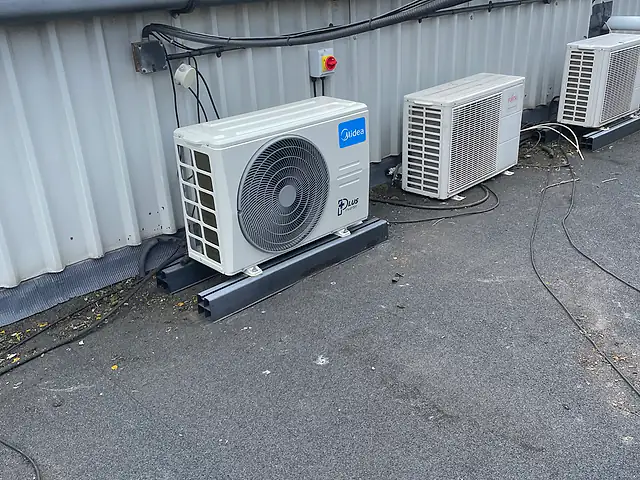
Planned preventative maintenance programmes with scheduled visits, asset registers, leak-check logs and filter routines for homes, landlords and multi-site businesses.
Learn more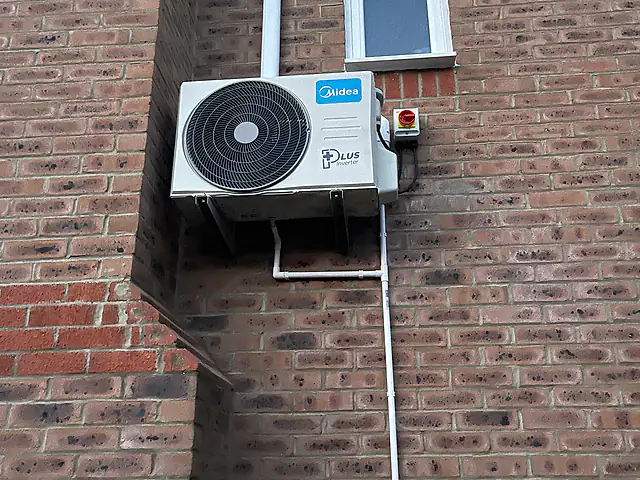
Upgrade ageing, R22 or unreliable units to efficient inverter R32 systems, with honest repair-or-replace advice, pipework testing and proper refrigerant recovery.
Learn more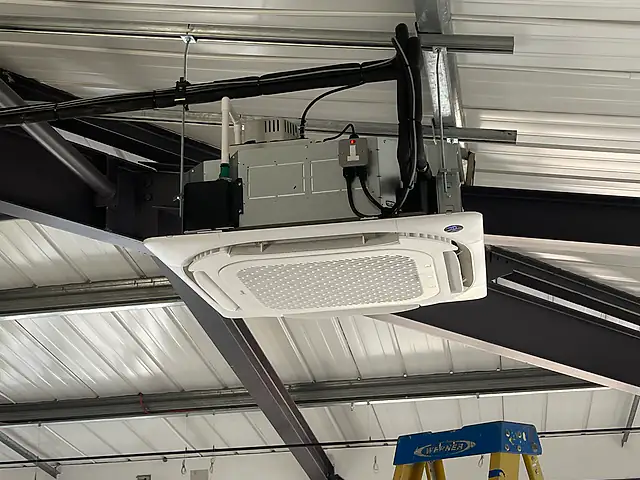
Commercial climate control for London offices, shops, restaurants, clinics and server rooms, from heat load design to out-of-hours installation and ongoing support.
Learn moreShare a few details about your property and what you need, and we’ll respond with advice and the next steps for your air conditioning repairs.
A few details help us understand your property and come back with useful advice.