North London

Haringey Air Conditioning Services

Haringey stretches from the hilly Victorian and Edwardian streets of Highgate, Crouch End and Muswell Hill across to Tottenham and the River Lea. We install, service and repair air conditioning for houses, converted flats, new apartments and businesses throughout the borough.

  • N4
  • N8
  • N10
  • N15
  • N17
  • N22

Free quote in Haringey

Homes and businesses: tell us what you need and we’ll be in touch.

Conversions, Terraces and Towers on Both Sides of the Railway

Haringey divides broadly along the main railway line through Hornsey and Harringay. West of it, Highgate, Muswell Hill, Crouch End, Hornsey and Stroud Green are characterised by substantial Victorian and Edwardian houses, many on steep streets rising towards Alexandra Palace and the woods around Highgate. East of it, Harringay, West Green, Wood Green, Seven Sisters and Tottenham are more densely built, with long terraces, busy high streets and some of the largest regeneration schemes in North London around Tottenham Hale.

The defining feature for air conditioning in this borough is conversion. A large share of Haringey’s period houses have been divided into flats, and many of those flats have added loft rooms or rear extensions. These are exactly the rooms that overheat, yet they raise the hardest questions: who owns the external wall, whose garden the condenser would sit above, and whether the freeholder and other leaseholders must agree. The Harringay Ladder, with its parallel streets of closely packed terraces running between Green Lanes and Wightman Road, shows how much careful siting matters when rear windows are only a few metres apart.

Commercial life is just as varied, from independent cafés, restaurants and studios in Crouch End and Muswell Hill to the shopping centre and high street at Wood Green, offices and healthcare premises, and industrial units near the Lea. We serve every part of the borough and start every job with a survey of how the space is actually used.

Our services

Comfort Cooling for Haringey Residents, Shops and Studios

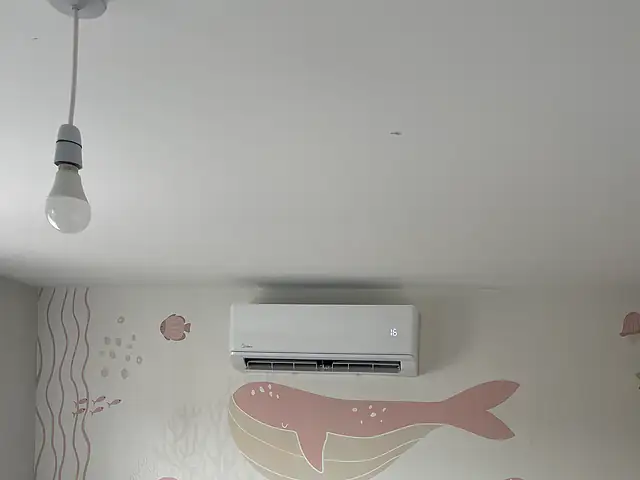
A quiet air conditioning unit in a child’s bedroom, the kind of air conditioning we fit for homes in Haringey
A quiet air conditioning unit in a child’s bedroom. An example of the air conditioning we install for homes in Haringey.

For homes

Haringey homeowners and tenants most often ask us to cool loft bedrooms, top-floor flats and home offices. Because so many properties are period conversions, we pay close attention to the lease position, routing pipework neatly within your own flat, keeping indoor units unobtrusive and choosing quiet outdoor equipment. Every system we fit can also run in heating mode, which helps in draughty older rooms and in loft spaces that the main heating struggles to reach. After commissioning, we offer annual servicing to keep filters, coils and drains clean and the system running quietly.

Domestic air conditioning
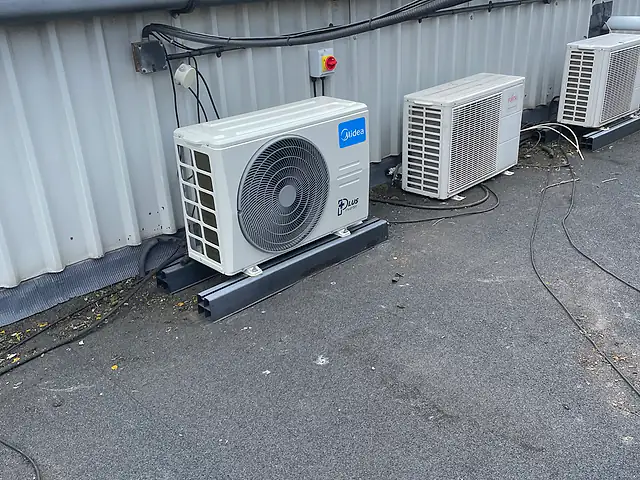
A row of outdoor air conditioning condensers at a commercial building, the kind of commercial air conditioning we fit for businesses in Haringey
A row of outdoor air conditioning condensers at a commercial building. An example of the commercial air conditioning we install for businesses in Haringey.

For businesses

Commercial premises across Haringey include independent shops, cafés and restaurants in Crouch End, Muswell Hill and Green Lanes, retail along Wood Green High Road, offices, creative studios, schools and health centres, plus industrial units near the Lea. We design and fit cooling for shop floors, kitchens, consulting rooms, studios and offices, choosing cassette, ducted or wall-mounted equipment to suit each space. Planned maintenance keeps systems reliable through the busy summer months, and we can help with the records larger systems need for refrigerant checks.

Commercial air conditioning

How Do You Fit Air Conditioning in a Haringey Conversion Flat?

It is usually possible, but it depends on three things: the lease, a lawful position for the outdoor unit and a sensible pipe route that does not cross someone else’s property without their agreement. Sorting these out before ordering equipment is the difference between a smooth installation and a dispute with neighbours.

Lease clauses and freeholder consent

Most leases on converted houses prohibit alterations to the structure and exterior without the landlord’s written consent. Where the freehold is shared between the flat owners, all of them may need to agree. Some leases also require notice to other leaseholders. We can provide unit dimensions, a proposed position, photographs and published sound levels to support your request and reduce back-and-forth.

When the garden belongs to the flat below

If the only practical position is above or in the ground-floor flat’s garden, their agreement is essential, and it is sensible to record it in writing. A bracket high on the rear wall, clear of their windows, is often an acceptable compromise.

Sharing a roof over the back addition

A flat roof over the back addition can be a good condenser spot, but it may be demised to a particular flat or held as common parts. The lease plan usually shows which, and the freeholder can confirm.

Routing pipework through a converted house

In a conversion, refrigerant pipework and condensate drains should stay within your own flat wherever possible. That often means drilling through the rear wall directly behind the indoor unit, or running pipework in a neat cover inside a cupboard to the back of the flat. Condensate can go to a nearby waste pipe with a trap, or a quiet pump can lift it where there is no natural fall.

Keeping Condenser Noise Down on Haringey’s Close-Packed Streets

On terraces where rear windows face each other across narrow gardens, outdoor unit noise is the most common source of friction. The answer is not just a quiet unit, but careful choice of position, mounting and operating settings, so that on a warm night your neighbours barely notice it.

Choosing equipment by sound data

Manufacturers publish sound pressure and sound power levels in dB(A) for their outdoor units. Inverter models slow down once the room reaches temperature, and many have a night or quiet mode that reduces fan and compressor speed further. We compare these figures when recommending units for the Ladder, West Green and other dense streets, rather than relying on capacity alone.

  • Ask for the outdoor unit’s published dB(A) figure
  • Check whether a night quiet mode is available
  • Avoid oversizing, which causes cycling and more noticeable noise

Positioning and anti-vibration mounting

Enclosed corners and courtyards reflect sound and can make a unit seem louder. Positions on open walls, away from bedroom windows and on proper anti-vibration mounts, transmit far less noise into the building and to neighbours. Brackets fixed to solid brick perform better than those on lightweight extension walls, which can carry vibration into the room behind.

Local properties

Ladder Terraces, Crouch End Villas and Tottenham Hale Flats

Victorian houses split into flats

Upper-floor flats often have no garden of their own and may share a roof with the flat below. A wall-mounted split with a short pipe run to a rear wall bracket or the flat roof of the back addition is usually the neatest option, subject to the freeholder’s written consent and agreement from anyone whose space the unit overlooks.

Tall period family houses in Crouch End and Hornsey

Three and four-storey houses often need cooling only at the top, in a loft bedroom and a second-floor study. A small multi-split, or two single splits, with pipework routed through cupboards and service voids keeps cornicing and original plasterwork intact on the floors below.

Terraces on the Ladder and around West Green

Two-storey terraces with narrow rear gardens and back additions are common east of the railway. Compact, low-sound condensers on brackets above head height or on the back addition roof leave the garden usable and reduce noise at ground-floor windows nearby.

New apartments at Tottenham Hale and Wood Green

Recent towers bring large windows and limited natural ventilation. Before recommending any equipment we check the building’s rules and any designated plant locations, then choose units that integrate with the flat’s layout and the management company’s requirements.

Before you install

Permissions and Neighbourly Details Specific to Haringey

This is general guidance only. Every building, lease and planning situation is different, so we’ll talk through yours at survey stage.

  1. 01The borough has many conservation areas, including large parts of Highgate, Muswell Hill, Crouch End and Tottenham High Road. If your home lies within one, ask the local planning authority whether an outdoor unit visible from the street requires consent.
  2. 02Leasehold flats in converted houses usually need the freeholder’s written consent for external alterations, and where the freehold is shared, the other owners may also need to agree.
  3. 03Rear gardens on terraced streets such as the Ladder are narrow, with windows close together. A low-sound condenser placed away from neighbours’ bedroom windows helps avoid disturbance on warm nights.
  4. 04Steep streets around Muswell Hill, Highgate and Crouch End, along with controlled parking zones near stations, can complicate access. Agreeing parking and unloading arrangements in advance saves time.
  5. 05New-build blocks at Tottenham Hale and Wood Green may have strict façade and balcony rules, so check with the managing agent before ordering any equipment.
Pricing explained

What Changes the Cost of Cooling a Haringey Flat or House

Haringey jobs range from a single bedroom unit in a conversion to cooling for a whole restaurant or office. We break every quote down into equipment, labour, access and electrical work, explaining each part so you can compare options. These are the factors that most often affect the price in this borough.

Height of the flat and the condenser position

Top-floor flats on tall Crouch End and Muswell Hill houses may need access equipment to fix a condenser or route pipework safely. Ground-level or back-addition roof positions are simpler. The survey identifies the safest and most practical approach for your building.

Pipe route length inside the property

A short run directly through the wall behind the indoor unit is the most economical. Longer internal runs through cupboards or service voids, often needed to protect period features, take more materials and more careful work.

Quiet equipment and mounting

Models with very low sound ratings and night modes, along with quality anti-vibration brackets, can cost more than basic equipment but are often the right choice on tight terraces where neighbour relations matter.

Condensate drainage options

Where condensate can drain by gravity to a gully or waste pipe, the installation is simpler. Where it cannot, a condensate pump is required, adding a component that also needs occasional maintenance.

Step by step

What Happens When You Book Us for a Haringey Installation

  1. Talk through the flat, house or premises

    We ask about the rooms to cool, whether the property is a conversion, leasehold or in a conservation area, and where you think a condenser might go. This shows early whether consents are needed.

  2. Survey with an eye on neighbours

    We measure rooms, assess glazing and orientation, check the electrical supply and look at condenser positions in relation to neighbouring windows and gardens. We then provide a written recommendation and quote.

  3. Install neatly within your own space

    Once consents are in place, we fit the indoor and outdoor units, route pipework within your property, pressure test, connect drainage and electrics, and protect floors and furnishings throughout.

  4. Commission and set quiet operation

    We commission the system, set night or quiet modes where available, explain the controls and agree a servicing routine to keep the system efficient and quiet.

FAQs

Practical Questions About Cooling Homes in N4, N8, N15 and N17

Can air conditioning be fitted in a flat on the Harringay Ladder?

In many cases, yes. The main hurdles are usually leasehold consent and finding a sensible position for the outdoor unit, as rear gardens on the Ladder are narrow and often belong to the ground-floor flat. Options include a wall bracket at the rear or the flat roof over the back addition, with agreement from the freeholder and any neighbours whose space is affected.

How noisy is the outdoor unit on a close terraced street?

Modern inverter condensers for domestic use are far quieter than older models, and many run at a low hum at night. Noise depends on the unit size, how it is mounted and what surfaces surround it. Using anti-vibration mounts, avoiding enclosed corners and enabling quiet modes all help, which matters on Haringey’s closely spaced terraced streets.

Do you service systems installed by another company?

Yes. Many Haringey flats come with a system inherited from a previous owner or landlord, and we service and repair most common makes of split and multi-split equipment regardless of who installed them. A service usually includes cleaning filters and coils, checking drainage, inspecting electrical connections and confirming the system performs as expected. If parts are needed, we explain the options before carrying out any repair.

My Crouch End loft room is unbearable in summer. What would help?

Loft rooms in tall period houses take heat through the roof slope and any dormer or rooflights, and on the hillside streets they often catch the afternoon sun. A correctly sized wall-mounted split is usually the most effective solution. Pipework can often run through the eaves to a condenser on a rear roof or wall, keeping visible trunking to a minimum.

Can I install air conditioning if my house is in a conservation area?

Often yes, but the position of the outdoor unit matters. Units visible from the street are more likely to need consent, while rear positions out of public view are generally less sensitive. Because so much of western Haringey is covered by conservation areas, it pays to check with the local planning authority before installation is booked.

Can you cool a restaurant kitchen and dining area in Haringey?

Yes. Kitchens generate a lot of heat from cooking equipment, so they need careful sizing and indoor units that can cope with a warm, sometimes greasy environment. Dining areas usually suit ceiling cassettes or wall-mounted units. We plan the system around your opening hours and extraction arrangements, and recommend more frequent servicing for kitchen units to keep coils clean.

Free quote

Send Us Details of Your Haringey Home or Commercial Space

Tell us about your home or business in Haringey and what you’d like to achieve, whether that’s cooling, heating or both. We’ll come back with advice and next steps.

  • Survey-led advice: recommendations based on your rooms, layout and how you use the space.
  • Clear written quotation: what’s included, the equipment proposed and the next steps.
  • No obligation: ask questions and take your time to decide.
  • CoverageHomes & businesses across Greater London

Request your free quote

A few details help us understand your property and come back with useful advice.

Fields marked * are required. We only use your details to respond to this enquiry.
Get a Free Quote