
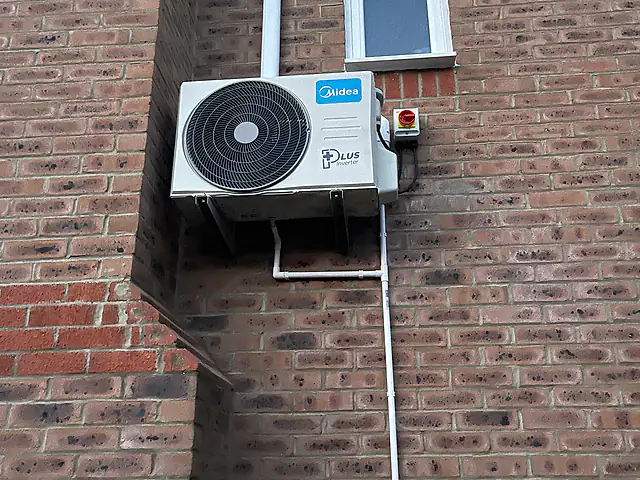
Noticeably lower running costs
Inverter compressors and R32 refrigerant allow modern units to deliver the same output with less electricity, a difference that adds up quickly where systems run for long hours in offices, shops and comms rooms.
If your air conditioning is noisy, keeps breaking down or runs on a refrigerant that can no longer be topped up, replacing it is often cheaper over time than nursing it along. We assess the old system, tell you plainly whether repair still makes sense, and manage the changeover for London homes and businesses with as little disruption as possible.
Request a Replacement Quote
Tell us about your property and we’ll come back with advice and a written quote.
Air conditioning does not usually fail all at once. More often it declines gradually: the compressor takes longer to bring a room down to temperature, the outdoor unit gets louder, a leak is repaired and returns the following summer, and electricity bills creep up. Eventually a major component fails, and the question becomes whether the system is worth saving at all. Replacing on your own timetable, rather than in the middle of a heatwave, gives you far more choice over equipment, timing and layout.
A good replacement is more than a like-for-like swap. We look at whether the old unit was ever sized properly, whether the room has changed use, whether the outdoor position caused noise complaints, and whether existing pipework, cabling and condensate drainage can safely be kept. Sometimes the right answer is a new unit in exactly the same place; sometimes it is a smaller, quieter model, an extra zone, or two old condensers replaced by a single multi-split.
We also take care of the parts of the job customers rarely see: recovering refrigerant from the old system rather than releasing it, removing heavy equipment from roofs and light wells safely, and sending old units for proper recycling as waste electrical equipment.
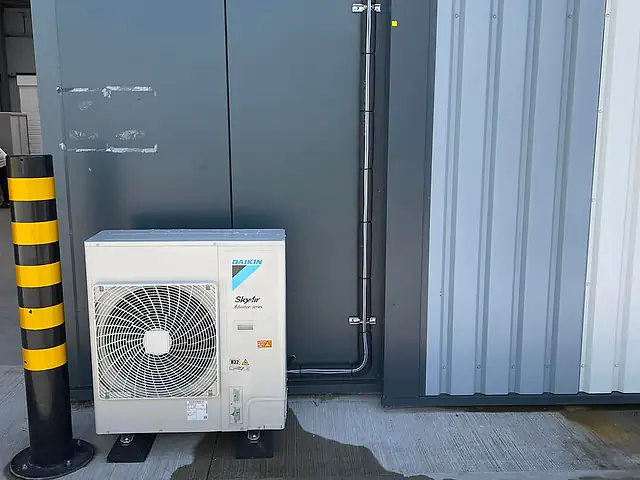
A commercial outdoor air conditioning unit on anti-vibration feet, a typical setup for air conditioning replacement in London.
Many systems fitted in the 1990s and early 2000s use R22, an HCFC refrigerant that depletes the ozone layer. Using new R22 to service equipment was banned some years ago, and the use of recycled or reclaimed R22 has since been banned too. In practical terms, if an R22 system leaks or loses its compressor, it cannot legally be recharged with R22, which is why a fault on one of these units so often ends in replacement.
The next generation of equipment mostly used R410A, an HFC that is kind to the ozone layer but has a high global warming potential. Under the F-gas regulations, the quantity of high-GWP refrigerants placed on the market is being stepped down over time. R410A systems remain legal to run and service, but the gas is expected to become scarcer and dearer, which is worth factoring in if your R410A system is already old and unreliable.
Most new single and multi-split systems now use R32, which has roughly a third of the global warming potential of R410A and transfers heat efficiently, so systems need a smaller charge. Combined with inverter-driven compressors and better heat exchangers, current models typically carry much higher SEER and SCOP ratings than the equipment they replace, which means lower running costs and steadier comfort from the same space.
Inverter compressors and R32 refrigerant allow modern units to deliver the same output with less electricity, a difference that adds up quickly where systems run for long hours in offices, shops and comms rooms.
New compressors, fans and control boards remove the uncertainty of ageing components, so you are far less likely to face a breakdown during the hottest weeks of the year.
Leaving R22 behind removes the problem of a system that cannot be legally recharged, and moving away from R410A reduces exposure to future supply and price pressure on high-GWP gases.
Current indoor units can run very quietly on low fan speeds, and modern outdoor units are often several decibels quieter than older models, which helps in bedrooms and close-packed London streets.
Scheduling, app control, improved filters and more effective dehumidifying modes make a new system easier to live and work with, and help maintain comfortable conditions without constant adjustment.
Oversized units, poorly placed condensers and awkward drain runs can all be put right during replacement, so the new system performs better than the old one ever did.
No single symptom means a system must go, but several together usually point that way. Age matters, though condition and refrigerant type matter more. A well-maintained unit can outlast a neglected newer one, while any R22 system with a fault is effectively at the end of its serviceable life.
A system that once cooled a room in fifteen minutes and now takes an hour, or never quite reaches the set point on warm afternoons, is losing capacity. Causes range from a slow refrigerant leak to a worn compressor or corroded coils. Cleaning and a leak repair can sometimes restore performance, but if the coils are pitted, the fins are crumbling or the compressor is drawing high current, the decline is likely to continue whatever is spent on it.
Grinding, rattling or loud starts from the outdoor unit often indicate worn compressor or fan bearings. Musty smells can come from a dirty coil or drain tray and are usually fixable, but repeated water leaks from an indoor unit with a cracked or corroded drain pan may not be worth repairing on old equipment. When several mechanical noises appear in the same season, components are wearing out together, and replacement starts to look more sensible than a series of call-outs.
Once a model has been discontinued for many years, manufacturers stop stocking circuit boards, fan motors and sensors. Repairs then depend on secondhand or generic parts, which can mean long waits and uncertain results. If you have had more than one significant repair in the last couple of seasons, it makes sense to look at the cumulative cost and ask what the next failure is likely to be.
A leak found and repaired once is normal. A system that needs regassing every year usually has corrosion in the coils or brazed joints spread through the circuit, and chasing each leak individually rarely ends well on older equipment.
Faded remote receivers, error codes that reappear and boards that reset themselves often signal ageing electronics. Replacement boards for older ranges can be unavailable or expensive relative to the remaining life of the system.
The honest answer depends on the fault, the refrigerant, the system's age and how hard it works. We set out the reasoning for each option so the decision is yours, made with the full picture rather than under pressure during a breakdown.
If the system uses R410A or R32, is in reasonable overall condition and has a single, well-defined fault such as a failed capacitor, fan motor, sensor or condensate pump, repair is usually good value. The same applies when a leak is found at an accessible flare joint rather than deep inside a corroded coil. In these cases a repair restores the system to useful service, and routine maintenance afterwards keeps it running efficiently for some time yet.
Replacement tends to win when the compressor has failed on an older system, when the unit runs on R22, when leaks recur across the circuit, or when the cost of a repair approaches a significant share of a new installation. Running costs also matter: a system that runs for long hours every day, as in an office, shop or server room, can recover a meaningful part of the upgrade cost through lower electricity use over its life.
A bedroom unit used on a handful of hot nights recovers little through efficiency gains. A unit cooling a shop floor or comms room all year is different: higher SEER and SCOP ratings translate into real savings when the compressor runs for thousands of hours.
We consider what else is likely to fail soon. Spending on a new fan motor when the compressor is drawing high current and the coil is corroded simply delays the replacement, often to a less convenient moment.
Older fixed-speed units run the compressor flat out, switch off when the room is cool, then start again, which wastes energy and causes temperature swings. Inverter compressors ramp up and down to match demand and spend most of their time at part load, where they are most efficient. Paired with R32 and improved heat exchangers, a modern system of the same nominal capacity will usually use considerably less electricity, run more quietly and hold a steadier temperature.
Keeping the old refrigerant pipes can save disruption, especially where they are hidden in finished ceilings or boxed in through several rooms. It is only appropriate when the pipework passes a series of checks, and when the new manufacturer permits it.
First we confirm the pipe diameters suit the new unit, because liquid and gas line sizes vary between capacities and refrigerants. We then inspect the route for damage, kinks and deteriorated insulation, and check that the flare connections can be remade properly. The pipework is flushed to remove residual oil and debris, pressure tested with oxygen-free nitrogen to confirm it is tight, and evacuated to a deep vacuum to remove moisture before any new refrigerant is introduced.
R22 systems used mineral oil, while modern R410A and R32 systems use synthetic oils that react badly with mineral oil residues. Contaminated pipework can lead to sludge, blocked expansion devices and early compressor failure. Some manufacturers allow reuse after thorough flushing, others do not, and some specify filters or particular procedures. If the old system suffered a compressor burnout, acid and carbon deposits make reuse even riskier. Where compatibility is in doubt, new pipework is the safer and more durable choice.
Before anything is disconnected, the refrigerant is pumped out using recovery equipment into dedicated cylinders; releasing it to the atmosphere is not permitted. Recovered gas is returned for reclamation or destruction. The old indoor and outdoor units are then removed and taken for recycling as waste electrical and electronic equipment, which recovers copper, aluminium and steel. In the UK, anyone handling refrigerants must hold F-Gas certification, so it is reasonable to ask any installer to show theirs.
For shops, offices, restaurants and clinics, the real cost of a replacement includes any time without cooling. Good planning keeps that window short and arranges the noisy, messy parts of the job for when they cause the least disruption.
Where a building has several systems, they rarely all need replacing at once. We can phase the work zone by zone or floor by floor, starting with the least reliable units, so most of the building stays comfortable throughout. Phasing also spreads the investment and lets you see the first new system working before committing to the rest. Temporary cooling for critical areas can be considered where a zone has to be without air conditioning for longer.
Removing an old condenser and making new connections can often be arranged early in the morning, in the evening or at weekends, depending on building rules and noise restrictions. For restaurants and retail, a quiet trading day is usually better than a busy one. Agreeing the schedule with your landlord or managing agent in advance avoids last-minute access problems with roofs, plant areas and service lifts.
IT equipment cannot simply sit without cooling while a unit is changed. Where a comms room relies on one ageing system, we plan the replacement around a temporary solution or, better, install a second permanent unit first so the room is never unprotected. A duty and standby arrangement with automatic changeover then provides resilience for the future, so the next fault does not become an emergency.
Single wall-mounted splits fitted ten or twenty years ago are common in London homes. These are often straightforward to upgrade, sometimes using the same wall opening and bracket position once the pipework and fixings have been checked.
Older ceiling cassettes and ducted units on R22 or early R410A can be replaced zone by zone, ideally in coordination with any planned refurbishment of ceilings and lighting, to limit disruption to staff.
Hospitality and retail spaces work their systems hard, often with high internal heat gains from kitchens, lighting and customers. Replacing tired units before peak season protects trade and comfort when it matters most.
Cooling for network equipment is often the oldest system in a building because it is out of sight. Replacing it, and adding a standby unit where appropriate, reduces the risk of overheating and unplanned downtime.
Every replacement quote is built from the specific system being removed and the one going in. We itemise the main elements so you can see where the cost comes from and compare options, such as reusing pipework versus renewing it, or a like-for-like swap versus a revised layout.
Capacity in kilowatts, the indoor unit style and the efficiency rating all affect equipment cost. A wall-mounted single split is simpler than a ducted unit or a multi-split serving several rooms, and premium ranges with higher SEER ratings or quieter operation cost more than standard models.
The amount of refrigerant to recover, the weight and position of the old condenser, and whether it sits on a high bracket, roof or light well all affect the time needed. Recycling of the old units as waste electrical equipment is part of the removal work.
If existing pipework passes flushing and pressure testing, reusing it reduces labour and making good. Where it is undersized, damaged, contaminated or incompatible, new pipe runs are needed, and their length and route through the building will shape the price.
Upper-floor or rooftop condensers can require access towers, scaffolding or careful lifting through stairwells, and some buildings restrict working hours or require permits. These practical matters are assessed at survey so they are included in the quote rather than discovered on the day.
Older installations sometimes lack a local isolator, use cabling that does not suit the new unit, or have condensate drains with poor falls. Bringing these up to current standards may add to the work, particularly where a condensate pump is now needed.
Moving a unit, adding a zone, switching to a multi-split or adding Wi-Fi or central controls changes the scope. Replacement is a good moment to make these improvements, but each one is costed separately so you can choose what is worthwhile.
We record the make, model, capacity and refrigerant, check performance and condition, look at the pipe route and drainage, and listen to what has gone wrong, from noise and leaks to rooms that never feel right.
We explain whether a repair is realistic or replacement is better value, with the reasons laid out, and suggest any layout or sizing changes worth considering while the work is being done.
Refrigerant is recovered into dedicated cylinders, the system is safely isolated, and the old indoor and outdoor units are removed with care and sent for recycling as waste electrical equipment.
Existing pipes are checked for size, flushed, pressure tested with nitrogen and evacuated. If they fail any check, or compatibility with the new refrigerant is uncertain, new pipework is installed instead.
The new units are fitted, charged and commissioned, performance is checked in cooling and heating, and we show you how the new controls, timers and filter cleaning work before we leave.
Older London installations were often fitted wherever there was space at the time: high on a rear wall, in a narrow light well, on a flat roof reached only through a hatch, or tucked into a basement area. Getting a heavy condenser out of these positions safely is frequently the most demanding part of a replacement, so we look at access, lifting routes and any need for towers or scaffolding during the survey rather than on the day.
Where the existing outdoor unit already has approval from a freeholder or planning authority, a replacement in the same position may be easier to agree, but this should not be taken for granted. Leases and planning conditions sometimes set noise limits or specify equipment, and a new unit may differ in size and appearance. Make sure you check with your managing agent, and with your local planning authority if the building is listed or in a conservation area, before work is booked.
Replacement can also solve problems that were never resolved first time round. A condenser that annoys neighbours across a tight terrace garden might be moved to a less sensitive spot or swapped for a quieter model with an anti-vibration mount, and two or three ageing condensers on a mansion block elevation could potentially be consolidated into one multi-split outdoor unit, reducing clutter on the façade.
This is general guidance rather than legal advice. Requirements vary by building, lease and local authority.
Local guidance by region
We cover homes and businesses across Greater London. Each region page explains local building types and consents.
Borough pages
Lifespan depends heavily on how hard the system works and how well it is maintained. A domestic unit used mainly in summer and serviced regularly will generally outlast a commercial unit running long hours with little maintenance. Rather than focusing on age alone, look at refrigerant type, repair history, running costs and performance, which together give a better guide to whether replacement is due.
No. Servicing equipment with new R22 was banned first, and the use of recycled or reclaimed R22 has since been banned as well, so a leaking R22 system cannot legally be topped up with the same gas. Conversion to an alternative refrigerant is sometimes possible, but performance and reliability can suffer, and replacement is usually the more dependable long-term answer.
Not necessarily. R410A systems can still be run and serviced legally. If yours is reliable, efficient enough and not expensive to keep running, there may be no reason to change it yet. Replacement becomes more attractive when an older R410A unit develops a major fault, runs long hours with poor efficiency, or needs repeated leak repairs, as the gas is expected to become harder to obtain.
Sometimes. The pipes must be the right sizes for the new unit, in sound condition, and they must pass flushing, nitrogen pressure testing and evacuation. Pipework from R22 systems can hold mineral oil residues that are incompatible with modern oils, and some manufacturers restrict reuse. If there is any doubt about compatibility or cleanliness, new pipework is the safer route.
The refrigerant is pumped out using recovery equipment into dedicated cylinders, then returned for reclamation or destruction, as venting it is not permitted. The old indoor and outdoor units are removed and recycled as waste electrical equipment, recovering metals such as copper and aluminium. In the UK, refrigerant handling requires F-Gas certification, so it is sensible to ask your installer about theirs.
In most cases a modern inverter unit uses less electricity than an older fixed-speed system for the same output, because it runs at part load rather than switching on and off. The size of the saving depends on the age and condition of the old equipment, how well it was sized, and how many hours it runs. Long-running commercial systems usually see the clearest difference.
A straightforward like-for-like swap of a single split, reusing a sound pipe route, can often be completed in a day. Jobs involving new pipework, difficult access, ducted units or several systems take longer. For businesses we can plan the work in phases or outside trading hours, and the survey will give a realistic idea of timings for your building.
It depends on the building and the change. A like-for-like replacement in the same position may be straightforward, but leases often require the freeholder's consent for any external work, and planning conditions or listed building status can still apply. If you intend to move the unit or change its size noticeably, check with your managing agent and local planning authority first.
Yes, and replacement is an ideal time to do so. You might swap an old wall unit for a ducted system during a refurbishment, consolidate several single splits into a multi-split to free up wall space, or add a standby unit for a comms room. We will explain how any change affects pipework, consent, disruption and cost so you can decide.

Surveyed, heat-load sized and properly commissioned air conditioning for London homes and businesses, from a single wall unit to multi-room and ducted systems.
Learn more
Symptom-led fault finding for air conditioning that has stopped cooling, is leaking, icing up, tripping the electrics or showing an error code anywhere in London.
Learn more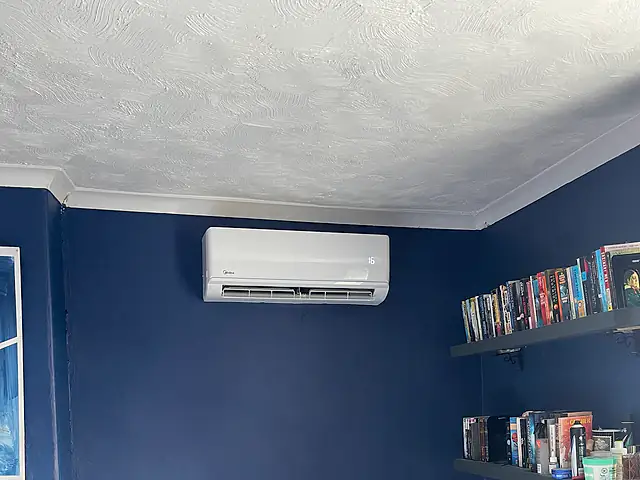
One outdoor unit paired with one indoor unit (wall-mounted, console, cassette or ducted), sized in kW for the room it serves, for quiet cooling and efficient heating.
Learn more
A single, thorough service visit covering filters, coils, drains, fans, electrics and refrigerant performance, with readings recorded for homes and businesses across London.
Learn moreShare a few details about your property and what you need, and we’ll respond with advice and the next steps for your air conditioning replacement.
A few details help us understand your property and come back with useful advice.