West London

Air Conditioning Installation in Harrow

Harrow is classic Metro-land: mock-Tudor semis on tree-lined roads, larger houses in Pinner, Stanmore and Hatch End, and a busy town centre at the foot of the hill. We install, service and repair air conditioning across the whole borough, for family homes, surgeries, shops and offices.

  • HA1
  • HA2
  • HA3
  • HA5
  • HA7

Free quote in Harrow

Homes and businesses: tell us what you need and we’ll be in touch.

Metro-land Semis, Hilltop Heritage and a Busy Town Centre

Much of Harrow grew in the 1920s and 1930s as the Metropolitan line extended outwards, and the result is a borough of tree-lined roads lined with semi-detached and detached houses, many with mock-Tudor gables, leaded bay windows and hipped roofs. Rayners Lane, North Harrow, South Harrow, Kenton and Headstone are typical. Pinner, Stanmore and Hatch End have older village cores alongside larger homes on bigger plots, and Harrow Weald and Stanmore rise towards the wooded high ground on the borough's northern edge.

Houses like these usually have space for an outdoor unit in the back garden and a loft that can carry pipework, so air conditioning is relatively straightforward to install. The challenge is comfort upstairs. Bedrooms under hipped roofs and later loft conversions become very warm during heatwaves, rear extensions with roof lights trap the afternoon sun, and with more people working from home, a cool box room or study has become a priority for many families.

The town centre around Station Road, St Ann's Road and College Road and the nearby Wealdstone high street provide the main commercial hubs, with shops, offices, restaurants, dental and medical practices and community buildings. Harrow on the Hill, crowned by Harrow School and St Mary's Church, has a protected historic streetscape that calls for particular care with any external equipment, and Pinner High Street has a similarly sensitive character.

Our services

Cooling for Harrow Families, Surgeries, Shops and Offices

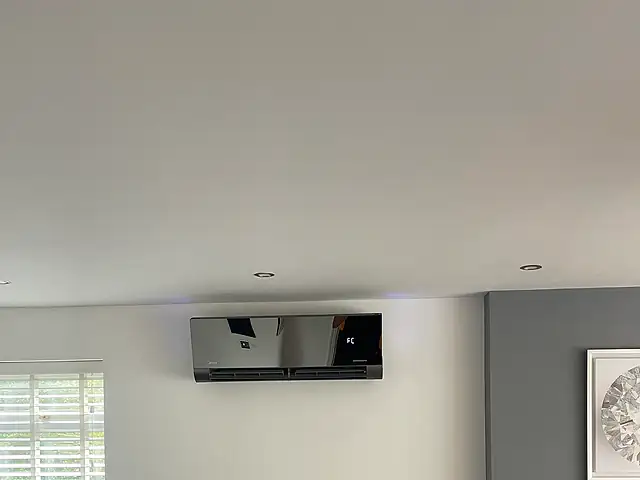
A black gloss designer air conditioning unit in a living room, the kind of air conditioning we fit for homes in Harrow
A black gloss designer air conditioning unit in a living room. An example of the air conditioning we install for homes in Harrow.

For homes

Homeowners in the borough typically want comfortable bedrooms, a cool home office and a usable conservatory or rear extension in summer. Many also value the efficient heating that reverse-cycle systems provide in spring and autumn, when firing up the boiler feels excessive. In a Rayners Lane semi that usually means a multi-split; in a large Stanmore house, possibly a ducted loft system. We survey each room, consider insulation, glazing and orientation, and recommend single, multi-split or ducted options before installing and commissioning the equipment, with annual servicing afterwards.

Domestic air conditioning
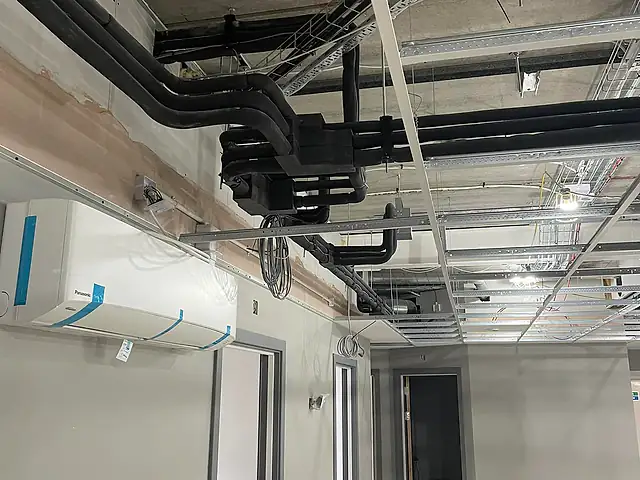
Insulated refrigerant pipework during a commercial fit-out, the kind of commercial air conditioning we fit for businesses in Harrow
Insulated refrigerant pipework during a commercial fit-out. An example of the commercial air conditioning we install for businesses in Harrow.

For businesses

Commercial premises across the borough include shops and restaurants along Station Road and St Ann's Road, offices in the town centre and Wealdstone, medical and dental clinics, nurseries, gyms, places of worship and community buildings. We install systems to suit each space, from a single wall unit in a small consulting room to ceiling cassettes on a retail floor, and provide repairs and planned maintenance so equipment stays reliable through the warmest weeks.

Commercial air conditioning

Getting Upstairs Comfortable in a 1930s Metro-land House

The typical Harrow semi has three bedrooms under a hipped roof, a box room used as an office and often a loft conversion or rear extension. Heat builds upstairs through the afternoon and lingers at night, so the system design starts with the bedrooms.

Multi-split routed through the loft

A single condenser in the rear garden connects to wall-mounted indoor units in each bedroom, with pipework rising into the loft and dropping through airing cupboards or wardrobes. Each room has its own controller, so a teenager's room can run cooler than the main bedroom. Bedroom units of 2.0 to 2.5 kW suit most of these rooms, with a larger unit for a south-facing rear bedroom.

Room for future expansion

Choosing a condenser with a spare connection lets you add a loft conversion or rear extension later without replacing the outdoor unit or running new pipes down the back of the house.

Cooling a box room used as a home office

Small rooms with a computer, monitors and a person working all day gain heat quickly. A compact 1.5 to 2.0 kW unit is usually enough, positioned so air does not blow directly at the desk. On a multi-split it can run during the day while bedroom units stay off.

Conservatories and glazed rear extensions

Glass roofs and bi-fold doors make these spaces swing from cold to very hot. They need more capacity than an internal room of the same size, and benefit from blinds or solar control film used alongside the system. Floor consoles or high wall units are chosen depending on available wall space.

Heating in winter too

A reverse-cycle unit sized for a conservatory also provides efficient heating on cold days, turning a seasonal room into usable year-round space without extending the central heating.

Heritage Streets on the Hill and in Pinner Village

Harrow on the Hill and Old Pinner contain some of the borough's oldest and most sensitive buildings. Air conditioning is often still achievable, but the approach is about discretion, consents and protecting historic fabric.

Concealing equipment on historic buildings

Indoor units can be ducted into ceiling voids or chosen in low-profile designs, pipework routed internally through existing service voids, and condensers placed in rear courtyards or behind garden walls. New holes through historic walls are kept to a minimum and positioned to avoid decorative brick, timber framing or original features.

  • Speak to the council's conservation officer early
  • Expect listed building consent to be required for listed properties
  • Keep condensers out of views from the street and churchyard

Choosing quieter equipment for close neighbours

Cottages and terraces on the hill sit close together, often with small rear yards. Outdoor units with low sound power ratings, mounted on anti-vibration feet and kept away from neighbouring windows, help avoid complaints and support any planning application.

Local properties

From Rayners Lane Semis to Stanmore Detached Houses

Mock-Tudor semis in Rayners Lane, North Harrow and Kenton

These interwar houses suit multi-split systems, with indoor units in two or three bedrooms and a single condenser in the rear garden. Pipework is routed through the loft and dropped inside cupboards to each room, keeping the decorative front elevation untouched and the outside of the house tidy.

Larger detached homes in Pinner, Stanmore and Hatch End

Bigger houses may need more than one outdoor unit, or a ducted system in the loft feeding discreet ceiling grilles in each bedroom. This keeps walls clear and suits owners who prefer the equipment to be almost invisible, though it needs adequate loft space and good access for servicing.

Period properties on Harrow on the Hill and in Old Pinner

Historic buildings and cottages around the hill's High Street and Pinner's timber-framed core need a sensitive approach. Low-profile indoor units, concealed pipe runs and condensers placed well out of public view are important, and listed building consent may be needed before any work starts.

Shops, surgeries and offices in the town centre and Wealdstone

Retail units, dental and medical practices and small offices around Station Road and Wealdstone often benefit from ceiling cassettes, which spread cool air evenly without taking up wall space or getting in the way of shelving, treatment chairs or equipment.

Before you install

Practical Checks Before Fitting a Condenser to a Harrow Home

This is general guidance only. Every building, lease and planning situation is different, so we’ll talk through yours at survey stage.

  1. 01The borough has numerous conservation areas, including Harrow on the Hill, Pinner High Street and several in Stanmore and Harrow Weald. It is wise to check with Harrow's planning service before mounting a condenser where it can be seen from the street.
  2. 02Semi-detached houses share a party wall with the neighbours. Mounting the outdoor unit on anti-vibration brackets and away from the shared boundary helps limit noise and vibration transfer, and keeps neighbourly relations intact.
  3. 03Loft conversions often have limited eaves space. Checking where pipework and condensate drains can run before work starts avoids unsightly external trunking on the rear elevation.
  4. 04Conservatories and glazed rear extensions gain and lose heat quickly, so a unit cooling one should be sized generously and positioned so it does not blow directly at seating areas.
  5. 05Homes on the slopes of Harrow on the Hill and Stanmore can have steep gardens and steps. Getting a condenser and tools to the rear is easier when access is discussed at survey stage.
Pricing explained

What Influences the Cost of Cooling a Harrow Home?

Harrow homes are often straightforward to install in, but the number of rooms, loft routing, conservation requirements and extension glazing all shape the final quote. Quotes set out equipment, labour, materials, electrical work and commissioning so you can see each element.

Single split, multi-split or ducted

One bedroom unit is the simplest job. A multi-split for three or four rooms costs more overall but less per room, and a ducted loft system involves more labour for ductwork and grilles in exchange for an almost invisible finish.

Loft access and internal pipe routes

Routing through a clear loft in a Metro-land semi is usually efficient. Converted lofts with little eaves space, or houses with no usable loft, may need internal boxing or external trunking, which changes the labour involved.

Conservation and heritage requirements

Concealed routes, careful core drilling and positions chosen to satisfy conservation officers on the hill or in Pinner can add time compared with a standard rear-wall installation on a suburban street.

Commercial premises and opening hours

Surgeries, shops and offices are sized on occupancy, equipment and glazing. Installations outside opening hours to avoid disrupting patients or customers, and any comms-room cooling, are itemised separately.

Step by step

What Happens When You Book a Harrow Installation

  1. Tell us about your home or premises

    Let us know where in Harrow you are, the house type, which rooms need cooling and whether there is a loft conversion, conservatory or extension. Photos of the rear garden and loft help us plan the visit.

  2. Room-by-room survey

    We measure rooms, note glazing, orientation and insulation, check loft access and pipe routes, assess condenser positions away from party walls and confirm electrical capacity at the consumer unit.

  3. Clear proposal and any consents

    You receive a written quote describing equipment, positions and inclusions. For conservation areas or listed buildings, we provide technical details to support any planning or listed building consent application.

  4. Installation and ongoing care

    We install and commission the system, configure each room's controller, explain filter cleaning and offer annual servicing, ideally in spring, so it is ready before the first warm spell.

FAQs

Harrow Homeowners' Common Air Conditioning Questions

Is a multi-split system a good choice for a 1930s semi in Harrow?

For many families it is. A multi-split connects several indoor units to one outdoor unit, so you can cool the bedrooms and a study without cluttering the outside of the house. Each room has its own controller. We check whether the outdoor unit capacity and pipe lengths suit your layout, and whether loft routing is possible, before recommending one.

Can I install air conditioning in a listed building on Harrow on the Hill?

It may be possible, but listed building consent is likely to be required for any work that affects the building's character, including external units and new holes through historic walls. Speak to the council's conservation officer early. We can then suggest discreet indoor options and an outdoor position that is less likely to raise objections.

Can air conditioning make my conservatory usable in summer?

Yes, a correctly sized split system can bring a conservatory to a comfortable temperature on most summer days and provide heating in winter. Because glass gains heat quickly, the unit needs more capacity than an equivalent room inside the house. Blinds or solar control film used alongside the system improve the results further.

Would a ducted system suit a large house in Stanmore or Pinner?

It can, if the loft has enough height and a good-sized hatch. A ducted unit in the roof feeds slim ceiling grilles in each bedroom, so there is nothing visible on the walls and the noise source sits outside the room. It involves more installation work than wall units and needs proper insulation of ductwork, which we assess during the survey.

How can I keep the outdoor unit from annoying my neighbours?

Choose a position on your own rear wall or in the garden away from the neighbour's bedroom window and patio, mount the unit on anti-vibration brackets or feet, and select a model with a low sound power rating. Avoid fixing it directly to the party wall. These steps also help meet the noise conditions that apply under permitted development.

Do you install air conditioning in Harrow dental and medical practices?

Yes. Treatment rooms and waiting areas often benefit from ceiling cassettes or slim wall units that keep surfaces clear and spread air evenly. Equipment such as compressors and computers adds heat, so we size each room individually. Installation can be scheduled outside clinic hours to avoid disrupting appointments.

Areas Bordering Harrow That We Also Serve

Free quote

Start Your Harrow Air Conditioning Project with a Home Survey

Tell us about your home or business in Harrow and what you’d like to achieve, whether that’s cooling, heating or both. We’ll come back with advice and next steps.

  • Survey-led advice: recommendations based on your rooms, layout and how you use the space.
  • Clear written quotation: what’s included, the equipment proposed and the next steps.
  • No obligation: ask questions and take your time to decide.
  • CoverageHomes & businesses across Greater London

Request your free quote

A few details help us understand your property and come back with useful advice.

Fields marked * are required. We only use your details to respond to this enquiry.
Get a Free Quote