
Areas we cover

Air Conditioning Across South London

South of the river, the right air conditioning depends heavily on where you are: a leasehold flat in Kennington, a tower apartment in Nine Elms and a 1930s semi in Bexleyheath all need different equipment, different consents and different installation days. We fit, service and repair systems for homes and businesses right across the region.

Free quote in South London

Homes and businesses: tell us what you need and we’ll be in touch.

From Thames-side Towers to Kent-border Semis

South London is not one housing market but several stacked on top of each other. Close to the Thames, Bankside, Vauxhall, Nine Elms, Deptford and the Greenwich Peninsula are dominated by offices and modern apartment blocks with sealed facades, big windows and managing agents who control every external fixing. Behind them, a broad belt of Victorian and Edwardian streets runs through Camberwell, Brixton, Peckham, Brockley, Tooting and Streatham, much of it now split into leasehold flats.

Further out, the pattern loosens. Interwar semis and detached houses fill Bromley, Sutton, south Croydon, Eltham and Bexley, usually with side access and rear gardens long enough to put a condenser well away from bedrooms. Bexley does not have its own page on this site, so homes and businesses in Bexleyheath, Sidcup, Welling, Crayford and Erith are covered through this South London page. The outer edge reaches the North Downs around Coulsdon and Biggin Hill, where plots are bigger again and hills shape access.

That spread means a single approach does not work. In the inner boroughs the first questions are usually about leases, conservation areas and where pipework can run without crossing a neighbour's wall. In the suburbs they are more about how many rooms to cool, whether one outdoor unit can serve them all and how to keep noise away from the house next door. We survey each property on its own terms, then recommend the simplest system that will genuinely keep it comfortable in a hot London summer.

Our services

Home Cooling and Business Climate Control South of the River

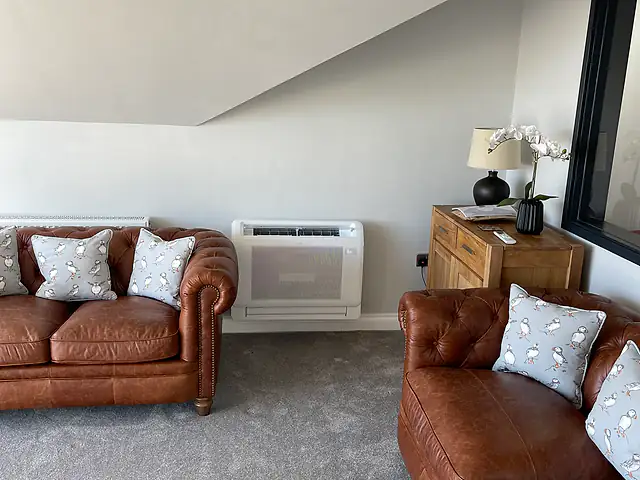
A floor-standing console air conditioner in a lounge, the kind of air conditioning we fit for homes in South London
A floor-standing console air conditioner in a lounge. An example of the air conditioning we install for homes in South London.

For homes

The commonest domestic request south of the river is cooling for the rooms that fail first in a heatwave: loft bedrooms, top-floor flats and glazed rear kitchen extensions. A single wall-mounted split usually solves one room; a multi-split serves several bedrooms from one outdoor unit; ducted systems suit larger suburban houses with usable loft or ceiling voids. Every system we recommend is a reverse-cycle heat pump, so it also heats efficiently in spring and autumn, and we offer annual servicing and repairs once it is in.

Domestic air conditioning
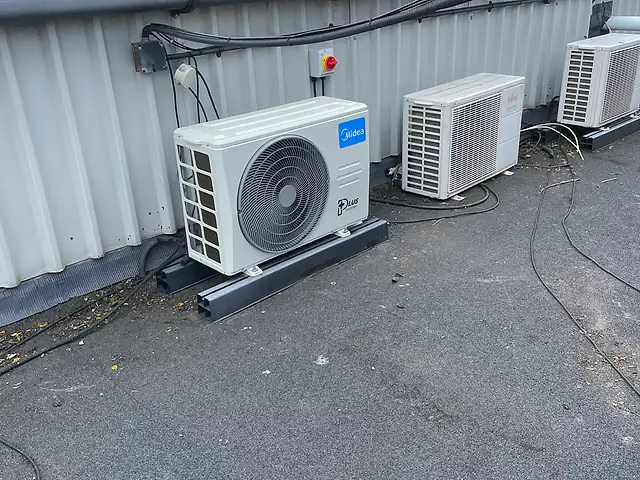

A row of outdoor air conditioning condensers at a commercial building, the kind of commercial air conditioning we fit for businesses in South London
A row of outdoor air conditioning condensers at a commercial building. An example of the commercial air conditioning we install for businesses in South London.

For businesses

Commercial work in South London ranges from supplementary cooling for meeting rooms in managed offices near London Bridge and Waterloo, to ceiling cassettes on shop floors along Croydon's North End and Bromley High Street, to kitchen-aware systems for restaurants in Peckham, Clapham and Greenwich. We also install dedicated around-the-clock cooling for comms and server rooms, and provide planned maintenance, including the periodic refrigerant leak checks that larger systems may be required to have.

Commercial air conditioning

Matching the System to Inner and Outer South London Homes

The same cooling load can call for quite different equipment depending on whether the home is a Lambeth conversion or a Bromley semi. Below is how we usually approach the main property groups, with the reasons behind each recommendation.

Wall-mounted splits for top-floor flats and loft bedrooms

A single wall-mounted split is the workhorse of inner South London. For a typical loft bedroom under a slate roof, a unit of around 2.5 kW to 3.5 kW is often enough, but dormers facing south or west and large roof windows can push that higher. The indoor unit sits high on an internal or party wall, and the pipework runs through the wall behind it to a condenser on a rear elevation or flat roof. Condensate can usually fall by gravity; where it cannot, a small pump is fitted inside the unit's trunking.

Why we size from heat gains, not floor area alone

Two rooms of the same size can need very different capacities. Roof construction, glazing area and orientation, and whether the room holds a home office with computers all change the result. We calculate those gains at survey rather than relying on a square-metre rule.

Keeping indoor noise down in bedrooms

For sleeping areas we look for indoor units with a quiet fan setting in the low twenties of dB(A). Inverter models ramp down once the room reaches temperature, so overnight running is far quieter than the cooling-down phase.

Multi-split and ducted options for suburban family houses

Where two to five rooms need cooling, a multi-split connects several indoor units to one outdoor unit, keeping the garden clear of clutter. In a 1930s semi the pipework can often be run through the loft and dropped into each bedroom, with the condenser in the side return. Larger detached houses in Chislehurst, Sanderstead or Cheam with good loft space may suit a ducted system, which hides the indoor unit and delivers air through slim ceiling grilles. Ducted systems take more planning and suit renovation projects best.

  • Multi-split: independent control for each room from one condenser
  • Ducted: least visible inside, needs a ceiling or loft void
  • Separate singles: more condensers but each room fully independent

Tower apartments with sealed facades

Modern riverside flats are airtight and heavily glazed, so they gain heat fast and lose it slowly. Before any design, we need the building's rules on external equipment, core drilling through the facade, approved fixings and working hours. Where a balcony position is allowed, a compact condenser on a wall bracket or floor stand is typical. Condensate is usually connected into an internal waste with a trap and air-break, because dripping onto the balcony below is rarely acceptable.

What Do South London Businesses Need From a Cooling System?

Commercial premises south of the river run from glass office floors near London Bridge to 1950s parades in Welling. Heat loads, landlord controls and opening hours vary just as much, and they drive the choice of system more than the floor area does.

Managed offices near London Bridge, Waterloo and East Croydon

In multi-let office buildings the landlord usually controls the main plant, so tenants tend to need supplementary units for meeting rooms, glazed corners or comms cupboards. Any new system has to fit the landlord's rules on contractors, risk assessments, roof access and out-of-hours working. Ceiling cassettes work well where there is a suspended ceiling; where there is not, high-wall units or ducted units hidden in a bulkhead are alternatives.

High-street shops, salons and restaurants

Shops on parades in Streatham, Lewisham, Bexleyheath or Bromley carry heavy lighting loads and lose cool air every time the door opens. Four-way cassettes spread air evenly across a sales floor. Restaurants need the kitchen's heat output considered separately from the dining area, and the condenser position at the rear yard or roof has to respect neighbouring flats above shops, which are common across the region.

Server and comms rooms need their own system

A comms cupboard should never depend on the office system that switches off at night. A dedicated split sized for the IT load, ideally with a standby arrangement where the equipment is critical, keeps temperatures stable around the clock.

Local properties

The Building Types That Shape South London Installations

Inner-borough terraces split into flats

From Kennington to Peckham, many houses now hold two or three leasehold flats. The ground-floor flat usually has the garden, which complicates condenser positions for the flats above. Common answers are a bracket on the rear wall, a unit on a back-addition flat roof, or a shared agreement between leaseholders, all subject to freeholder consent.

Riverside towers from Vauxhall to Woolwich

High-rise blocks along the Thames often have fixed glazing, winter gardens and strict rules on external plant. Some already include comfort cooling that simply needs servicing; others allow residents to add a split system only on a designated balcony position. The building's rules decide the design, so we start with the managing agent's requirements.

1930s semis in the outer boroughs

Semis in Bexleyheath, Petts Wood, Sutton and Selsdon usually have hipped roofs, bay-fronted bedrooms and side passages. That side passage or the rear garden is the natural place for a condenser, and a multi-split can reach two or three bedrooms with short pipe runs through first-floor walls.

Converted offices, arches and studios

Office-to-residential blocks in central Croydon, workspaces under railway arches in Bermondsey and Deptford, and studios in former light industrial buildings all overheat for different reasons: solar gain through glass, poor insulation or high equipment loads. Each needs sizing from a proper heat-gain calculation rather than a rule of thumb.

Before you install

Consents, Neighbours and Access South of the Thames

This is general guidance only. Every building, lease and planning situation is different, so we’ll talk through yours at survey stage.

  1. 01Conservation areas cover large parts of Kennington, Camberwell, Dulwich, Brockley, Blackheath and Chislehurst. Outdoor units visible from the street may need planning permission, so you should check with your local planning authority before settling on a position.
  2. 02Leasehold is the norm in converted terraces and riverside blocks. Most leases require written consent from the freeholder or managing agent for external units, core drilling and work on shared roofs, and that consent can take several weeks to arrive.
  3. 03Gardens in terraced streets are narrow and close to neighbours' bedroom windows. Choosing a condenser with a low sound power rating and siting it on anti-vibration mounts away from boundaries makes a real difference on warm nights.
  4. 04Controlled parking zones cover most of the inner boroughs. A parking suspension or visitor permit arranged in advance helps on installation day, especially where a condenser has to be carried through a house to the garden.
  5. 05In the outer boroughs, long gardens tempt people to put the condenser far from the house. Pipe runs have manufacturer limits, so a shorter run with a well-chosen, quiet position is usually better than a distant one.
Pricing explained

What Pushes an Installation Quote Up or Down South of the River

Every quote we give is built from the survey, so it is worth knowing what moves it. The equipment is only part of the cost; access, pipe length, consents and making good often matter as much. Quotes typically separate equipment, labour, electrical work and any access equipment, so you can see where the money goes.

Floor level and how the condenser gets there

A ground-floor unit in a Sidcup garden is quick to position. A condenser for a fourth-floor flat in Brixton may need a longer pipe run, a bracket at height and possibly a scaffold tower or access platform, all of which add labour and equipment hire to the job.

Number of rooms and type of system

One wall-mounted split is the simplest installation. A multi-split adds indoor units, branch pipework and a larger condenser; ducted systems add ductwork, grilles and ceiling work. The more rooms served, the more the survey and design time matters.

Pipe routes through period construction

Solid brick walls in Victorian terraces are straightforward to core drill, but long internal routes through finished rooms need trunking or boxing in, and decorative cornices or panelling require extra care. Concealed routes cost more but often look far better.

Electrical supply and consents

Most systems need a dedicated circuit and an outdoor isolator. An older consumer unit may need upgrading first. Where planning permission or freeholder consent is needed, the time to prepare drawings or specifications also forms part of the overall cost.

Step by step

How an Installation Runs When You Book From South London

  1. Survey at your property

    We visit, measure rooms, note glazing and orientation, check the electrical supply and look at possible condenser positions, including side returns, flat roofs and balconies. For flats, we note what the lease or building rules are likely to require.

  2. Design and written quote

    You receive a recommendation for the system type, capacity of each unit, pipe routes and outdoor position, with a clear breakdown of the work. If consents are needed, we explain what information the freeholder or council is likely to want.

  3. Installation day

    Most single-room installations are completed within a day; multi-room systems take longer. We protect floors, core drill, fit brackets and units, pressure test and vacuum the pipework, then commission the system and show you the controls.

  4. Servicing and aftercare

    We recommend an annual service to clean filters and coils, check drainage and confirm the refrigerant circuit is performing as it should. Repairs and fault-finding are available across South London and Bexley for systems we fit and many we did not.

FAQs

Questions We Hear Across South London and Bexley

Which parts of South London and Bexley do you cover?

We cover the whole region south of the river, including Lambeth, Southwark, Wandsworth, Lewisham, Greenwich, Merton, Croydon, Bromley and Sutton, plus Bexley, which is handled through this page. That includes Bexleyheath, Sidcup, Welling, Crayford and Erith. Kingston, Clapham, Brixton and Wimbledon have their own pages too. Wherever you are, we arrange a survey and recommend a system for your property.

Is air conditioning worth it for a home south of the river?

For many households, yes. Loft bedrooms, top-floor flats and glazed extensions in South London often stay uncomfortably warm overnight during hot spells. A modern split system cools those rooms quickly and also works as an efficient heat pump, so it is useful well beyond the summer months. Whether it suits your home depends on which rooms overheat and where an outdoor unit can sensibly go.

Can you fit air conditioning in a rented flat?

Yes, provided the owner agrees in writing. Tenants need landlord permission, and in leasehold buildings the landlord usually needs freeholder or managing agent consent as well. Some tenants prefer an arrangement that can be removed cleanly at the end of a tenancy, with the holes made good, and we can discuss that at the survey.

How do you deal with a flat that has no garden or balcony?

We look at a rear wall bracket, a flat roof over a back addition, a lightwell or a shared roof area, each subject to the freeholder's consent. If no external position is permitted, a through-wall unit with no separate outdoor condenser is sometimes an option, though it is noisier and less efficient than a split system.

Do 1930s semis in Bexley or Bromley suit a multi-split?

Usually very well. The side passage or rear garden gives a discreet place for one outdoor unit, and pipework can often run through the loft to drop into each bedroom. That keeps the front of the house clear and the indoor installation tidy. The capacity is set by the number of rooms and their heat gains, which we calculate at the survey.

How often should a system in South London be serviced?

Once a year is a sensible minimum for homes, ideally in spring before the hot weather. Busy commercial premises, restaurants and comms rooms often benefit from more frequent visits. Systems near main roads or in kitchens pick up dust and grease faster, so their filters and coils need closer attention to keep efficiency and air quality up.

South London Boroughs and Neighbourhoods With Their Own Pages

Free quote

Tell Us About Your South London Property

Tell us about your home or business in South London and what you’d like to achieve, whether that’s cooling, heating or both. We’ll come back with advice and next steps.

  • Survey-led advice: recommendations based on your rooms, layout and how you use the space.
  • Clear written quotation: what’s included, the equipment proposed and the next steps.
  • No obligation: ask questions and take your time to decide.
  • CoverageHomes & businesses across Greater London

Request your free quote

A few details help us understand your property and come back with useful advice.

Fields marked * are required. We only use your details to respond to this enquiry.
Get a Free Quote

