
South London

Brixton Air Conditioning for Homes, Shops and Venues

Brixton packs covered markets, railway arches, mansion blocks, divided villas and some of London's best-known music venues into a few busy streets, and we provide air conditioning installation, servicing and repairs for homes and businesses across SW2 and SW9.

  • SW2
  • SW9

Free quote in Brixton

Homes and businesses: tell us what you need and we’ll be in touch.

Market Arcades, Mansion Blocks and Railway Arches: Brixton's Mix

Brixton grew around the railway in the Victorian era, and the viaducts still shape the town centre, carrying trains over Atlantic Road and Brixton Station Road with shops and businesses tucked into the arches beneath. Around them sit the covered arcades of Brixton Village and Market Row, the street market on Electric Avenue, Windrush Square and venues such as the Academy and the Ritzy. Few London neighbourhoods fit so many different kinds of commercial space into so small an area.

Residential Brixton is mostly flats. Victorian terraces off Coldharbour Lane and around Railton Road have largely been split into two or three units, mansion blocks line parts of the main roads, and post-war estates such as Angell Town and the Loughborough Estate house many households. Up the hill towards Tulse Hill, large Victorian villas have been divided into several flats each, often leaving the top-floor flat under a hot roof and a long way from the garden.

That mix means there is no standard installation here. A market trader, a chef, a venue manager and a top-floor leaseholder each face different constraints, and the hardest question is usually where the outdoor unit can go and who has to agree to it. We plan around those constraints from the first visit, across the neighbourhood from Stockwell Park to Brixton Hill.

Our services

Air Conditioning for Brixton Flats, Kitchens and Music Venues

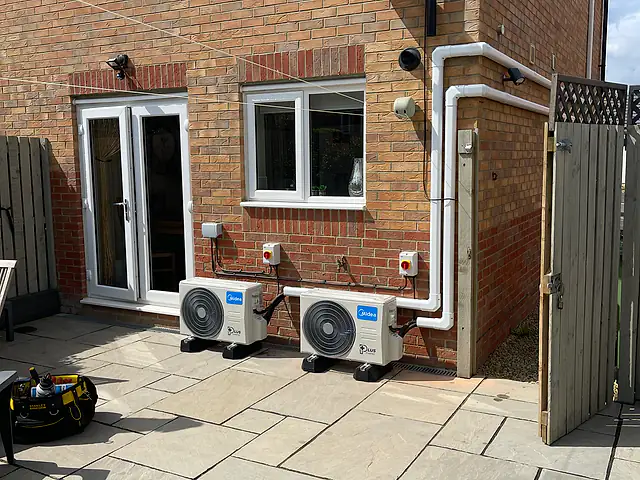
Two outdoor air conditioning units on a patio with neat trunking, the kind of air conditioning we fit for homes in Brixton
Two outdoor air conditioning units on a patio with neat trunking. An example of the air conditioning we install for homes in Brixton.

For homes

Most households here live in flats, so domestic work usually means one efficient wall-mounted split in the bedroom, sometimes with a second unit added to the living room later. Consent and condenser position come first: in divided villas, mansion blocks and estate flats, those decisions shape the whole design. Reverse-cycle units heat efficiently too, which helps in draughty period flats with tall sash windows. We also service and repair existing systems in homes across SW2 and SW9.

Domestic air conditioning
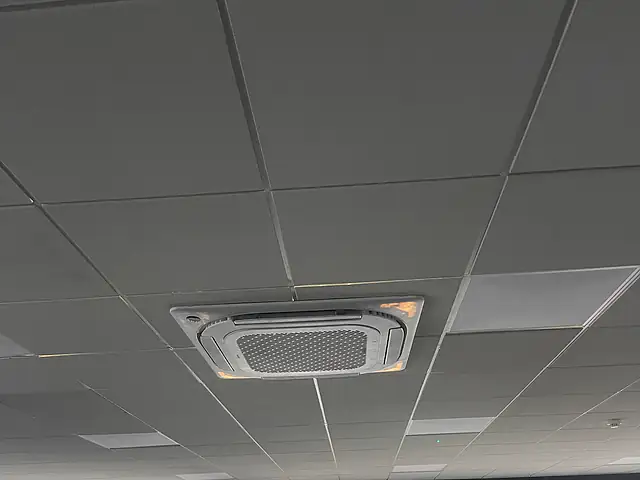

A four-way ceiling cassette in a suspended office ceiling, the kind of commercial air conditioning we fit for businesses in Brixton
A four-way ceiling cassette in a suspended office ceiling. An example of the commercial air conditioning we install for businesses in Brixton.

For businesses

Brixton's commercial cooling is driven by food, drink, music and independent retail. Restaurants and street-food kitchens in the arcades need systems that cope with cooking heat, bars and venues must handle crowds for hours at a time, and shops, salons, studios and community spaces in the arches and along the main roads each have their own constraints. We design, install and maintain systems for all of these, with planned servicing before the busy summer weekends.

Commercial air conditioning

Can You Cool a Railway Arch Unit in Brixton?

Usually yes, but arches behave differently from conventional buildings. Thick brick vaults hold heat and moisture, the only external face is often the front, and the arch landlord sets the rules on alterations. Good results come from planning ventilation, plant position and drainage together rather than choosing a unit first.

Brick Vaults, Damp and Air Movement

Arch interiors are often lined to manage water coming through from the track above, and the void behind the lining must stay ventilated. Cooling a lined arch also reduces humidity, which helps with damp, but condensate must be drained properly, usually with a pump lifting to a waste connection near the front. Ceiling cassettes rarely suit the curved roof, so high wall units or floor consoles towards the back of the unit are common.

Front Elevation Plant Positions

With no rear wall or roof to use, condensers are often placed above the shopfront in a louvred enclosure or on a frame behind a screened panel. The enclosure must allow free airflow, or the system will lose efficiency on hot days.

Working With the Arch Landlord

Most arch leases require landlord approval for alterations, including holes through the brickwork and new electrical supplies. Submitting a clear drawing, specification and method statement at the start speeds up the approval process.

Electrical Supply and Metering in Arch Units

Many arch units have modest supplies shared between lighting, coffee machines, fridges or workshop tools. Adding air conditioning may need a new circuit or a review of the incoming supply. A qualified electrician checks the load and capacity before installation, and a lockable isolator is fitted next to the condenser so it can be safely worked on during servicing.

Kitchen Heat and Crowd Loads Across Brixton's Food and Music Scene

Food and entertainment businesses in the town centre produce some of the highest heat loads we design for. Ovens and grills add heat all day, and full venues add hundreds of people. Cooling has to work alongside kitchen extraction and general ventilation rather than fight against them.

Restaurant Kitchens and Extract Systems

Kitchen extraction pulls large volumes of air out of a restaurant, and replacement air has to come from somewhere. If make-up air is not designed properly, cooled air from the dining room is drawn into the canopy and wasted. Cooling for dining areas is sized with this in mind, and kitchen staff are often served by a dedicated unit positioned away from cooking fumes and grease, with filters cleaned more frequently.

Units in Brixton Village and Market Row

The covered arcades have small units with shared roofs and limited external access. The market management controls where outdoor equipment can go, how cables run and how condensate is drained. Compact wall units or small cassettes, with condensers on agreed roof positions and pumped drainage, are typical once approval is given. Because units are small, careful sizing avoids overcooling the space when trade is quiet.

Bars and Live Music Rooms

Venues fill quickly and stay full, with stage lighting and sound equipment adding to body heat. Ducted systems or multiple cassettes on a VRF or multi-split arrangement spread air across the room without creating draughts on stage. Plant generally sits on roofs or in service yards and may need acoustic treatment, as many venues are surrounded by flats.

  • Size for peak capacity on the busiest night
  • Account for stage lighting and equipment heat
  • Plan plant positions away from neighbouring windows
  • Schedule servicing before the summer season

Keeping Top-Floor Flats Cool on Brixton Hill and in the Estates

Upper flats in converted villas and estate blocks overheat for the same reason: heat rises through the building and collects beneath the roof. The equipment needed is simple; agreeing positions and routes with freeholders, managing agents or the council is the main task.

Long Pipe Routes in Divided Villas

A top-floor flat in a four-storey villa might be ten or more metres above the garden, and the route down may cross other flats' walls. Alternatives include a condenser on a rear flat roof at an intermediate level or on a back-wall bracket close to the flat. Every option must stay within the manufacturer's maximum pipe length and height difference, which the survey checks before anything is proposed.

Estate Blocks With the Council as Landlord

On estates such as Angell Town and the Loughborough Estate, tenants and leaseholders need the council's permission for alterations, and there may be rules on external equipment and facade drilling. Balconies are sometimes the only practical place for a condenser, and pumped condensate avoids water dripping onto balconies below. A clear written proposal helps the application move smoothly.

Local properties

Where Brixton Lives and Trades, and How Each Space Is Cooled

Railway arch units

Brick arches under the viaducts have deep vaulted interiors, limited rear access and only a front elevation to work with. Cooling has to be agreed with the arch landlord, and condensers usually go on the frontage in a louvred enclosure or on a screened frame.

Divided villas on Brixton Hill and Tulse Hill

Large houses split into three or four flats often have tall ceilings and deep gardens. Pipe runs from an upper flat to a ground-level condenser can be long, and every leaseholder whose walls or garden the route crosses may need to agree.

Mansion blocks and estate flats

Solid-brick mansion flats and council-built blocks are leasehold or rented. Managing agents, and the council as landlord, usually protect frontages, so courtyards, lightwells or balconies are the likely condenser positions.

Market units, restaurants and venues

Small arcade units, busy kitchens and crowded music rooms have high heat loads in small or awkward spaces, and nearly all need the market operator's or landlord's approval for plant, power and drainage before any design is fixed.

Before you install

Permissions and Practicalities Specific to Central Brixton

This is general guidance only. Every building, lease and planning situation is different, so we’ll talk through yours at survey stage.

  1. 01The town centre and several surrounding streets are conservation areas. A condenser visible from the street may need planning permission, so check with Lambeth's planning team before fixing a position.
  2. 02Traders in Brixton Village, Market Row and the railway arches should speak to the market management or arch landlord about equipment, electrical supply and condensate rules before commissioning a design.
  3. 03Leaseholders in divided villas and mansion blocks normally need written consent from the freeholder or managing agent for external units and for drilling through shared walls. Council leaseholders need the council's permission as landlord.
  4. 04Roads around the town centre are busy, with bus lanes and controlled parking, so deliveries of larger equipment and access for installation vehicles need to be arranged in advance.
  5. 05Venues and restaurants close to homes should plan condenser positions and running hours carefully, as noise from external plant is a common cause of complaints in dense mixed-use streets.
Pricing explained

Why Brixton Jobs Vary So Much in Scope and Price

Two jobs a few streets apart can be very different: a simple bedroom split in a garden flat, or a cooled arch unit with pumped drainage, a new supply and a front-mounted enclosure. A clear quote lists the equipment, access, electrical work and any landlord requirements, so you can see what is driving the price.

Deliveries and Parking Around the Town Centre

Busy roads, bus lanes and controlled parking around the town centre make loading and unloading harder. Arranging bay suspensions, early deliveries or carrying equipment from further away all affects time on site.

Kitchen and Crowd Capacity

Restaurants and venues need much larger capacity than homes of similar floor area, often with several indoor units, reliable drainage and coordination with ventilation. Capacity is the biggest single cost driver for commercial work.

Enclosures and Front-Mounted Plant

Arch units and shops without rear access may need condensers in louvred enclosures or on frames above the frontage, which adds fabrication, fixing and approval time to the job.

Long Routes in Converted Buildings

Running pipework from a top-floor flat to an acceptable condenser position may involve long runs, additional refrigerant and access equipment. The quote should state the pipe lengths and access assumptions clearly.

Step by step

A Brixton Installation Step by Step, With Market and Parking Realities

  1. Visit and constraints check

    We survey the space, note who owns the walls, roof and frontage, and check access for deliveries. For market units and arches we ask for the operator's or landlord's rules before designing anything.

  2. Design for approval

    You receive a written design with equipment, positions, routes and noise data, which you can pass to the freeholder, the council, the market management or the arch landlord.

  3. Installation around trading and traffic

    We schedule deliveries and drilling to suit traffic and opening hours, protect communal areas, fit units, run pipework and drainage, and connect the supply. Most flats take a day; commercial jobs are planned in phases.

  4. Commissioning and pre-summer servicing

    Every system is pressure-tested, evacuated and run in both modes. Commercial clients can schedule servicing ahead of the summer season, when kitchens and venues are at their busiest.

FAQs

Brixton Cooling Questions From Residents and Traders

Can a unit in Brixton Village or Market Row have air conditioning?

It may be possible, but the market management controls alterations, including outdoor equipment positions, electrical supplies and how condensate is drained. Speak to them first to understand their requirements. Once you know what is allowed, a compact wall unit or small cassette can usually be designed to suit the size and use of your unit.

Can a railway arch shop be air conditioned?

Usually, yes. Arch units need careful planning because the curved brick roof limits indoor unit positions and there is often only a front elevation for the condenser. Condensate is normally pumped to a waste, and the supply may need upgrading. The arch landlord's approval is needed before work starts, so we prepare a clear drawing and specification.

My flat is at the top of a converted villa on Brixton Hill. What are my options?

A wall-mounted split in the bedroom is the most common solution. The condenser could sit on a rear flat roof, a back-wall bracket or at ground level, depending on consent and pipe length. Your freeholder will need to approve external work, and other leaseholders may need to be consulted where the route crosses their walls or garden.

Do you cool restaurants and venues in Brixton?

Yes. We design and install systems for restaurants, bars and venues across the neighbourhood, sized for kitchen heat and peak crowds rather than floor area alone. Because many venues sit close to homes, condenser positions and noise levels are planned carefully, and landlord consent is usually needed before any work starts.

I am a council leaseholder on a Lambeth estate. Can I fit air conditioning?

Often, but you will need the council's written permission as landlord before installing an outdoor unit or drilling external walls. Ask what information they need, typically a drawing, specification and method of fixing. Balcony positions with pumped condensate are a common solution where the rules allow external equipment.

How do I stop my unit dripping onto the balcony below?

Condensate should never discharge freely from a balcony or wall. The indoor unit's drain can be routed to an internal waste pipe, either by gravity or with a small condensate pump, and the outdoor unit's defrost water in heating mode can be piped to a drain. A proper drainage plan is part of every installation.

Getting From SW2 and SW9 to Clapham, Southwark and Beyond

Free quote

Tell Us About Your Brixton Flat, Stall or Venue

Tell us about your home or business in Brixton and what you’d like to achieve, whether that’s cooling, heating or both. We’ll come back with advice and next steps.

  • Survey-led advice: recommendations based on your rooms, layout and how you use the space.
  • Clear written quotation: what’s included, the equipment proposed and the next steps.
  • No obligation: ask questions and take your time to decide.
  • CoverageHomes & businesses across Greater London

Request your free quote

A few details help us understand your property and come back with useful advice.

Fields marked * are required. We only use your details to respond to this enquiry.
Get a Free Quote

