
West London

Richmond upon Thames Air Conditioning

Georgian terraces on Richmond Hill, Arts and Crafts villas in Barnes, riverside flats in Twickenham and family semis in Whitton all need cooling handled differently. We design, install and service air conditioning across the borough on both banks of the Thames, with equipment chosen to stay quiet and out of sight.

  • TW1
  • TW2
  • TW9
  • TW10
  • TW11
  • TW12
  • SW13
  • SW14

Free quote in Richmond upon Thames

Homes and businesses: tell us what you need and we’ll be in touch.

Discreet Cooling for a Borough of Parks, River and Period Homes

Air conditioning in this borough is mostly about discretion. A large share of Richmond upon Thames sits inside conservation areas, many houses are listed, and front elevations facing greens, parks and the river are protected for good reason. The practical answer is usually a system whose outdoor unit lives at the back of the property, with refrigerant pipework run internally through cupboards, loft space or floor voids rather than clipped to a visible wall.

The building stock varies more here than almost anywhere in West London. Richmond Green and the Hill have tall Georgian houses with deep cornices and shutters; St Margarets and East Twickenham have generous Victorian villas; Teddington, Hampton Hill and Whitton are dominated by Edwardian and interwar family housing; and Barnes and Mortlake mix riverside cottages with substantial houses around the Castelnau area. Each type pushes the design towards a different system, from slim wall units to fully ducted installations hidden in a loft.

Two other local realities shape the work. Homes near the river at Twickenham, Teddington, Ham and Barnes may sit in areas with flood risk, so condenser height and electrical isolation need thought. And a lot of the borough lies under Heathrow arrival routes, which is why many owners would rather sleep with windows closed and a quiet inverter unit running than leave sashes open on a warm night.

Our services

Home and Business Air Conditioning from Kew to Hampton

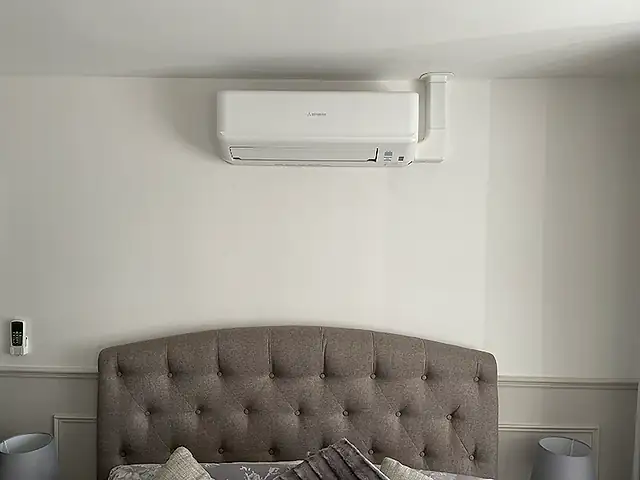
A compact wall-mounted air conditioner above a bed, the kind of air conditioning we fit for homes in Richmond upon Thames
A compact wall-mounted air conditioner above a bed. An example of the air conditioning we install for homes in Richmond upon Thames.

For homes

For households, we start with how each room is used and how it overheats. A top-floor bedroom under a slate roof in Teddington needs a different capacity from a north-facing study in Kew, and a glazed garden room in Barnes may need more cooling than the rest of the house combined. We size every indoor unit from room dimensions, glazing and orientation, recommend wall, floor console or ducted units to suit the interior, and plan internal pipe routes before anything is drilled. Systems are reverse-cycle heat pumps, so the same equipment provides efficient heating in spring and autumn. After commissioning we offer regular servicing to keep filters, coils and condensate drains in good order.

Domestic air conditioning
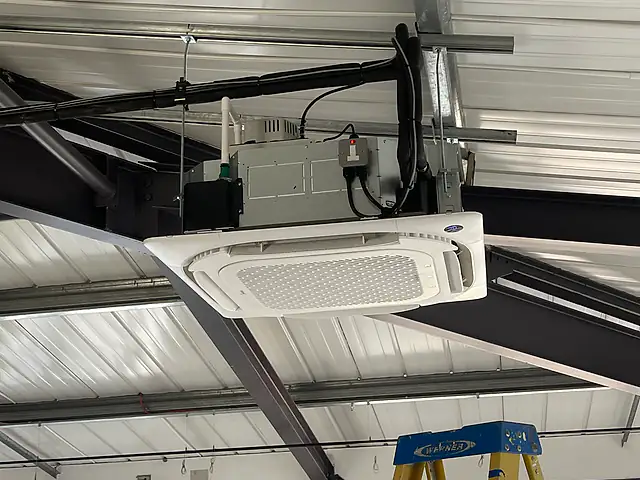

A ceiling cassette air conditioner in a commercial unit, the kind of commercial air conditioning we fit for businesses in Richmond upon Thames
A ceiling cassette air conditioner in a commercial unit. An example of the commercial air conditioning we install for businesses in Richmond upon Thames.

For businesses

Commercial work in the borough ranges from boutiques and restaurants in Richmond and Twickenham town centres to dental and physiotherapy practices, private schools, offices above shops and hospitality venues that fill up on Twickenham Stadium match days. Most premises sit in older buildings with limited roof space and neighbours living above or behind, so we focus on compact ceiling cassettes or ducted units, low-noise condensers and tidy service routes. We install, repair and maintain split, multi-split and VRF systems, and can schedule work outside trading hours so shops and surgeries stay open.

Commercial air conditioning

Choosing Equipment That Suits Georgian and Victorian Interiors

In period rooms, the indoor unit is the part people see every day, so the choice of format matters as much as capacity. Wall-mounted splits are the simplest and most efficient, but they are not always the right look under a Georgian cornice. These are the options we weigh up most often in Richmond, Twickenham and Barnes homes.

Ducted units hidden in lofts and cupboard bulkheads

A ducted fan coil sits out of sight in a loft, a boxed-in section above a wardrobe or a lowered corridor ceiling, and supplies cool air through slim grilles. It is the least visible option for a principal bedroom or drawing room, and one unit can serve two adjoining rooms. It needs space for the unit, a return air path, a condensate route and access for filter cleaning, which is why a loft above the rooms being cooled is ideal.

  • Grilles can be painted to match ceilings
  • Return air grilles must be kept clear
  • Filter access hatches need planning at design stage

When the loft is already converted

If the loft has been converted, ducted units can often go into eaves storage behind knee walls. The available height is the deciding factor, so we measure eaves voids carefully during the survey and check that there is a fall for condensate drainage or space for a small pump.

Floor consoles beneath sash windows

A floor console looks a little like a slim radiator and sits low on the wall, often in the space beneath a sash window. It keeps the upper wall and cornice clear, and because it can be piped through the floor void, it may avoid any new opening in a front or side elevation. Consoles also work well in rooms with panelling or picture rails where a high wall unit would interrupt the detailing.

Pipe routes through suspended timber floors

Many Victorian and Georgian houses have suspended timber ground floors, which make it relatively easy to run insulated copper pipes and a drain between joists to the rear wall. Upper floors need more care because joists may be notched already and floorboards may be original.

Riverside and Flood-Aware Installations Along the Thames

The Thames runs past Barnes, Mortlake, Kew, Richmond, Twickenham, Teddington and Hampton, and homes close to it raise practical questions about condenser height, drainage and visibility from the towpath. Planning for these from the outset avoids moving equipment later and protects it if the river does rise.

Raising and protecting outdoor units

In areas with flood risk, a condenser mounted on galvanised wall brackets or a raised plinth is better protected than one standing on a patio. The isolator switch and any external controls should be fixed at a similar height. Brackets also lift the unit clear of leaves and garden debris, and wall-mounted units with rubber anti-vibration pads transmit less noise into the structure than a poorly levelled ground installation.

Elevations seen from the water and towpath

A rear elevation in a riverside street may be the most visible side of the house, seen by everyone walking the towpath or boating past. That changes where a condenser can sensibly go. Options include side passages, low positions screened by planting or timber louvres with enough free area for airflow, or, in a flat, a designated plant position agreed with the managing agent.

  • Keep at least the manufacturer's clearances around screened units
  • Avoid recesses where warm exhaust air recirculates
  • Check any balcony or terrace rules in the lease
Local properties

From Richmond Hill Townhouses to Whitton Semis

Georgian and Regency townhouses

Houses around Richmond Green, the Terrace on Richmond Hill and parts of Twickenham riverside have tall rooms, decorative plaster and original joinery. Ducted units hidden in the loft or a lowered cupboard ceiling, feeding discreet linear grilles, avoid cutting into cornices. Where ducting is impossible, a floor console sitting under a window reveal is often less intrusive than a high wall unit, and listed building consent is likely to be needed for any new opening through historic fabric.

Victorian villas in St Margarets and East Twickenham

These double-fronted and semi-detached villas usually have deep rear gardens and side returns, which makes hiding a condenser straightforward. A multi-split serving the principal bedroom, a loft room and a home office is the common choice. Pipework can drop through the back bedroom wardrobes and exit low at the rear, keeping the front of the house untouched.

Edwardian and interwar homes in Teddington, Whitton and Hampton

Family houses with hipped roofs and rear extensions are the easiest properties in the borough to cool. Most can take one outdoor unit against the rear wall or beside the extension, with two to four indoor units. Glazed kitchen extensions facing south or west often need the largest indoor unit in the house because of solar gain through roof lanterns and bifold doors.

Riverside apartments and town centre premises

Flats at Richmond riverside, Teddington Lock and Kew Bridge are often west-facing and heavily glazed, and block rules usually control where plant may go. Shops and restaurants on George Street, Hill Street and Church Street in Twickenham typically use ceiling cassettes or concealed ducted units, with condensers on rear flat roofs or in service yards well away from historic shopfronts.

Before you install

Consents, Flood Risk and Flight Paths: What to Check First

This is general guidance only. Every building, lease and planning situation is different, so we’ll talk through yours at survey stage.

  1. 01Much of the borough is covered by conservation areas, so an outdoor unit visible from a road, green or the riverside may need planning permission. It makes sense to check with the local planning authority before settling on a position.
  2. 02Listed building consent is likely to be required for listed houses, and can apply to internal works such as new pipe runs through original walls or floors. Allow time for this in your plans.
  3. 03In lower-lying riverside streets, mount condensers on wall brackets or raised plinths and fit isolators and controls at a sensible height. The Environment Agency's online flood map is a useful first check.
  4. 04Many streets here are very quiet at night, so a condenser can be more noticeable than in central London. Low-noise models, anti-vibration mounts and positions away from neighbouring bedroom windows all help.
  5. 05If you live under a Heathrow approach path and keep windows closed, choose indoor units with a night or quiet mode and good filtration so bedrooms stay comfortable without opening sashes.
Pricing explained

Why Quotes Vary So Much Between Richmond Properties

Two houses in the same street can need very different systems, so we price each job from a survey rather than a fixed list. The quote breaks down equipment, labour, materials and any extras such as condensate pumps, brackets or electrical work, so you can see exactly where the cost goes and where choices could change it.

Concealment in heritage and conservation settings

Ducted units, floor consoles routed through floor voids and long internal pipe runs take more labour and materials than a standard wall unit on an outside wall. Where consents apply, extra time may be needed for drawings, specification sheets and noise information to support an application.

Distance from indoor unit to condenser

In large villas and townhouses the most discreet outdoor position is often well away from the rooms being cooled. Longer pipe runs add copper, insulation, possibly an extra refrigerant charge and more making-good, and may affect which equipment is suitable.

Room count and the choice of system

A single bedroom split is the simplest installation. A multi-split serving several floors, or a ducted system with grilles in two or three rooms, involves more equipment and more commissioning, though it often means only one outdoor unit at the back of the house.

Access, parking and riverside logistics

Narrow lanes near the river, controlled parking zones and houses with no rear access all affect how long an installation takes. Raised brackets, scaffold towers for upper-floor positions and screening also add to the scope of work.

Step by step

How a Richmond Borough Installation Runs Start to Finish

  1. Home survey and heat assessment

    We visit, measure each room, note glazing, orientation and roof construction, and look at where pipework can run invisibly. We also identify whether the property is listed, in a conservation area or near the river, so consent and flood points are flagged early.

  2. Design, quotation and consents

    You receive a written proposal with unit types, positions, pipe routes and a clear quote. If planning, listed building or freeholder consent may be needed, we supply the technical details, noise data and drawings your application or managing agent is likely to ask for.

  3. Careful installation in occupied homes

    Floors and furnishings are protected, pipe routes are formed through existing voids where possible, and core holes are drilled with dust extraction. Condensers go on anti-vibration mounts, and electrical work includes a local isolator for safe servicing.

  4. Commissioning, handover and servicing

    We pressure test and evacuate the system, check operating pressures and temperatures, then show you the controls and quiet modes. Regular servicing keeps filters clean, drains clear and the system running efficiently through Richmond's warm summers.

FAQs

Questions Richmond, Twickenham and Barnes Residents Ask

Can air conditioning be installed discreetly in a Georgian or Regency home?

Usually, yes. Ducted units in the loft or a cupboard bulkhead, floor consoles beneath windows and internal pipe routes through floor voids keep historic interiors intact. The outdoor unit normally goes in the rear garden or a side passage. If the house is listed, listed building consent is likely to be required, so we design with that in mind and provide the technical details you will need.

My house is near the river in Twickenham. Does flood risk change the installation?

It can. In areas with flood risk it makes sense to mount the condenser on wall brackets or a raised plinth rather than on the ground, and to fix the electrical isolator at a similar height. You can check your property on the Environment Agency's flood map before we finalise positions. The indoor side of the system is unaffected.

Will a condenser be too noisy for a quiet street in Teddington or Ham?

Modern inverter condensers are quiet, especially at part load, but on a still evening even a low hum can carry. We choose low-noise models, use anti-vibration mounts and position the unit away from neighbouring bedroom windows and patios. The sound pressure figure for each model, quoted in dB(A) at a set distance, can support a planning application or reassure the household next door.

Is air conditioning useful if I live under the Heathrow flight path in Kew or Barnes?

Many residents under approach routes keep windows shut in summer to cut aircraft noise, which makes bedrooms stuffy. Cooling with the sashes shut also takes the clamminess out of the air, and a bedroom unit on its lowest fan setting is usually quieter than the planes overhead. Filters also capture dust, which helps if you previously relied on open windows for ventilation.

Can one outdoor unit cool several rooms in a Victorian villa in St Margarets?

Yes, a multi-split connects two or more indoor units to a single condenser, which keeps the rear of the house tidy. Each room has its own control. The practical limit is total pipe length and capacity, so in larger villas we sometimes recommend two smaller systems rather than one stretched across three floors.

Do you cover the whole borough, including Hampton and Mortlake?

Yes. We work on both sides of the river, from Barnes, Mortlake, East Sheen and Kew through Richmond, Ham and Petersham to Twickenham, Whitton, Teddington, Hampton Hill and Hampton. Housing changes a lot across that area, so we always survey before recommending a system.

Free quote

Request a Survey for Your Richmond upon Thames Property

Tell us about your home or business in Richmond upon Thames and what you’d like to achieve, whether that’s cooling, heating or both. We’ll come back with advice and next steps.

  • Survey-led advice: recommendations based on your rooms, layout and how you use the space.
  • Clear written quotation: what’s included, the equipment proposed and the next steps.
  • No obligation: ask questions and take your time to decide.
  • CoverageHomes & businesses across Greater London

Request your free quote

A few details help us understand your property and come back with useful advice.

Fields marked * are required. We only use your details to respond to this enquiry.
Get a Free Quote

