North London

Air Conditioning Fitters in Barnet

Barnet runs from the green-belt edge at Arkley and Totteridge down to Golders Green and Brent Cross. We plan, install, service and repair air conditioning across the borough, from large family houses to new Colindale apartments and busy high-street businesses.

  • EN5
  • N3
  • N12
  • N20
  • NW4
  • NW7
  • NW11

Free quote in Barnet

Homes and businesses: tell us what you need and we’ll be in touch.

Green-Belt Edge to Brent Cross: The Spread of Homes in Barnet

Barnet is one of London’s largest boroughs and one of its most varied for air conditioning work. In the north, Chipping Barnet, Totteridge, Arkley and Mill Hill sit among fields and golf courses, with large detached houses on substantial plots. Through the middle, Finchley, Whetstone, Edgware and Hendon are dominated by Edwardian and interwar semis and terraces. In the south, Golders Green and Childs Hill mix period houses with purpose-built flats, and Colindale and Brent Cross have become two of the largest new-build areas in outer London.

The building tells you most of what you need to know about the right system. A five-bedroom house in Mill Hill with a long rear garden and a converted loft can usually take a multi-split with a single, well-screened condenser. A one-bedroom flat on the upper floors of a Colindale block, built on the former Hendon aerodrome land, depends entirely on what the lease and the management company permit. An Arts and Crafts cottage in Hampstead Garden Suburb needs a proposal that respects one of the most carefully protected streetscapes in London.

We cover every ward in the borough, including Barnet, Burnt Oak, Colindale, East Barnet, Edgware, Finchley, Golders Green, Hendon, Mill Hill, New Southgate, Totteridge and Whetstone. Our work includes new installations, replacements for ageing systems, routine servicing and repairs, for homes, landlords, offices, shops, surgeries and schools.

Our services

Home Cooling and Business Climate Control Across the Borough

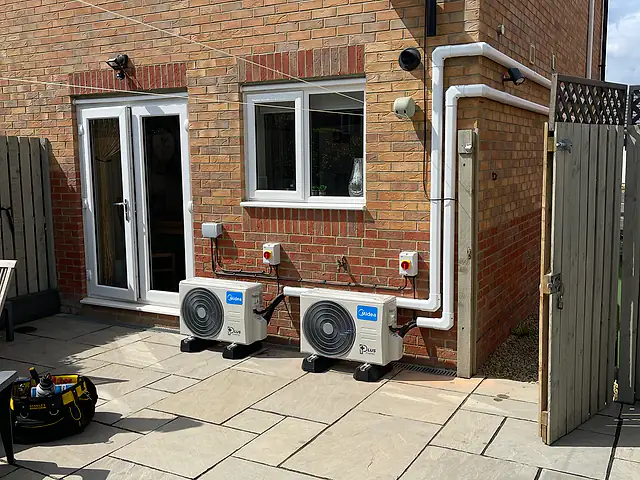
Two outdoor air conditioning units on a patio with neat trunking, the kind of air conditioning we fit for homes in Barnet
Two outdoor air conditioning units on a patio with neat trunking. An example of the air conditioning we install for homes in Barnet.

For homes

Barnet households most often ask us to cool main bedrooms, children’s rooms and home offices, and the loft conversions and glazed rear extensions that so many houses in Hendon, Finchley and Edgware now have. For larger homes in Mill Hill and Totteridge, we look at whether one multi-split or two independent systems will be more efficient and reliable. Every modern split works as a heat pump, so many owners use their units to top up heating in extensions and lofts that radiators struggle to reach. After commissioning we offer annual servicing to keep filters, coils and condensate drains clean and the system running quietly.

Domestic air conditioning
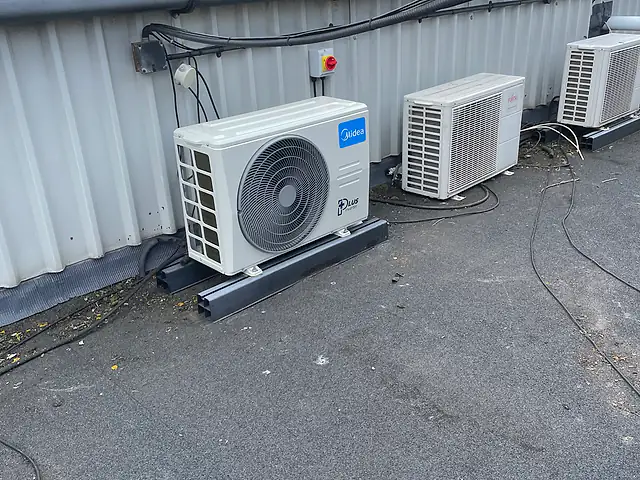
A row of outdoor air conditioning condensers at a commercial building, the kind of commercial air conditioning we fit for businesses in Barnet
A row of outdoor air conditioning condensers at a commercial building. An example of the commercial air conditioning we install for businesses in Barnet.

For businesses

Commercial property across the borough includes town-centre shops in Chipping Barnet, Edgware and North Finchley, offices along the A1 and A41 corridors, retail and leisure around Brent Cross, and a large number of surgeries, dental practices, schools, nurseries and places of worship. We design and install wall-mounted, ceiling cassette and ducted systems to suit each building and its hours of use, including dedicated cooling for comms rooms. Planned maintenance and prompt fault diagnosis help keep systems running through the busiest weeks of summer, and we can help with the record-keeping larger systems require for refrigerant checks.

Commercial air conditioning

Getting Approval in Hampstead Garden Suburb and Barnet Conservation Areas

Approval is the step that most often delays Barnet projects. The borough has a large number of conservation areas beyond the Suburb, including parts of Mill Hill, Totteridge, Monken Hadley and Finchley, and some houses are listed. We cannot predict the outcome of any application, but we can help you prepare a sensible, well-presented proposal.

How the Suburb Trust fits alongside the council

Hampstead Garden Suburb has its own Trust, which operates a scheme of management covering alterations to properties alongside the council’s planning role. In practice, this means owners should expect to check with both the Trust and the local planning authority before fixing a condenser or pipework externally. Providing a site plan, photographs of the proposed position, the unit’s dimensions and its published sound level helps either body assess the request quickly.

Positions that tend to cause fewer concerns

Rear elevations not visible from the road, low positions behind existing walls or planting, and units finished in a neutral colour are generally easier to justify. Pipework taken inside through a cupboard or loft avoids lengthy external runs on attractive brickwork.

Positions likely to raise objections

Front elevations, side walls visible from the street, roofs and anywhere that interrupts the line of hedges or gables are far harder to justify. If no discreet rear position exists, it may be better to discuss a different system design before applying.

Conservation areas elsewhere in the borough

Outside the Suburb, conservation areas in places such as Mill Hill, Totteridge and Monken Hadley cover streets of character with older and larger houses. Here the usual guidance is to keep equipment out of public view and away from principal elevations. Listed buildings are a separate matter: listed building consent is likely to be required for fixings to the fabric, so it makes sense to speak to the planning authority early.

Cooling Colindale and Brent Cross Apartments Without Breaching the Lease

The rapid growth of Colindale and the regeneration around Brent Cross have put thousands of new flats into the borough. Many face south or west with floor-to-ceiling glazing, and residents quickly find them uncomfortable in July. What can be installed depends on the building, so the lease and the managing agent come first.

Reading the lease and building rules

Look for clauses about alterations, external fixtures, balconies and the building’s façade. Many developments forbid anything visible from outside without consent, and some specify where plant can be placed. Ask your managing agent for the building’s policy on air conditioning in writing. We can provide equipment details, dimensions and sound figures to support your request, which often speeds up the response.

  • Check whether a designated condenser location exists on the roof or balcony
  • Ask whether core drilling through the external wall is permitted
  • Confirm the rules on running pipework through communal areas

Equipment that fits compact new-build layouts

Where an outdoor unit is allowed on a balcony, a slim wall-mounted indoor unit with a short pipe run is the most efficient choice. Where ceiling voids exist in hallways, a small ducted unit can serve the living room and bedroom through discreet grilles. Condensate drainage is usually connected to an internal waste with a trap, or uses a quiet pump where there is no fall.

Local properties

Detached Houses, Suburb Cottages and Colindale Apartments

Large detached houses in Mill Hill, Totteridge and Arkley

These homes often have five or more bedrooms across two floors and a loft, with bedrooms facing in several directions. A multi-split serving three to five indoor units from one condenser keeps the exterior tidy, and the generous side returns and rear gardens give plenty of discreet positions well away from neighbouring houses.

Edwardian and interwar semis in Hendon, Edgware and Whetstone

The typical brief is a main bedroom, a child’s room and a loft conversion. Pipework runs through the loft void to each bedroom, and the outdoor unit usually goes by the rear wall or at the end of the side passage. Interwar houses often have rendered walls, so pipe covers can be colour-matched.

Arts and Crafts homes in Hampstead Garden Suburb

Tile-hung gables, hedged front gardens and uniform rooflines make the Suburb highly sensitive. Condensers belong at the rear, low down and screened, with refrigerant pipework run internally wherever possible. Approval from the Hampstead Garden Suburb Trust is expected before external work.

New apartments in Colindale, Brent Cross and Mill Hill East

Large windows, compact layouts and sealed façades make these flats warm in summer. Developments may have a designated plant area, a balcony restriction or a ban on visible units. Where external units are not permitted, a compact ceiling-concealed or through-wall solution may be possible, subject to management approval.

Before you install

Checks That Save Time Before Work Starts in Barnet

This is general guidance only. Every building, lease and planning situation is different, so we’ll talk through yours at survey stage.

  1. 01Residents of Hampstead Garden Suburb should expect to check with the Trust as well as the local planning authority before any external equipment is fixed, and allow time for that process.
  2. 02Conservation areas in places such as Mill Hill, Totteridge, Monken Hadley and parts of Finchley may affect where a condenser can go. Checking with the planning authority before ordering equipment is sensible.
  3. 03Leaseholders in Colindale, Brent Cross, Edgware and Golders Green blocks should obtain written approval from the managing agent first, including where pipework and condensers may be placed.
  4. 04On large plots, siting the condenser at the side or rear on anti-vibration mounts keeps sound away from bedrooms, but remember that longer pipe runs have limits set by the manufacturer.
  5. 05Homes near the A1, A41, M1 and the North Circular often keep windows closed for noise, so cooling capacity should be sized to cope without opening windows on hot nights.
Pricing explained

Cost Drivers for Larger Barnet Houses and Compact Flats Alike

Quotes in Barnet vary more than in many boroughs because the properties range from small flats to very large detached houses. We break every quote down into equipment, labour, access and electrical work, so you can compare options clearly. These factors account for most of the difference between one Barnet job and another.

How many rooms the system serves

A large Totteridge or Mill Hill house with five bedrooms plus a study may need a multi-split with a high-capacity condenser, or two separate systems. Each additional indoor unit adds equipment, pipework and labour, while a single bedroom in a flat is far simpler.

Distance from condenser to the furthest room

Big plots allow the condenser to be placed well away from the house and neighbours, but this lengthens the refrigerant run. Every manufacturer sets maximum pipe lengths and height differences, which can affect the equipment choice for very large homes.

Approvals and design work

Projects in the Suburb, other conservation areas or managed blocks may need drawings, specification sheets and sound data to support an application. Preparing this information takes time and is reflected in how the project is quoted.

Finishes in high-specification homes

Concealed ducted units, recessed grilles and pipe runs hidden behind joinery cost more than a standard wall-mounted unit but suit houses where the interior has been carefully finished. We show you both options so the choice is yours.

Step by step

Four Stages From Enquiry to a Working System in Your Barnet Home

  1. Initial conversation about your Barnet property

    We ask about the rooms to cool, the type of house or flat, and whether it is in the Suburb, a conservation area or a managed block. That helps us flag any approvals needed early.

  2. Survey and written recommendation

    We visit, measure the rooms, check glazing and orientation, assess the electrical supply and identify condenser positions and pipe routes. You then receive a clear recommendation and quote covering equipment, labour and access.

  3. Approvals, then installation

    Once any freeholder, Trust or planning approvals are in place, we install the indoor and outdoor units, run and pressure test pipework, fit drainage and wire the system, protecting your floors and furnishings.

  4. Commissioning and servicing plan

    We commission the system, check performance in each room, show you the controls and agree a servicing schedule so filters, coils and drains stay clean in the years ahead.

FAQs

Questions Barnet Homeowners, Leaseholders and Landlords Ask Us

Can I add air conditioning to a new-build flat in Colindale?

Often yes, but the lease and building management rules decide what is possible. Many Colindale developments restrict changes to the façade and balconies, and some specify where outdoor plant can go. Ask your managing agent for their written policy first. We can then recommend equipment and pipe routes that work within those rules, and supply technical details and sound figures to support your request.

I live in Hampstead Garden Suburb. Is air conditioning allowed?

It is not ruled out, but the Suburb is tightly protected and the Trust operates its own scheme of controls alongside the council. You should expect to seek approval before installing anything visible outside, and the outcome depends on the position and appearance of the equipment. Rear, low and screened condenser positions with internal pipework tend to give a proposal the best chance.

Is a multi-split better than separate systems for a large Mill Hill house?

For three or more rooms close together, a multi-split is neater because one outdoor unit serves several indoor units. In larger houses with rooms far apart or used at very different times, two separate systems can be more efficient and give resilience if one develops a fault. We look at room sizes, distances and pipe-length limits at the survey before recommending either.

How long does an installation take in a typical Barnet semi?

A single wall-mounted split in a bedroom is usually completed in a day. A multi-split serving three bedrooms and a loft room normally takes longer, depending on pipe routes through the loft and whether any making good is needed. We confirm the expected timescale after the survey, once we know the routes, access and electrical work involved.

Can air conditioning help heat my rear extension in winter?

Yes. Modern split systems are air-to-air heat pumps that heat efficiently in mild and moderately cold weather. Glazed rear extensions in Barnet houses are often hard to heat with the existing radiators, and a wall-mounted unit or cassette can provide quick, controllable warmth. Many owners use the unit for cooling in summer and as a top-up to central heating in spring and autumn.

Do you look after air conditioning in rental properties?

Yes. We install, service and repair systems for landlords and letting agents across the borough. Regular servicing keeps equipment efficient and helps avoid breakdowns during tenancies. We can work with tenants to arrange access, and provide a summary of the work completed after each visit so you have a record of maintenance for your property files.

Free quote

Request a Survey for Your Home or Premises in the Borough

Tell us about your home or business in Barnet and what you’d like to achieve, whether that’s cooling, heating or both. We’ll come back with advice and next steps.

  • Survey-led advice: recommendations based on your rooms, layout and how you use the space.
  • Clear written quotation: what’s included, the equipment proposed and the next steps.
  • No obligation: ask questions and take your time to decide.
  • CoverageHomes & businesses across Greater London

Request your free quote

A few details help us understand your property and come back with useful advice.

Fields marked * are required. We only use your details to respond to this enquiry.
Get a Free Quote