
North London

Air Conditioning Installation in Finchley

Finchley’s three centres, East Finchley, Church End and North Finchley, are surrounded by Edwardian and interwar family houses, 1930s flats and busy High Road businesses. We fit, service and repair air conditioning across N2, N3 and N12, with advice matched to the house in front of us.

  • N2
  • N3
  • N12

Free quote in Finchley

Homes and businesses: tell us what you need and we’ll be in touch.

Three Town Centres, One Northern Line and a Lot of Loft Conversions

Finchley grew up along the Great North Road and the railway that later became the Northern line, and it still has three distinct centres: East Finchley around the High Road and Cherry Tree Wood, Church End at Finchley Central, and North Finchley at Tally Ho Corner. Between them are long roads of Edwardian semis and terraces, interwar houses with hipped roofs, and purpose-built blocks of flats near the stations and along the main roads.

The rooms that overheat here are remarkably consistent. Dormer loft conversions, now a feature of most streets, sit directly under the roof and take the full afternoon sun. Glazed rear kitchen extensions with roof lanterns trap heat in the evening. And homes close to the North Circular or the High Road often cannot open windows at night because of traffic noise, which turns an uncomfortable bedroom into a real sleep problem in a heatwave.

Most Finchley houses are good candidates for air conditioning. Loft voids make pipe routing straightforward, side passages and long rear gardens give plenty of discreet condenser positions, and solid party walls help keep sound in check. The main exceptions are flats, where the lease and the managing agent decide what is possible, and homes in conservation areas such as Finchley Church End and Finchley Garden Village. We cover the whole district and recommend single splits, multi-splits or ducted systems according to the property.

Our services

Bedroom, Loft and High Road Shop Cooling in N2, N3 and N12

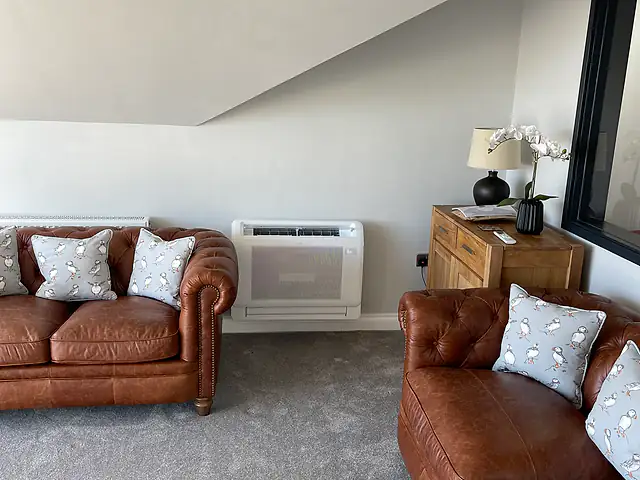
A floor-standing console air conditioner in a lounge, the kind of air conditioning we fit for homes in Finchley
A floor-standing console air conditioner in a lounge. An example of the air conditioning we install for homes in Finchley.

For homes

Finchley homeowners most often want to cool upper-floor bedrooms and a loft conversion used as a bedroom or study. Because many houses suit multi-split systems, it is often possible to serve several rooms neatly from one outdoor unit placed in the side passage or rear garden. We explain the options clearly, install with care to protect décor and finished joinery, and offer ongoing servicing. Modern units double as heat pumps, so they also provide efficient top-up heating in glazed extensions and lofts during cooler months.

Domestic air conditioning
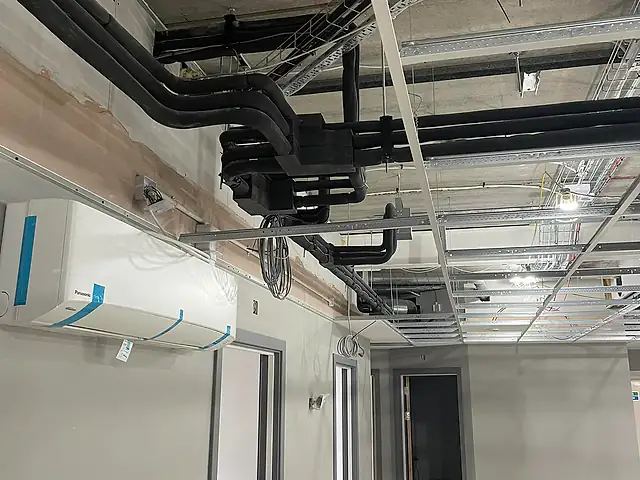

Insulated refrigerant pipework during a commercial fit-out, the kind of commercial air conditioning we fit for businesses in Finchley
Insulated refrigerant pipework during a commercial fit-out. An example of the commercial air conditioning we install for businesses in Finchley.

For businesses

Shops, cafés, restaurants, dental and GP practices, nurseries and small offices line the High Road and Ballards Lane between the three centres. We design and install cooling for shop floors, treatment rooms, offices and kitchens, choosing wall-mounted, cassette or ducted equipment to suit each space and its opening hours. Flats above shops often need careful coordination with residential neighbours. Planned maintenance visits help businesses avoid breakdowns during the hottest weeks, and we repair existing systems too.

Commercial air conditioning

Why Finchley Loft Bedrooms Get So Hot, and the Fix That Works

A dormer loft added to an Edwardian or 1930s house is the most common reason Finchley homeowners call us. The room has a roof directly overhead, often a large dormer window and rooflights, and the insulation standard depends on when the conversion was built. The result is a room that can stay warm long after sunset.

Sizing a unit for a converted roof space

Floor area alone is a poor guide for lofts. We take into account the roof construction, the area and orientation of the dormer and rooflights, insulation quality and whether the room is used as a bedroom or a daytime office. A correctly sized inverter unit runs gently through the night rather than cycling on and off, which keeps the temperature stable and the noise low.

Using the eaves for pipework

Most loft conversions have an eaves void behind the knee walls. Running refrigerant pipework and condensate drainage through this space to the rear of the house keeps the room free of trunking and gives a short, direct route to the condenser.

Where the condenser goes

The outdoor unit is commonly placed on the rear flat roof of the dormer, on a wall bracket at the back or at ground level. Each has implications for access, noise and servicing, which we explain on site.

Combining loft and first-floor bedrooms

If the main bedroom and a child’s room on the first floor also overheat, a multi-split can serve all three rooms from one outdoor unit. The loft makes routing to the first-floor rooms simple, as pipework can drop from above. Each room gets its own controls, so the loft office can run during the day while bedrooms cool in the evening.

Sleeping With Windows Shut Near the North Circular and High Road

The A406 cuts right through Finchley, and the High Road carries heavy traffic between the three centres. For households nearby, opening windows on a hot night means noise and fumes. Air conditioning lets bedrooms stay cool with windows closed, but it needs to be planned with that in mind.

Capacity for windows-closed operation

A bedroom cooled with windows closed relies entirely on the air conditioning to remove heat built up through the day. We size units for this, allowing for south or west-facing glazing and the heat stored in solid walls. The indoor unit should be one with a very quiet low fan speed, so it does not replace road noise with a different disturbance.

  • Choose indoor units with low published night-time sound levels
  • Use timers to pre-cool bedrooms before bedtime
  • Close blinds on sunny windows during the day to reduce the load

Keeping fresh air in mind

Split air conditioning recirculates and cools room air; it does not bring in fresh air. In bedrooms used with windows shut, trickle vents in the window frames or a separate ventilation solution help maintain air quality. We can point out where this is worth considering during the survey.

Local properties

Semis, Terraces and Purpose-Built Blocks Between the Stations

Edwardian semis and terraces near the stations

Houses around East Finchley and Church End often have bay windows, high ceilings and a back addition. Wall-mounted splits suit the bedrooms, with slightly higher capacity for larger front rooms facing the sun. The condenser usually sits neatly against the rear wall or on the back addition roof, out of sight from the street.

Interwar houses in West Finchley and Woodside Park

The 1930s houses common in these parts have a hipped roof and a side passage. A multi-split with indoor units in two or three bedrooms and a single condenser tucked into the passage or rear garden is a popular, tidy arrangement, with pipework dropped from the loft into each room.

Purpose-built flats along the main roads

Blocks near Ballards Lane, Regents Park Road and the High Road are typically run by a freeholder, residents’ company or managing agent. Approval for external units is normally required, and wall-mounted splits with condensers on a rear elevation, balcony or shared roof area are the usual solution.

Loft conversions and glazed rear extensions

These are the warmest rooms in most Finchley houses. A single wall-mounted unit or slim floor console is usually enough to bring a loft room or kitchen-diner back to comfort, and it doubles as efficient heating in spring and autumn.

Before you install

Before Booking: Consents and Practicalities Around Finchley

This is general guidance only. Every building, lease and planning situation is different, so we’ll talk through yours at survey stage.

  1. 01Parts of Finchley, including Finchley Church End and Finchley Garden Village, are conservation areas. Checking with the local planning authority before fixing an outdoor unit to a street-facing wall is sensible.
  2. 02East Finchley borders Hampstead Garden Suburb. If your home is within the Suburb itself, expect to check with the Hampstead Garden Suburb Trust as well as the planning authority.
  3. 03If you own a flat in a purpose-built block, read the lease carefully. Many require written permission from the freeholder or managing agent for any external fixtures, including condensers and pipe covers.
  4. 04Homes close to the North Circular or the High Road may want to keep windows closed, so a system sized to cope without natural ventilation through a hot spell is worth discussing.
  5. 05Garden space is often generous, but placing the condenser away from your neighbour’s patio and bedroom windows is still the best way to keep noise to a minimum.
Pricing explained

Pricing Air Conditioning for a Typical Finchley Semi or Flat

Most Finchley jobs fall into a few familiar patterns: a single loft unit, a multi-split for several bedrooms, or a unit in a purpose-built flat. Each quote is broken down into equipment, labour, access and electrical work. These factors explain most of the differences between one Finchley project and the next.

Bedrooms, lofts and the number of heads

One loft unit is the simplest job, while a multi-split for three bedrooms and a loft room needs a larger condenser, more pipework and more labour. Concealed ducted systems are more involved again, suiting houses undergoing wider renovation.

Ease of the loft and eaves route

Clear access to the loft and eaves usually means a quick, tidy pipe route. Conversions without eaves access, or with finished joinery to work around, take more time and care.

Condenser position and access

Ground-level positions in a side passage are the simplest to install and service. Dormer roof or high wall positions may need access equipment, which adds to the labour and equipment on the quote.

Consents for flats and conservation areas

Flats need managing agent or freeholder approval, and homes in Finchley’s conservation areas may need planning input. Supplying technical details for these approvals adds a little time to the project.

Step by step

Four Steps to a Finished Installation in a Finchley Home

  1. Tell us about the house and the hot rooms

    We ask which rooms overheat, whether there is a loft conversion or glazed extension, whether the home is a flat, and if it lies in a conservation area or the Suburb.

  2. Survey, including the loft and eaves

    We measure the rooms, check the loft and eaves for pipe routes, assess the consumer unit and agree a condenser position away from neighbours. You receive a written recommendation and quote.

  3. Installation, usually completed quickly

    We fit the indoor and outdoor units, route pipework through the loft or eaves, pressure test, connect drainage and electrics, and leave the rooms clean and tidy.

  4. Handover and annual servicing

    We commission the system, show you the controls, timers and quiet modes, and arrange annual servicing so the system keeps running efficiently through future summers.

FAQs

Finchley Residents’ Questions About Air Conditioning Answered

My loft conversion in Finchley gets very hot. What would you suggest?

Loft rooms absorb heat through the roof and often have large dormer or roof windows, so they warm up quickly. A single wall-mounted split unit, correctly sized for the room, is usually the most effective answer. The pipework can often be run through the eaves space to an outdoor unit at the rear of the house, keeping things tidy inside and out.

Can one outdoor unit cool several bedrooms?

Yes, that is what a multi-split system does. One condenser connects to two or more indoor units, each with its own controls, so every room can be set to a different temperature. It works well in Finchley’s semi-detached and detached houses where there is a convenient spot for a single, slightly larger outdoor unit at the side or rear.

How often should air conditioning be serviced?

For most Finchley homes, an annual service is a sensible routine, ideally in spring before the loft and bedroom units start working hard. Busy High Road shops, surgeries and restaurants often benefit from more frequent visits. Servicing keeps filters and coils clean, checks drainage and electrical connections, and helps catch small faults early, which protects efficiency and extends the life of the equipment.

I live near the North Circular. Will air conditioning let me sleep with windows shut?

Yes, that is one of the main reasons Finchley residents near the A406 choose air conditioning. The unit needs to be sized to remove the day’s heat without help from open windows, and the indoor unit should have a very quiet night setting. Trickle vents or another fresh air source help keep the bedroom air pleasant overnight.

Can I fit an outdoor unit to my flat in a purpose-built Finchley block?

Often yes, but most leases require written permission from the freeholder or managing agent for external fixtures. Some blocks have a preferred location, such as a rear elevation or roof area. Ask your managing agent for their policy first; we can provide equipment details and sound figures to support your request and then plan the installation around their requirements.

Do I need permission in Finchley Garden Village or Church End?

Both are conservation areas, so an outdoor unit visible from the street is more likely to need consent. Positions at the rear, out of public view, are generally less sensitive. It pays to check with the local planning authority before installation is booked, and we can help by supplying details of the proposed equipment and its position.

Other Parts of Barnet and North London Close to Finchley

Free quote

Book a Home Survey in East Finchley, Church End or North Finchley

Tell us about your home or business in Finchley and what you’d like to achieve, whether that’s cooling, heating or both. We’ll come back with advice and next steps.

  • Survey-led advice: recommendations based on your rooms, layout and how you use the space.
  • Clear written quotation: what’s included, the equipment proposed and the next steps.
  • No obligation: ask questions and take your time to decide.
  • CoverageHomes & businesses across Greater London

Request your free quote

A few details help us understand your property and come back with useful advice.

Fields marked * are required. We only use your details to respond to this enquiry.
Get a Free Quote

