
East London

Air Conditioning Fitters in Hackney

In Hackney the hard part of air conditioning is rarely the indoor unit. It is finding a condenser position that keeps a conservation-area frontage clean, satisfies a shared freehold and stays quiet for the flat next door. We install, service and repair systems for homes and businesses across the borough, from Stoke Newington to Hackney Wick.

  • E5
  • E8
  • E9
  • N16

Free quote in Hackney

Homes and businesses: tell us what you need and we’ll be in touch.

Terraces, Squares and Studios: Cooling Hackney's Older Housing

Most Hackney homes are late Victorian terraces, and a large share have been split into two or three flats. That pattern drives almost every design decision. The upper flat, with the hottest rooms under the roof, usually has no garden, while the ground-floor flat owns the space where a condenser would naturally go. The most workable answer tends to be a compact wall-mounted split with its outdoor unit on the flat roof of the back addition or high on the rear wall, linked by a short pipe run that never touches the front elevation.

The borough has many conservation areas, from the early nineteenth-century squares of De Beauvoir Town to Clapton Square, Stoke Newington Church Street and the streets around Victoria Park. Where front elevations are protected, external equipment visible from the road may need permission, so rear and roof positions are the starting point. Alongside these streets sit large council and housing association estates, the rebuilt Woodberry Down by the reservoirs, and newer blocks along the Regent's Canal at Haggerston and Kingsland.

In the east, Hackney Wick's former factories now house studios, breweries, event venues and live/work units, often with single glazing and uninsulated metal or asbestos-cement roofs that heat up fast. Cooling there must handle daytime machinery or crowds and still be quiet enough to sleep beside. Across the borough, these varied buildings share one practical constraint: tight streets with controlled parking, so we plan access and deliveries as carefully as the equipment.

Our services

Cooling for Hackney Flats, Workspaces, Bars and Kitchens

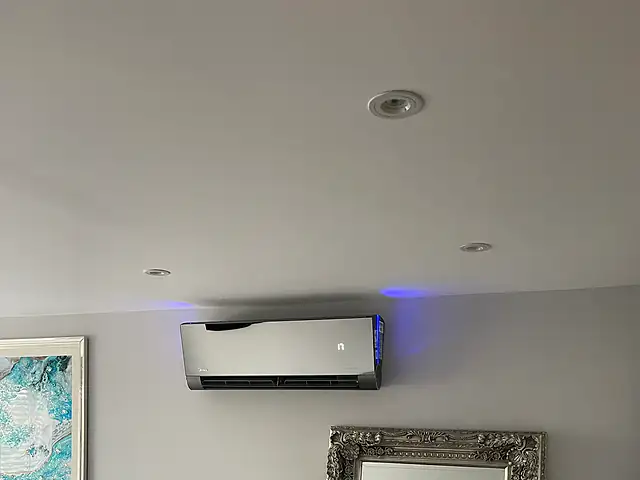
A quiet mirror-finish air conditioning unit above a bed, the kind of air conditioning we fit for homes in Hackney
A quiet mirror-finish air conditioning unit above a bed. An example of the air conditioning we install for homes in Hackney.

For homes

Typical Hackney home installations are top-floor bedrooms, loft conversions under slate and a home office in the back addition. One room usually means a single split; two or three rooms with one realistic outdoor spot means a multi-split. We size each indoor unit to the room's glazing and roof exposure, plan condensate drainage into a rear soil stack or gully, and keep pipe trunking on the rear elevation. Reverse-cycle operation also gives efficient heating, which many flat owners with electric heaters value. We service and repair existing systems too, including units left behind by previous owners.

Domestic air conditioning
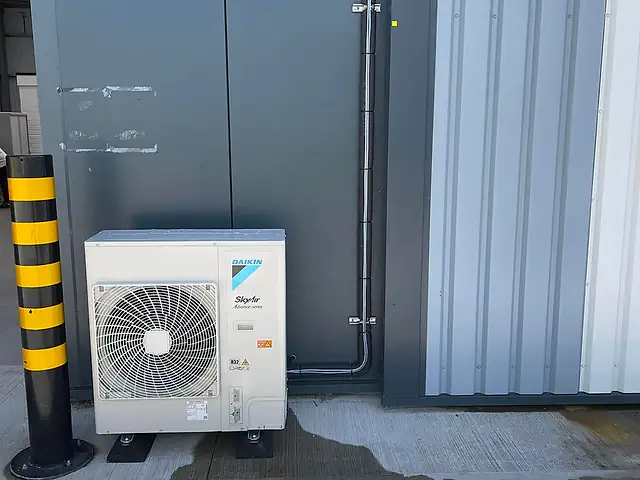

A commercial outdoor air conditioning unit on anti-vibration feet, the kind of commercial air conditioning we fit for businesses in Hackney
A commercial outdoor air conditioning unit on anti-vibration feet. An example of the commercial air conditioning we install for businesses in Hackney.

For businesses

The local economy leans towards hospitality, independent retail and creative work. Restaurants and bars along Kingsland Road, Mare Street, Broadway Market and Chatsworth Road need cooling that copes with full rooms and heat spilling from kitchens, and filters that are cleaned more often. Studios, galleries and small offices want low indoor sound levels for recording or concentration. We fit cassettes, ducted units and wall-mounted splits, provide dedicated cooling for comms cupboards, and offer planned maintenance timed before the summer trade peaks.

Commercial air conditioning

Getting a Condenser Off the Street Face of a Hackney House

Keeping equipment off the front of a terrace protects its appearance, usually avoids the most sensitive planning questions and keeps neighbours on side. In Hackney there are three positions that work again and again, each with its own practical checks before we commit to it.

The flat roof over the back addition

Most Hackney terraces have a two-storey rear outrigger, and many have a flat roof over a single-storey kitchen extension. A condenser there is out of sight from the street and close to the upper rooms, which keeps pipe runs short. We check the deck, the waterproofing and the distance to neighbouring windows, then set the unit on a weighted frame or rubber feet so the membrane is not pierced.

Draining the condenser on a flat roof

In heating mode a condenser sheds water, which can freeze on a roof in winter. We direct it to an outlet or gutter rather than letting it pool, and keep the unit raised so leaves and puddles do not block airflow.

Keeping noise away from the next garden

Narrow Hackney gardens sit close together, so a unit on a back-addition roof can face a neighbour's bedroom across a few metres. Angling the fan discharge away from windows and choosing a low-noise model makes a real difference.

High on the rear wall

Where no flat roof exists, a wall bracket on the rear elevation is the next choice. It needs a sound wall, access for fitting and servicing, and a route for pipework that avoids crossing the downstairs flat's windows. Brick condition matters in older houses, so we use resin anchors where mortar is soft and keep the bracket clear of the soil stack.

Hidden valley roofs and roof terraces

Some Hackney terraces have a concealed London or butterfly roof behind a front parapet, and some upper flats have a roof terrace. A low condenser in the valley or behind a terrace screen can be invisible from the street. Access for installation and future servicing has to be safe and practical, which we confirm at survey rather than assume.

Can a Hackney Wick Studio Be Cooled for Living and Working?

Yes, but the specification differs from a typical flat. Studio spaces combine high ceilings, poor roof insulation and daytime heat from equipment or visitors with a need for silence at night. Getting both right depends on matching the indoor unit to the volume and the use of the space.

Sizing for volume, roof and machinery

A studio with a four-metre ceiling and a metal roof needs far more capacity than its floor area suggests. We calculate the load from the roof, the glazing, any kilns, printers or computers, and the number of people who use the space. Undersized units run flat out and still fail on hot days, while oversized ones short-cycle and leave the air clammy.

Quiet indoor units for sleeping areas

Where a mezzanine or partitioned bedroom shares the air with a workspace, a ducted unit in a plant cupboard or a ceiling-suspended unit with a low fan setting keeps sound down. Separate zones on a multi-split let the sleeping area run gently overnight while the work area is cooled harder during the day.

Event spaces, taprooms and breweries

Venues and taprooms in former industrial buildings have occupancy that swings from empty to crowded. Cassette or ducted systems with enough capacity for peak numbers, plus zoned controls, avoid cooling an empty hall. Brewing areas with heat-generating plant are best treated as a separate zone so the customer space is not starved of capacity.

Local properties

The Hackney Buildings We Are Asked to Cool Most Often

Upper flats in converted terraces

The top flat in a Dalston or Homerton conversion takes the full heat of a slate roof and often a loft room too. A 2.5 kW split in the bedroom and another in the living room, or a two-port multi-split, usually covers it. The condenser normally goes on the back-addition roof, with consent from the freeholder and often the downstairs owner.

Period houses in De Beauvoir and Stoke Newington

Larger early Victorian and late Georgian-style houses have tall ceilings, cornicing and shutters worth protecting. Pipework can often run through floor voids, alcove cupboards or a disused flue route, and slim high-wall or ducted units keep plasterwork intact. A multi-split avoids several condensers on a sensitive rear elevation.

Live/work studios around Hackney Wick

Converted industrial units have high ceilings, big windows and roofs with little insulation. Ceiling-suspended or ducted units move the larger air volume, but must be specified with low indoor sound levels for sleeping areas. Where the space doubles as a workshop, filters need to suit dust from making or printing.

Estate flats and the Woodberry Down blocks

On older council estates the landlord's written consent is needed for anything fixed outside, and on newer blocks the managing agent sets the rules. A single split for the bedroom is the usual outcome, with condenser placement and drainage agreed in advance to suit the building's own maintenance needs.

Before you install

Leases, CPZs and Conservation Rules That Affect Hackney Jobs

This is general guidance only. Every building, lease and planning situation is different, so we’ll talk through yours at survey stage.

  1. 01If your street is in one of the borough's conservation areas, a condenser visible from the road may need planning permission. Rear elevations and screened flat roofs are generally less sensitive, but it makes sense to confirm with the council's planning team before you commit.
  2. 02Shared-freehold conversions often need agreement from every leaseholder as well as any freeholder. Raising the plan early, with a drawing of the proposed condenser position, avoids weeks of delay once the equipment is chosen.
  3. 03Terraces rarely have side access, so the outdoor unit, copper and tools come through the hallway. We protect floors and stair carpets and keep trips to a minimum.
  4. 04Controlled parking zones and low-traffic filters cover much of the borough. A visitor permit or bay suspension outside the property, and a check of which roads a van can actually reach, make the day run smoothly.
  5. 05Flat roofs over back additions are often felt or EPDM. Condensers should sit on load-spreading supports rather than being bolted through the membrane, and the roof's condition should be checked first.
Pricing explained

Hackney-Specific Factors Behind Your Installation Quote

Hackney quotes vary mainly because of access, consents and the time spent keeping equipment discreet. We list each element separately, so you can see what the equipment costs and what the building adds. No figures appear here because they depend entirely on what the survey finds.

Reaching an upper-floor rear wall or roof

A condenser on the back-addition roof of a three-storey house may need a tower scaffold set up in a narrow garden, sometimes passed through the downstairs flat. That extra access time is usually the biggest variable in a Hackney job.

Discreet pipe routes through period interiors

Running pipework inside the house through floor voids, cupboards or the loft keeps the exterior clean but takes longer than surface trunking. In houses with original plaster and joinery, careful lifting and refitting of boards adds time.

Consents, drawings and building management

Preparing specifications and condenser drawings for a freeholder, managing agent or planning application is part of design time. Blocks with out-of-hours rules or lift booking add scheduling that a house does not need.

Parking, permits and loading

Bay suspensions and visitor permits carry their own charges and lead times. Where vans cannot stop outside because of filters or restrictions, carrying equipment further adds labour.

Step by step

Four Stages from Hackney Survey to a Working System

  1. Survey of rooms and rear elevations

    We look at the hot rooms, roof and glazing, then the back of the house: flat roofs, rear walls, gardens and neighbours' windows. We also ask about your lease, freeholder and whether the street is in a conservation area.

  2. Design you can share with the freeholder

    Your quote comes with unit sizes, a marked-up condenser position and pipe route. That makes it easy to seek consent from the freeholder, other leaseholders or the council before anything is booked.

  3. Installation with floors protected

    We carry kit through the hallway under dust sheets, core-drill the rear wall, fix the condenser on its frame or bracket, run insulated pipework and drainage, wire a dedicated circuit and isolator, then pressure-test and evacuate the circuit.

  4. Commissioning and annual care

    We check pressures and outlet temperatures, set up the controller or app, show you how to clean filters, and suggest a servicing interval to suit how hard the system works through a Hackney summer.

FAQs

Hackney Air Conditioning Questions, Answered Plainly

I live in a Hackney conservation area. Can I still have air conditioning?

Often yes, but the outdoor unit's position matters most. Condensers at the rear of a house or on a flat roof hidden from the street are generally viewed very differently from units on a front elevation. Planning permission may still be needed depending on the building and location, so it is sensible to check with the council's planning team before installation.

Can the condenser go on the flat roof over my rear extension?

A flat roof over a kitchen or back addition is frequently the best spot in a Hackney terrace, keeping the unit out of sight and close to upper rooms. We check the roof can take the load, that the waterproofing is not pierced, that drainage is managed and that the unit sits far enough from neighbouring windows to keep noise acceptable.

My flat is in a converted Victorian house. Who needs to agree?

Usually the freeholder, and in many cases the other leaseholders if the freehold is shared, particularly where equipment is fixed to a shared wall or sits above someone else's garden. Your lease will explain what alterations need consent. Getting written approval before the final design avoids awkward disagreements later.

Will air conditioning work in a warehouse live/work unit?

It can, provided it is sized for the full volume, the roof and any equipment in use. Ceiling-suspended or ducted units suit high ceilings, and zoning allows the sleeping area to be cooled quietly while the work area runs harder. Some buildings have landlord rules on external plant, so check your lease or licence first.

Can you service a system a previous owner left in my flat?

Yes. We inspect the indoor and outdoor units, clean filters, coils and drains, check electrical connections and assess how the refrigerant circuit is performing. Older units that use R22 refrigerant can no longer be recharged with new gas, so if we find one we explain the options and whether replacement makes better sense than repair.

Is a portable unit a reasonable alternative in a Hackney flat?

Portable units can help briefly, but they are noisy, less efficient and need a hose through a window, which is awkward with sashes and a security risk on lower floors. A properly sized split removes heat outside, runs quietly and also heats. If consent for a condenser is unlikely, we can talk through other options.

Free quote

Send Us the Details of Your Hackney Home or Business

Tell us about your home or business in Hackney and what you’d like to achieve, whether that’s cooling, heating or both. We’ll come back with advice and next steps.

  • Survey-led advice: recommendations based on your rooms, layout and how you use the space.
  • Clear written quotation: what’s included, the equipment proposed and the next steps.
  • No obligation: ask questions and take your time to decide.
  • CoverageHomes & businesses across Greater London

Request your free quote

A few details help us understand your property and come back with useful advice.

Fields marked * are required. We only use your details to respond to this enquiry.
Get a Free Quote

