
East London

Bethnal Green Air Conditioning Fitters

Bethnal Green mixes Victorian terraces, post-war estates, railway arches and busy high streets within a few streets of each other. We install, service and repair air conditioning for E2 homes and businesses, and help leaseholders through the consent process.

  • E2

Free quote in Bethnal Green

Homes and businesses: tell us what you need and we’ll be in touch.

Terraces, Estates and Arches Off Bethnal Green Road

Bethnal Green's housing changes street by street. Rows of Victorian terraces, many built in London stock brick with small rear yards, sit beside large post-war council estates of low-rise blocks and towers. Many former council flats are now owned by leaseholders or let privately, while newer apartment buildings have appeared along Cambridge Heath Road and near the station. Each type needs a different cooling approach and, just as importantly, a different route to permission.

For leaseholders in ex-council blocks, the direct answer is that cooling is usually possible but rarely immediate. The council or housing association normally remains freeholder, and fixing a condenser to the building or drilling an external wall generally needs written consent. Top-floor flats beneath flat roofs and those facing busy Bethnal Green Road or Hackney Road, where windows cannot stay open at night, are where we see the most demand.

The commercial side is just as varied. Railway arches under the viaducts towards Cambridge Heath house gyms, workshops, breweries, studios and cafés. Shops, salons and takeaways line Bethnal Green Road, with flats above most of them, and Columbia Road comes alive with its Sunday flower market. Small businesses here have often managed summer with fans and open doors, and many are now looking for a quieter, more reliable alternative.

Our services

Home Cooling and Small-Business Systems in the E2 Streets

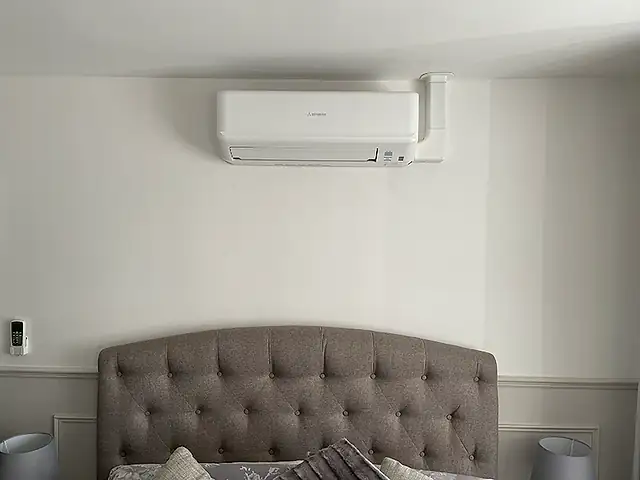
A compact wall-mounted air conditioner above a bed, the kind of air conditioning we fit for homes in Bethnal Green
A compact wall-mounted air conditioner above a bed. An example of the air conditioning we install for homes in Bethnal Green.

For homes

Most Bethnal Green homeowners and leaseholders contact us about bedrooms that will not cool down at night. We assess heat gain from windows, roofs and orientation, explain what consent you may need, and size equipment room by room so systems run quietly. In flats, one or two high-wall splits usually make the biggest difference; in terraces, a multi-split serving the bedrooms and loft room is often the best value. Reverse-cycle systems also provide efficient heating, which can be a practical upgrade in flats that still rely on old electric storage heaters.

Domestic air conditioning
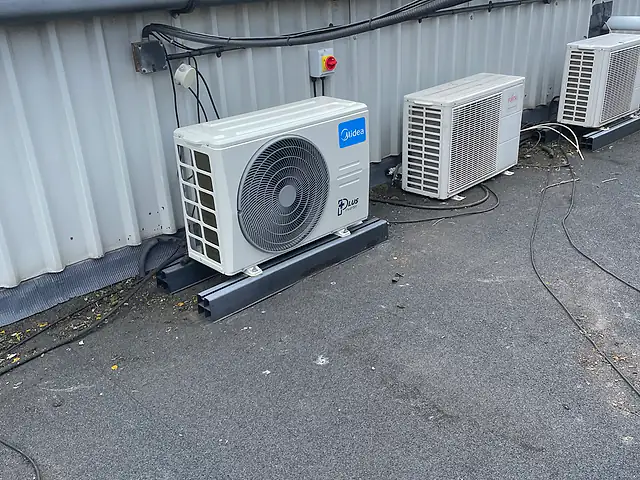

A row of outdoor air conditioning condensers at a commercial building, the kind of commercial air conditioning we fit for businesses in Bethnal Green
A row of outdoor air conditioning condensers at a commercial building. An example of the commercial air conditioning we install for businesses in Bethnal Green.

For businesses

Local businesses range from cafés, salons and shops on the high streets to gyms, studios, breweries and workshops in railway arches. We design cooling around each space: compact splits for small shops and offices, cassettes for cafés and salons, and hard-wearing units for arches and gyms where heat, dust and humidity build up. We prepare the information landlords and arch operators need, schedule work around trading hours and offer regular servicing so filters and coils stay clean in demanding environments.

Commercial air conditioning

Getting Freeholder Consent for Cooling in a Former Council Flat

Buying a former council flat in Bethnal Green gives you ownership of the interior, but the external walls, balconies and structure usually remain the freeholder's. That means a new condenser or a hole through the wall generally needs written consent. A clear, well-prepared application makes approval quicker and avoids having to remove equipment later.

Who you are likely to be asking

The freeholder is usually the council or a housing association, and its leasehold services team handles alteration requests. Your lease will set out what needs consent, and there may be an administration fee or a formal licence. Tenants renting privately also need their own landlord's agreement, who in turn may need the freeholder's consent. Asking early saves time, because applications in large estates can take several weeks.

What to include in the application

Freeholders want to know exactly what will be installed, where it will sit and how it will be fixed and drained. Incomplete requests are a common reason for applications stalling in larger estates, as the leasehold team writes back for more information. We prepare the technical details for you so the request is complete first time, with photographs of the proposed position taken during the survey.

  • Equipment make, model, dimensions and weight
  • Proposed condenser position with photographs or a sketch
  • Pipe route, core hole size and condensate drainage
  • Noise data and the installer's method statement

Condenser position and fixing method

Balcony floor stands avoid drilling into the structure and are often viewed more favourably than wall brackets. Where a bracket is needed, specify fixings suitable for the wall construction, which in post-war blocks can be concrete panels, brick or render over block.

Noise and neighbours in close blocks

Balconies in estate blocks are often close together, so condenser noise travels easily. Including the unit's sound pressure figure at a set distance and confirming it will run in quiet mode at night reassures both the freeholder and neighbouring residents.

Top-floor flats under flat roofs

Flats directly beneath flat roofs absorb heat all day and release it overnight, making bedrooms the hardest rooms in the building to keep cool. They often need a slightly larger unit than the same room on a lower floor. If the roof is due for maintenance, asking the freeholder about improved insulation can also help, and may reduce how hard the air conditioning has to work.

Can a Bethnal Green Terrace Take a Multi-Split System?

Usually, yes. Victorian terraces in the area typically have a rear yard or back-addition roof that can take a single outdoor unit, and a multi-split can then serve two to four rooms. The challenge is routing pipework neatly through narrow houses with solid walls and original features.

Routing pipework through narrow terraces

Pipes from the condenser need to reach each bedroom without spoiling cornices, staircases or chimney breasts. Common routes run up through the back addition, inside built-in cupboards or alongside chimney breasts, sometimes boxed in neatly. External runs on the rear elevation, in trunking matched to the brickwork, are another option where the house is not in a sensitive location. Front elevations are left untouched wherever possible.

Heating and cooling from one system

Modern split systems are reverse-cycle heat pumps, so the same units that cool bedrooms in July can heat them efficiently in winter. In terraced houses with old, inefficient heating in loft rooms or extensions, this can be a useful way to improve comfort without extending the central heating. We explain the SCOP efficiency ratings and how controls can schedule heating and cooling for each room.

Cooling Railway Arches, Salons and Corner Cafés in E2

Bethnal Green's small businesses occupy some unusual spaces. Arches, narrow shop units and corner premises each have quirks that affect where equipment can go, how condensate drains and how the system copes with heat, steam or dust from the business inside.

Railway arches with curved ceilings

Arches rarely have a flat surface high enough for a cassette, so floor-standing units or high-wall units on the end walls are common. Air needs to reach the back of the arch, which can be deep, so two smaller units sometimes work better than one large one. Condensers are typically placed at the front or rear of the arch, subject to the landlord's rules, and fixings into the brick vault itself are often restricted.

Salons, barbers and cafés on the high streets

Hairdryers, steamers, coffee machines and full waiting areas generate a lot of heat in small spaces. Ceiling cassettes suit shops with suspended ceilings, while high-wall units work in others. Filters in salons and cafés collect hair, lint and grease quickly, so cleaning every few weeks in summer and a professional service at least once a year keeps systems efficient and hygienic.

Local properties

Housing and Workspaces From Victoria Park to Cambridge Heath

Victorian terraced houses

Two- and three-storey terraces with back additions and small yards suit a wall-mounted split or a multi-split with one condenser at the rear. Pipework can be routed through the back addition and inside cupboards, keeping the front facade unchanged. Loft conversions, often the warmest rooms in the house, usually benefit from their own indoor unit.

Leasehold ex-council flats

Flats in post-war blocks are now frequently privately owned, but external alterations still need the freeholder's consent. Once agreed, compact high-wall splits serving a bedroom or living room are the usual choice, with a condenser on a balcony or a bracket in a position the landlord approves. Top-floor flats under flat roofs often need slightly more capacity than lower floors.

Railway arch businesses

Arches have curved brick ceilings, limited natural ventilation and sometimes damp. Floor-standing or high-wall units suit the shape, and condensers must sit where the arch landlord and railway operator allow, often on the front frontage or a rear yard. Condensate drainage needs particular care, and units should handle dust or humidity from the business inside.

Shops and salons with flats above

High street premises along Bethnal Green Road and Roman Road typically have a shopfront, a rear storeroom or yard and a separate flat upstairs. A ceiling cassette or wall-mounted unit cools the shop, with the condenser at the rear placed so it does not sit beneath the upstairs bedroom window.

Before you install

Freeholders, Conservation Areas and Market-Day Parking

This is general guidance only. Every building, lease and planning situation is different, so we’ll talk through yours at survey stage.

  1. 01Parts of Bethnal Green fall within conservation areas. Equipment visible from the street may need permission, so it pays to check with Tower Hamlets planning before settling on a condenser position.
  2. 02Leaseholders in ex-council blocks generally need written consent from the council or housing association for external units. Applications can take several weeks, so start the process before booking installation.
  3. 03Some post-war blocks in the area are listed, and listed building consent is likely to be required for external alterations to those buildings.
  4. 04Railway arches are usually let on leases with strict rules about fixing to the structure and placing equipment outside. Check with the arch landlord before designing any system.
  5. 05Parking around Columbia Road and the surrounding streets is especially difficult on Sundays, so installations in that area are best booked for weekdays.
Pricing explained

What Drives the Cost of Air Conditioning in an E2 Home or Arch

Bethnal Green quotes depend heavily on the building. A single split in a ground-floor flat with an easy balcony is very different from a multi-split threaded through a three-storey terrace or a system in a deep railway arch. Our quotes set out equipment, labour, materials and any access equipment separately, and we explain what changes the price rather than quoting fixed figures.

Single split or multi-split

One indoor unit with one condenser is the simplest arrangement. Multi-splits serving several rooms use larger outdoor units and more pipework, but often cost less overall than several separate systems and need only one external position.

Pipe routes through terraces and blocks

Long concealed runs through cupboards and floors, or neat external routes on rear elevations, take more time than a short run through one wall. In concrete-framed estate blocks, core drilling may need specialist equipment.

Height and access

Condensers on upper-floor balconies or brackets high on rear walls may need access towers or other equipment, particularly in terraces with small yards or flats where scaffolding is impractical.

Consent and documentation

Preparing technical details for freeholders, arch landlords or planning enquiries is part of the work. Any fees charged by the freeholder for licences are separate and payable to them.

Step by step

Four Steps for Bethnal Green Terraces and Leasehold Flats

  1. Check consent and survey

    We discuss who owns the building and what permissions you may need, then survey each room, the condenser position, the electrical supply and drainage. For leaseholders, we can survey first to prepare the consent application.

  2. Proposal and application details

    You receive a written proposal with equipment, capacities and positions. For flats and arches, we provide the technical details, photographs and noise data your freeholder or landlord will ask for.

  3. Installation at a convenient time

    Once consent is confirmed, we book a date that avoids market days and busy trading hours. We protect floors, core drill, fit units and pipework neatly, and connect electrics with an isolator.

  4. Commissioning and annual care

    We test the system, check drainage and controls, and show you how to clean filters. An annual service before summer keeps units efficient, especially in arches and salons where dust and humidity are higher.

FAQs

Bethnal Green Homeowners and Arch Tenants Ask Us

I have bought my ex-council flat in Bethnal Green. What permissions might I need?

Even after buying, the council or housing association usually remains the freeholder, so your lease sets out which alterations need consent. Drilling through an external wall or fixing a condenser to the building normally requires written permission, sometimes as a formal licence. Contact the leasehold team with full details of the proposal and wait for approval before any work starts.

Can a railway arch business in Bethnal Green have air conditioning?

Yes, though arches bring particular challenges. The curved ceiling limits mounting options, ventilation is often poor and fixings into the structure may be restricted by the landlord. Floor-standing or wall-mounted units usually work best, with condensers placed where the lease allows. Check your landlord's rules before planning, and allow for good condensate drainage.

Is a single split enough for a small Bethnal Green terraced house?

For one room, such as the main bedroom, a single split is often sufficient. If you want several bedrooms or a loft room cooled, a multi-split connected to one outdoor unit is usually more practical than several separate condensers. We size each indoor unit to its room, taking account of roof heat and window orientation, so the system runs quietly and efficiently.

My top-floor flat gets unbearably hot in summer. Will air conditioning cope?

Yes, if the unit is sized correctly. Flats under flat roofs gain heat from above all day, so we calculate the load from the roof, windows and room size rather than using a standard figure. A correctly sized inverter split will bring the bedroom down to a comfortable temperature and keep it there through the night at low, quiet output.

Can air conditioning replace the storage heaters in my flat?

It can provide much of the heating. Split systems are reverse-cycle heat pumps, delivering several units of heat for each unit of electricity used, compared with one unit from storage heaters. Many Bethnal Green leaseholders use them for living rooms and bedrooms, sometimes keeping a heater elsewhere. Your tariff and room layout will affect how practical a full replacement is.

How disruptive is installation in a busy Bethnal Green shop or café?

A single split in a shop can often be fitted in a day, and work can be arranged before opening or on a closing day. We protect stock and surfaces, keep drilling to the times you agree, and leave the area clean. Multi-unit systems may take longer, but we can phase the work so you keep trading.

Close to Bethnal Green: Shoreditch, Hackney and the Docks

Free quote

Arrange a Visit to Your Bethnal Green Home, Shop or Arch

Tell us about your home or business in Bethnal Green and what you’d like to achieve, whether that’s cooling, heating or both. We’ll come back with advice and next steps.

  • Survey-led advice: recommendations based on your rooms, layout and how you use the space.
  • Clear written quotation: what’s included, the equipment proposed and the next steps.
  • No obligation: ask questions and take your time to decide.
  • CoverageHomes & businesses across Greater London

Request your free quote

A few details help us understand your property and come back with useful advice.

Fields marked * are required. We only use your details to respond to this enquiry.
Get a Free Quote

