
East London

Tower Hamlets Air Conditioning Installation and Servicing

Tower Hamlets packs Georgian weavers' houses, Thames-side wharves, post-war estates and some of London's tallest residential towers into one borough. That means managing agents, listed building rules and river wind shape most installations here. We fit, service and repair air conditioning for homes and businesses from Aldgate to the Isle of Dogs.

  • E1
  • E2
  • E3
  • E14

Free quote in Tower Hamlets

Homes and businesses: tell us what you need and we’ll be in touch.

From Huguenot Townhouses to Isle of Dogs Towers

For most Tower Hamlets residents the deciding question is not which unit to buy but who has a say over the outside of the building. In a Wapping warehouse flat it is the managing agent, in a Spitalfields townhouse it may be the conservation officer, and on a Poplar or Stepney estate it is usually the council or housing association as freeholder. Once those answers are known, the equipment choice tends to follow: compact wall-mounted splits where a condenser position is approved, ducted units hidden in service voids where historic interiors must be protected.

The borough's building stock spans three centuries. Early eighteenth-century houses around Fournier Street and Elder Street, built for Huguenot silk weavers, sit minutes from glass offices on the City fringe. Nineteenth-century warehouses in Wapping and Limehouse became flats in the 1980s and 1990s. Bow, Mile End and Roman Road are a mix of Victorian terraces and post-war estates, while the Isle of Dogs, Blackwall and Aldgate have filled with high-rise apartment towers in recent years.

Heat builds quickly here. Dense streets hold warmth overnight, and riverside towers with south or west-facing glass can overheat even in late spring. Many residents keep windows shut because of traffic on the Highway, Commercial Road or the A12, which makes mechanical cooling more valuable for sleep. For businesses on Brick Lane, around Whitechapel's hospital and market or in City-fringe offices, steady temperatures protect staff, stock and equipment through long summers.

Our services

Residential and Commercial Cooling Across Tower Hamlets

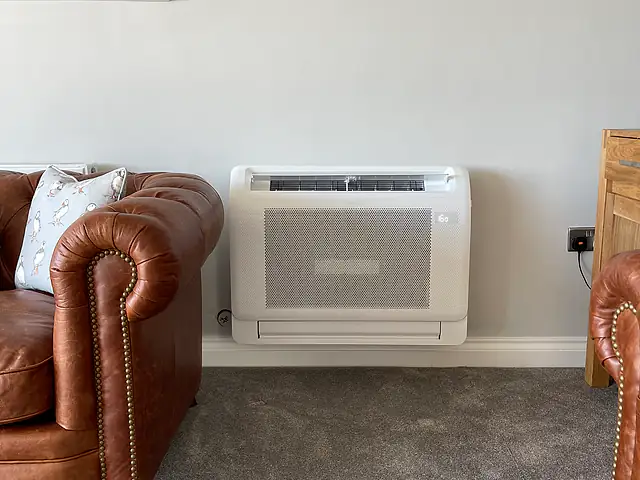
A floor-standing air conditioning console at skirting level, the kind of air conditioning we fit for homes in Tower Hamlets
A floor-standing air conditioning console at skirting level. An example of the air conditioning we install for homes in Tower Hamlets.

For homes

Tower Hamlets homeowners and tenants most often ask about bedrooms in high-rise flats, top floors of Bow and Mile End terraces, and warehouse lofts with large windows. We calculate heat gain from glazing, orientation and roof exposure, recommend split or multi-split equipment sized to match, and explain what consent you may need from the freeholder, managing agent or council. For existing systems, including fan coils in newer towers, we offer servicing, refrigerant leak checks by suitably qualified engineers, and repairs.

Domestic air conditioning
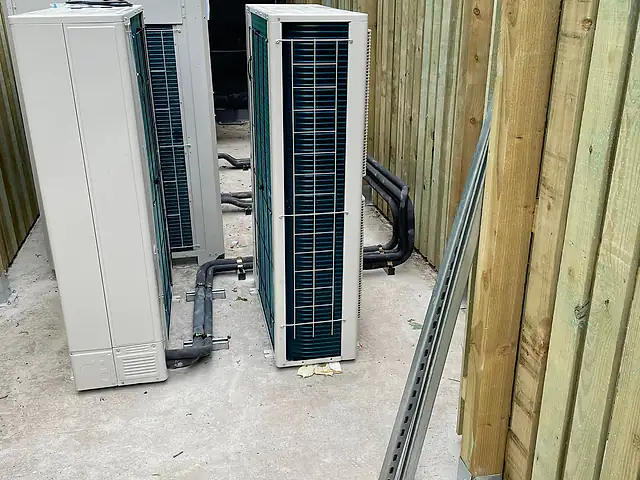

Large commercial outdoor air conditioning units in a plant area, the kind of commercial air conditioning we fit for businesses in Tower Hamlets
Large commercial outdoor air conditioning units in a plant area. An example of the commercial air conditioning we install for businesses in Tower Hamlets.

For businesses

Business needs here vary enormously. City-fringe offices around Aldgate need quiet, even cooling for meeting rooms and open floors; curry houses, cafés and bars on Brick Lane and around Spitalfields Market need units that cope with kitchen heat and busy evenings; clinics, pharmacies and community buildings near Whitechapel want reliable, low-maintenance systems. We install cassettes, ducted units and wall-mounted splits, provide comms room cooling, and run planned maintenance to cut the risk of summer breakdowns.

Commercial air conditioning

What Managing Agents in Wapping and Limehouse Wharf Blocks Expect

Riverside developments are usually run under strict building rules, and the approval stage takes longer than the installation itself. Knowing what an agent typically asks for, and preparing it at the outset, avoids weeks of back-and-forth before any work can be booked.

Paperwork before the first visit

Most agents want product data sheets, a drawing of the proposed condenser and pipe positions, a method statement, a risk assessment and evidence of the installer's insurance and refrigerant handling certification. In the UK anyone working on refrigerant circuits must hold F-Gas certification, so asking any installer for theirs is sensible. We prepare the technical documents to support your application.

  • Equipment specifications and sound data
  • Marked-up plans showing positions
  • Method statement and risk assessment
  • Proposed working hours and access

Where the outdoor unit is allowed to go

Warehouse conversions rarely permit condensers on front facades or riverside elevations. Approved positions may be a shared roof plant area, a courtyard wall or an internal plant cupboard with ventilation louvres. Each affects pipe length and therefore capacity, so the agent's answer comes before equipment selection.

Internal plant cupboards

Some flats have a ventilated cupboard designed for a condenser. Airflow through its louvres must be adequate, or the unit will recirculate its own hot air and lose efficiency. We check free area and discharge direction before relying on one.

Balconies and terraces

Where balcony units are permitted, they must not block drainage, escape routes or glass balustrades, and must be fixed against river wind. Floor-standing frames with anti-vibration pads are usually preferred to fixings through the balcony deck.

Working hours, lifts and protection

Agents commonly limit noisy work such as core drilling to set hours, require lift protection and booked loading bays, and ask for a named contact on site. We plan the day around those rules so drilling, deliveries and commissioning fit the permitted windows.

Is Air Conditioning Possible in a Listed Spitalfields House?

It can be, but only with a design that respects the building and, in most cases, consent from the council. The guiding principle is minimal intervention: hidden equipment, reversible fixings and routes that use voids already present rather than new chases through historic walls.

What listed building consent may cover

For a listed house, consent is likely to be needed for an external condenser, new openings through walls and, often, internal changes such as boxing in pipework or altering panelling. The conservation officer will want drawings, a heritage statement and details of fixings. The decision rests with the council, so early conversation is the best way to learn what is likely to be acceptable.

Equipment that leaves the least trace

Ducted units in a basement, attic or behind a later partition can serve principal rooms through small grilles in joinery or floors. Where a condenser cannot go on a rear wall, a low roof valley or rear yard behind a wall may be acceptable. Wall-mounted units are usually kept to later rear rooms, never in panelled front rooms.

Protecting floors, plaster and joinery

Historic floors and lime plaster need careful handling. Boards are lifted and numbered rather than cut, drilling is by diamond core with dust extraction, and pipework sits on padded clips. Condensate drainage is routed to existing waste pipes where possible to avoid new external pipes on a sensitive facade.

Local properties

Tower Hamlets Homes, From Wharf Lofts to Right-to-Buy Flats

Wharf and warehouse apartments by the river

Converted warehouses in Wapping and Limehouse have thick brick walls, timber or cast-iron columns and deep window reveals. Many are listed or in conservation areas, and almost all are run by managing agents who control external equipment tightly. Internal plant cupboards, approved roof areas or ducted units in corridor bulkheads are the usual routes.

Listed Georgian houses in Spitalfields

Panelled rooms, original staircases and fragile lime plaster make these houses unforgiving. Listed building consent is likely to be needed even for some internal work. Concealed ducted units in a basement or attic, with pipework through existing voids, cause the least disturbance to historic fabric.

Right-to-buy and estate flats

Many flats in Stepney, Poplar, Bow and Bethnal Green estates were bought under right to buy but remain in council or housing association blocks. External units need landlord consent and some blocks restrict balcony equipment. A single wall-mounted split with a carefully positioned condenser is the most common outcome.

High-rise apartments on the Isle of Dogs and at Aldgate

Towers with full-height glazing trap solar heat, and opening windows are often limited for safety at height. Some blocks already have central comfort cooling via fan coil units, which needs filter cleaning, drain checks and fault-finding rather than replacement. Where no cooling exists, building rules decide whether anything can be added.

Before you install

Listed Fabric, Managing Agents and River Wind in E1 to E14

This is general guidance only. Every building, lease and planning situation is different, so we’ll talk through yours at survey stage.

  1. 01The borough has a large number of listed buildings and conservation areas. Listed building consent is likely to be required for works to a listed property, including some internal alterations, so speak to the council's conservation team before finalising any design.
  2. 02Riverside, warehouse and tower developments are usually controlled by managing agents. Expect to supply product data, a method statement and risk assessment, and proof of insurance from the installer before work is approved.
  3. 03Parking around Whitechapel, Spitalfields and Brick Lane is very tight, and market days make it harder still. Loading arrangements or bay suspensions should be agreed well before installation day.
  4. 04On upper floors and exposed roofs near the Thames, wind loading on condensers is significant. Secure brackets, wind baffles where appropriate and careful positioning reduce vibration and extend equipment life.
  5. 05Many converted warehouses have concrete or steel floors that cannot be chased. Pipe and drain routes need planning around them from the start rather than discovered on the day.
Pricing explained

Why Two Tower Hamlets Quotes Can Look So Different

Prices for similar equipment can diverge sharply in this borough because the building, not the unit, drives most of the work. A clear quote separates equipment, labour, access, consents support and making good, so you can see where the effort goes. We do not publish figures, as each depends on the survey.

Building management requirements

Lift bookings, out-of-hours drilling and extra documentation all add time on tower and wharf jobs. Where an agent insists on specific condenser screens or plant areas, materials and pipe lengths rise accordingly.

Heritage-sensitive installation work

Ducted systems in listed houses need design time, careful floor and joinery work and drainage planning. These tasks take longer than fitting a wall unit in a modern flat and are itemised separately.

Height and wind exposure

Condensers on high balconies or exposed roofs need heavier brackets, frames or wind protection, and sometimes access equipment such as a powered platform. Each of these appears as a line in the quote.

Concrete structure and pipe length

Core drilling through thick concrete or brick takes longer, and long internal routes to an approved plant area need more copper, insulation and refrigerant. Condensate pumps may be needed where gravity drainage is not available.

Step by step

How a Tower Hamlets Installation Runs, Step by Step

  1. Survey and building rules check

    We inspect the rooms, glazing and possible condenser positions, then ask for your lease, building rules or listing details. In wharf and tower blocks we confirm agent requirements before designing anything.

  2. Design pack and consents support

    You receive a specification, drawings and a quote, plus method statements and data sheets for the managing agent or the council's conservation team. Installation is booked only once written approval is in place.

  3. Installation within permitted hours

    We protect lifts, corridors and floors, drill within agreed hours, fix condensers securely against river wind, run pipework and drainage, wire the supply and isolator, then pressure-test and vacuum the circuit.

  4. Commissioning and maintenance plan

    We check operating pressures, airflow and temperatures, set controls and explain filter cleaning. A servicing schedule is agreed, which many managing agents expect to see as evidence of ongoing maintenance.

FAQs

Tower Hamlets Customers Often Want to Know

Can air conditioning be fitted in a listed house in Spitalfields?

It can be possible, but listed building consent is likely to be required, and the conservation officer will want to see how equipment and pipework affect historic fabric. Concealed ducted units, careful pipe routes and condensers hidden from view give the best chance of acceptance. The decision is the council's, so speak to them early.

My riverside warehouse flat has strict building rules. What happens next?

Start with your managing agent or freeholder, who will explain what is permitted and what documents they need. We can prepare equipment specifications, proposed positions and a method statement to support the request. Once written approval arrives, installation can be scheduled around their access, lift and working-hours rules.

I bought my ex-council flat. Do I still need the council's permission?

In most cases the council or housing association remains freeholder, so your lease sets out which alterations need consent. Fixing a condenser to an external wall or drilling through it usually falls into that category. Check the lease and contact the leasehold services team before booking work.

My Isle of Dogs flat already has cooling but it barely works. Can you help?

Many towers use fan coil units served by a central plant or individual heat pumps. Weak cooling is often caused by clogged filters, blocked condensate drains, failed fan motors or controller faults within the flat. We can inspect and service the in-flat equipment. Faults in central plant are the building management's responsibility.

Will strong wind off the Thames damage a balcony condenser?

Not if it is fixed properly. Exposed positions need sturdy frames or brackets, anti-vibration mounts and, sometimes, wind baffles so gusts do not stall the fan. The unit should also sit where it cannot become a hazard. Your managing agent may have rules about fixings, which we follow.

Can a Brick Lane restaurant run air conditioning near a hot kitchen?

Yes, with sensible design. Dining areas should be cooled separately from the kitchen, and indoor units kept away from cooking fumes that coat coils with grease. Filters need cleaning far more often than in an office, and a planned maintenance schedule helps prevent breakdowns during busy evenings and summer trade.

Free quote

Start Your Tower Hamlets Air Conditioning Enquiry Here

Tell us about your home or business in Tower Hamlets and what you’d like to achieve, whether that’s cooling, heating or both. We’ll come back with advice and next steps.

  • Survey-led advice: recommendations based on your rooms, layout and how you use the space.
  • Clear written quotation: what’s included, the equipment proposed and the next steps.
  • No obligation: ask questions and take your time to decide.
  • CoverageHomes & businesses across Greater London

Request your free quote

A few details help us understand your property and come back with useful advice.

Fields marked * are required. We only use your details to respond to this enquiry.
Get a Free Quote

