
West London

Fulham Air Conditioning Fitters

Fulham's Victorian terraces have been extended up into the roof, out into glazed kitchens and down into basements, and each of those spaces brings its own cooling challenge. We design, install and service air conditioning across SW6, from Parsons Green and the Peterborough Estate to Sands End, Imperial Wharf and the streets near Bishops Park.

  • SW6

Free quote in Fulham

Homes and businesses: tell us what you need and we’ll be in touch.

Cooling SW6 Homes That Have Grown Up, Out and Down

Most of Fulham is made up of two and three-storey Victorian terraces on long, regular streets, many of them within conservation areas. Over the years these houses have gained dormer loft conversions, side-return kitchen extensions with roof glazing and, in many streets, full basement excavations. The result is a house with a hot top floor, a sunny kitchen and a basement that can feel stuffy, all in close proximity to neighbours on both sides.

Cooling a typical SW6 terrace is therefore a question of fitting the right indoor units into three or four very different spaces while keeping everything hidden outside. Rear gardens are narrow and overlooked, front elevations are protected, and party walls limit where pipes and units can go. The best results usually come when air conditioning is planned alongside building work, so pipework, drains and cabling are concealed before walls and ceilings are closed up.

Fulham also has mansion flats near Fulham Palace Road and Munster Road, riverside apartments around Imperial Wharf and Sands End, and busy commercial streets on Fulham Road, the New King's Road, North End Road and around Fulham Broadway. Restaurants, boutiques, gyms and clinics all need reliable cooling, especially on match days near Craven Cottage and Stamford Bridge when footfall surges and doors stay open.

Our services

Fulham Household and Business Air Conditioning

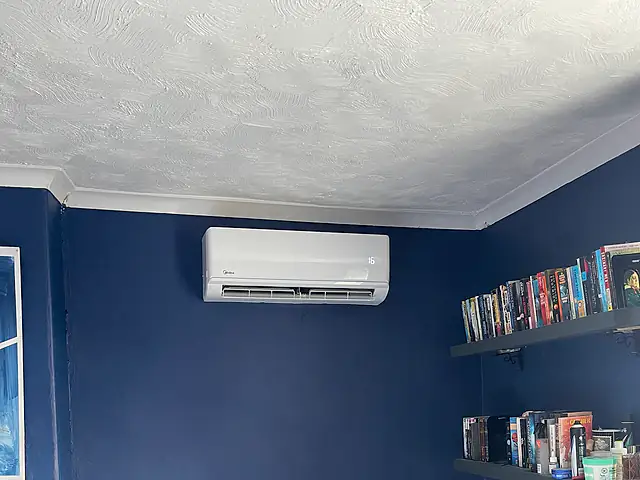
A split air conditioning unit in a home office, the kind of air conditioning we fit for homes in Fulham
A split air conditioning unit in a home office. An example of the air conditioning we install for homes in Fulham.

For homes

Homeowners in SW6 usually want to cool a loft bedroom, the main bedroom and a glazed kitchen extension, and sometimes a basement cinema room or gym. We size each indoor unit from room size, glazing and roof construction, choose wall, cassette or ducted units to suit each space, and plan condenser positions that respect neighbours and conservation rules. If you are renovating, we coordinate with your builder so first-fix pipework, drains and cabling are concealed before finishes go on. In winter the same units run in heat pump mode, which is handy in a loft room the radiators never quite reach, and a yearly service keeps everything quiet and dependable.

Domestic air conditioning
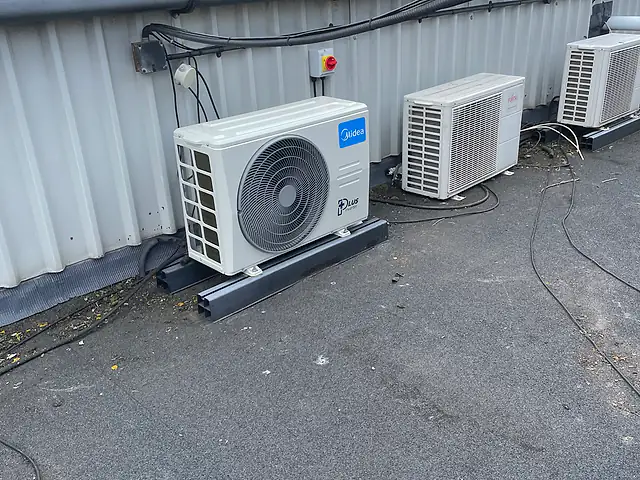

A row of outdoor air conditioning condensers at a commercial building, the kind of commercial air conditioning we fit for businesses in Fulham
A row of outdoor air conditioning condensers at a commercial building. An example of the commercial air conditioning we install for businesses in Fulham.

For businesses

Fulham's business community includes independent shops and boutiques, restaurants and bars, gyms and fitness studios, beauty and dental clinics, estate agents and small offices. Typical jobs include cassettes in shop ceilings, ducted units hidden above restaurant dining rooms, VRF for multi-floor premises, breakdown repairs and pre-season maintenance. Because most commercial premises have flats above or behind, we pay close attention to condenser noise, night-time running and vibration, and we can work outside trading hours.

Commercial air conditioning

Planning Air Conditioning Into a Loft or Basement Renovation

Many Fulham terraces are mid-renovation at any given time, and that is the best moment to install air conditioning. With walls, floors and ceilings open, pipework and drains can be hidden completely, and indoor units can be positioned where they work best rather than where retrofitting allows.

First-fix and second-fix timing

First fix happens while the structure is open: insulated refrigerant pipes, condensate drains and control cables are run to each indoor unit position and tested. The builder then closes up walls and ceilings and decorates. Second fix follows, when indoor units and the condenser are mounted, connected, evacuated and commissioned. Coordinating these stages with your builder avoids damage to finished walls.

Protecting pipe ends during building work

Pipe tails left in walls for several weeks must be sealed and pressure tested to keep dust and moisture out. We label each run and record its position so other trades do not drill into it.

Cooling basement rooms

Basements stay cooler than upper floors, but cinema rooms, gyms and home offices generate heat and can feel stuffy. A ducted unit or ceiling cassette in the basement ceiling is usually the neatest option. Condensate must be pumped up to a drain, and the condenser can sit in a front or rear lightwell if there is enough airflow, or in the rear garden.

  • Check lightwell airflow and clearances
  • Use a reliable condensate pump with an overflow cut-out
  • Coordinate with ventilation and waterproofing contractors

Basement dehumidification

Air conditioning removes moisture as it cools, which helps basement rooms feel fresher in summer. It is not a substitute for proper waterproofing or ventilation, so we coordinate with the specialists responsible for those systems.

Keeping Condenser Noise Down in Tightly Packed Terraced Gardens

Fulham's narrow rear gardens are overlooked from every side, and neighbours are often only a few metres away. Choosing and siting the outdoor unit carefully is the key to an installation that nobody notices.

Choosing quiet outdoor units

Modern inverter condensers slow down at part load and are far quieter than older models. Manufacturers publish sound figures in dB(A), and we compare these when recommending equipment. For a multi-split, one larger condenser can be quieter overall than several smaller units scattered around the garden or back addition roof.

Where to site the condenser

Common positions include low on the rear wall, on the flat roof of the back addition or kitchen extension, or in a corner of the garden screened by planting or timber louvres. We avoid positions below neighbouring bedroom windows, keep clearances for airflow and fit anti-vibration mounts so that noise does not travel into the structure or party walls.

  • Avoid enclosed corners where sound reflects
  • Use rubber feet or isolating brackets
  • Leave space for servicing access
Local properties

Terraces, Conversions, Mansion Blocks and Riverside Flats in SW6

Victorian terraces with loft and basement extensions

A multi-split with one condenser at the rear can serve a loft bedroom, a first-floor bedroom and the kitchen extension. Basements are better treated separately: a ducted unit or cassette in the basement ceiling, with condensate pumped to a suitable drain and the outdoor unit in a lightwell or the rear garden. Pipe routes down through the house are easiest to hide during renovation.

Upper and lower conversion flats

Many terraces are split into two flats. Upper flats can often place a condenser on the rear roof of the back addition, while garden flats can use the garden. Freeholder consent is normally needed, and in share-of-freehold buildings both owners will usually need to agree to any external equipment.

Mansion blocks and riverside apartments

Mansion flats near Fulham Palace Road need consent from the managing agent and usually rely on rear elevations or lightwells for outdoor units. Riverside developments around Imperial Wharf are heavily glazed and can overheat badly; building management controls external units, and some blocks have cooling provision built in that only needs connecting.

Shops, restaurants and gyms

Premises on Fulham Road, the New King's Road and around Fulham Broadway generally use ceiling cassettes or ducted units. Condensers go on rear roofs or yards away from flats above and behind, with low-noise models and anti-vibration mounts to protect residents.

Before you install

Neighbours, Conservation Areas and Parking in Fulham

This is general guidance only. Every building, lease and planning situation is different, so we’ll talk through yours at survey stage.

  1. 01Much of SW6 is covered by conservation areas. Outdoor units visible from the street, or placed on front roof slopes, may need planning permission, so check with the local planning authority first.
  2. 02Terraced gardens are small and closely overlooked. Choose quiet outdoor units and site them away from neighbouring bedroom windows and patio seating.
  3. 03In leasehold and share-of-freehold flats, written consent from the freeholder or co-owners is normally needed before external units are fitted or walls are drilled.
  4. 04Parking is controlled across SW6. Installers may need visitor permits or a bay suspension, and match days near Craven Cottage and Stamford Bridge are best avoided.
  5. 05Riverside homes around Sands End and Imperial Wharf may be in flood risk areas. Raise outdoor equipment and keep isolators above likely flood levels.
Pricing explained

Cost Factors for Air Conditioning in SW6

We price every project from a survey, with equipment, labour, materials and extras such as condensate pumps, brackets and electrical work set out clearly. In Fulham, the biggest variables are whether the work is part of a renovation and how many different spaces the system must serve.

Renovation versus retrofit

Installing during building work is usually simpler, because pipework can be run while the structure is open. Retrofitting into a finished house involves careful routing, more making-good and sometimes visible trunking.

Number of floors and spaces

Serving a loft, a bedroom, a kitchen extension and a basement may need a multi-split plus a separate system for the basement. More indoor units and longer pipe runs add to equipment and labour.

Condenser location and access

Back addition roofs and lightwells are discreet but harder to reach than garden positions. Terraces without rear access mean carrying equipment through the house, which needs extra protection and time.

Parking and permits

Bay suspensions and permits add administration and cost, and match-day restrictions can affect scheduling around Craven Cottage and Stamford Bridge.

Step by step

What Happens When You Book a Fulham Installation

  1. Survey of your SW6 home

    We measure each room, look at loft, extension and basement construction, and find discreet condenser positions and hidden pipe routes. If you are renovating, we ask for drawings and the builder's programme.

  2. Design coordinated with your builder

    You receive a written proposal and quote. For renovations, we agree first-fix dates with your builder. Where planning or freeholder consent may be needed, we provide specification sheets and noise data.

  3. Installation in one or two stages

    For retrofits we install in a single visit. For renovations we complete first fix while walls are open, then return for second fix after decoration, mounting units and connecting everything.

  4. Commissioning and regular servicing

    The system is pressure tested, evacuated and checked under load, and we explain the controls. Annual servicing cleans filters and coils, checks condensate pumps and keeps the system quiet.

FAQs

Air Conditioning Questions From Fulham Homeowners

What is the best way to cool a Fulham loft conversion?

A wall-mounted split system is usually the most effective option, because heat builds up under the roof. If you are renovating, pipework can be hidden in walls or floors. A multi-split can serve the loft and other bedrooms from one outdoor unit, which keeps the rear of the house tidy and avoids several condensers.

Should I install air conditioning during a renovation?

It is the ideal time. First-fix pipework, drains and cabling can be installed while walls and floors are open, then the indoor units are fitted after decoration. Coordinating with your builder early avoids visible trunking and makes the finished installation much neater than retrofitting afterwards.

Can air conditioning cool a basement cinema room or gym?

Yes. A ducted unit or ceiling cassette in the basement ceiling is usually the neatest option, with condensate pumped up to a drain. The condenser can go in a lightwell if there is enough airflow, or in the rear garden. We coordinate with your ventilation and waterproofing contractors.

Do I need consent for air conditioning in a leasehold flat in SW6?

Usually, yes. Leasehold and share-of-freehold flats normally need written consent from the freeholder or co-owners for external units and wall penetrations, and conservation area rules may also apply. Checking these points before installation saves time and avoids disputes. We can provide technical details to support your request.

Will the outdoor unit annoy my neighbours?

In Fulham's close-set gardens, noise is the main concern. We choose low-noise inverter models, fit anti-vibration mounts and site units away from neighbouring bedrooms and patios. Showing the people next door the model's published dB(A) rating before installation often settles concerns early.

Do you work on Fulham Road and the New King's Road?

Yes. We install, service and repair systems for shops, restaurants, gyms and clinics across SW6, including Fulham Road, the New King's Road, North End Road and around Fulham Broadway. We schedule work outside trading hours where needed and keep noise low for residents above.

Free quote

Request Your Fulham Air Conditioning Quote

Tell us about your home or business in Fulham and what you’d like to achieve, whether that’s cooling, heating or both. We’ll come back with advice and next steps.

  • Survey-led advice: recommendations based on your rooms, layout and how you use the space.
  • Clear written quotation: what’s included, the equipment proposed and the next steps.
  • No obligation: ask questions and take your time to decide.
  • CoverageHomes & businesses across Greater London

Request your free quote

A few details help us understand your property and come back with useful advice.

Fields marked * are required. We only use your details to respond to this enquiry.
Get a Free Quote

